
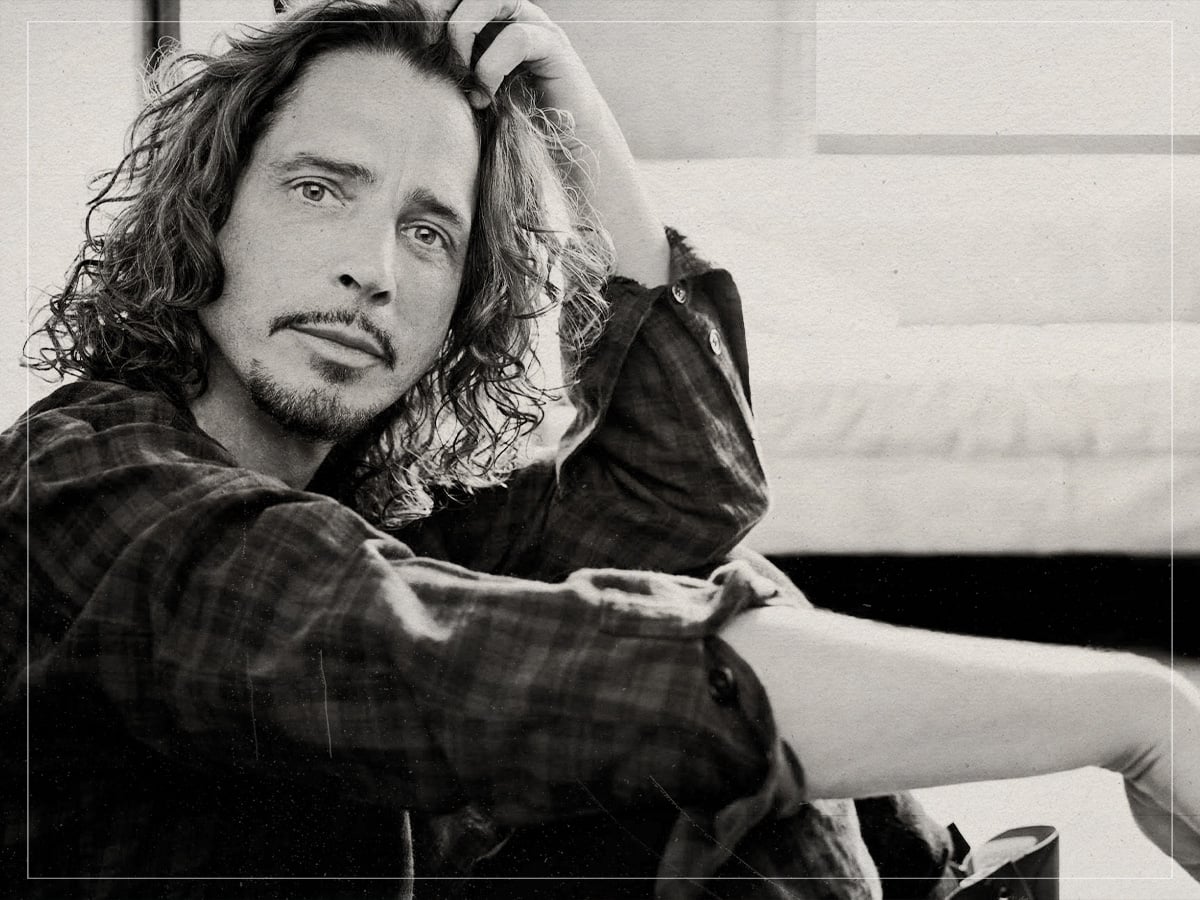
(Credits: Far Out / Chris Cornell)
Mon 9 March 2026 22:00, UK
Nothing about the Seattle scene was meant to be too pompous as far as Chris Cornell was concerned.
There was no point in anyone thinking that a bunch of people in flannel shirts was going to be the next best thing in pop music, but time seemed to have some other plans when acts like Nirvana started to become the biggest thing in the world. But even with all of the great music that Cornell made throughout the years, there were more than a few songs that were meant to be friendly jabs at some of the people who were getting on the soapbox a little too much.
Because while grunge was a major change of pace for rock and roll, you couldn’t say that it was necessarily preachy. There were a handful of message songs and story songs that had a major impact on people, like Nirvana’s ‘Polly’ and ‘Jeremy’ by Pearl Jam, but by and large, it was hard enough trying to understand what the hell they were saying half the time. No one was really engaged with the lyrics on a deep level yet, but Cornell had a much more abstract approach to lyrics.
Even though they sounded like the modern incarnation of Led Zeppelin on a few of their songs, the lion’s share of tunes that Cornell wrote were borderline psychedelic on the lyrical front. No one was painting with the words the same way that he did on ‘Black Hole Sun’, and even when he zeroed in on his innermost feelings, it’s hard to really deny the kind of pathos that he was putting across on ‘Outshined’.
Then again, there were more than a few people who took rock in a lot of directions that weren’t making that much sense to him. The underground should have been a natural reaction to the pompous side of rock and roll, but even among the artsy rockers, Cornell was seeing people getting a bit too much of a stick up their ass when it came to some of their favourite artists. There’s a fine line between being a rock and roll star and being a snob, and you could see people crossing it a bit too much.
And when looking at what he had seen thus far, Cornell figured that people like Bono needed to bring themselves down to Earth a little bit, saying, “I hate arrogant or arty rock stars. A lotta people in the music business become so idolised; the David Byrnes and the Bonos. Prince is idolised a lot too; more so than the singer of Poison anyway, or Mötley Crüe, whoever their singer is.” But even if the band had time to tour with Guns N’ Roses and take the piss out of their show, it’s not like Cornell didn’t have a point with Bono.
He was already preaching about rock and roll meaning something much more than a few chords, and since David Byrne had gone in the same direction when he became too eccentric for Talking Heads, it was much easier for Cornell to air his grief in a song like ‘Jesus Christ Pose’, especially since the U2 frontman was using religion as a means of talking about his innermost feelings.
But the silver lining is that Bono actually seemed to agree with Cornell in many respects. The Irish legends had been going for so long that they were in danger of becoming a parody of themselves, and while Achtung Baby saw them dial up the theatrics, they did at least play into the irony that was coming from the underground once Bono started to becoming the spitting image of what a pompous rockstar should be with ‘The Fly’.
So even if Cornell was strutting his stuff across the stage, he was always going to be honest with his audience whenever he made new music. Nothing that he made was ever going to be too contrived, and even if that managed to alienate a few fans, he would have rather been himself than worry about pleasing a bunch of purists that didn’t get it in the first place.