
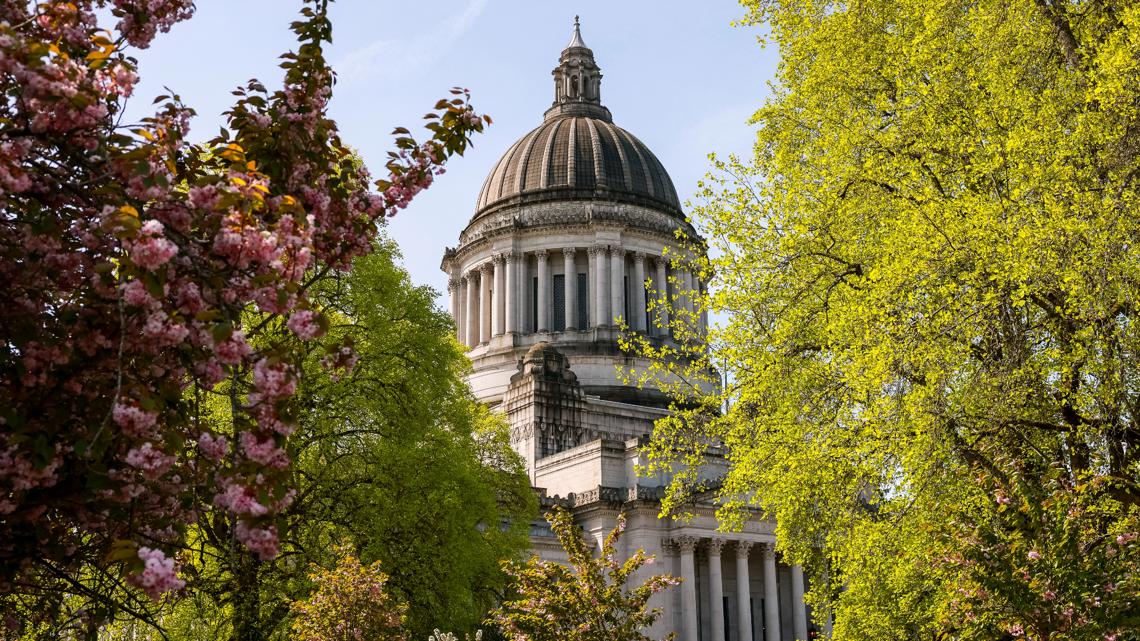
Gov. Bob Ferguson signed a series of bills addressing housing, AI in nursing, and healthcare in Washington, including vaccines.
OLYMPIA, Wash. — Gov. Bob Ferguson signed a series of bills Monday related to housing, healthcare, labor, data privacy and the environment.
This was the first set of bill signings of the 2026 legislative session.
See a summary of all the bills signed Monday below.
Housing
Engrossed House Bill No. 1687: Social housing public development authorities
This bill authorizes the government to help a social housing public development authority to plan, build or operate housing projects. At this point, Seattle is the only city in Washington that the bill will impact, since voters passed a social housing initiative in 2023. Supporters of the bill said it will give the city a tool to use to support Seattle Social Housing PDA through things like land opportunities, grants, loans or zoning exemptions.
Second Substitute House Bill No. 1859: Affordable housing on religious-owned property
The bill aims to make it easier to develop affordable housing on religious-owned properties by modifying rules for a density bonus, which is a zoning tool that allows developers to build more housing units or taller buildings in exchange for public benefit, such as a certain number of affordable housing units.
Under the law, fewer affordable units are required to qualify for the bonus on religious-owned property. Certain cities and counties must also develop policies to implement a density bonus if religious organizations request it.
Substitute House Bill No. 2151: Factory-built structures standards
Under the law, the Department of Labor and Industries must consider International Code Council consensus standards when adopting rules for factory-built housing and commercial structures. It also allows L&I to establish options for those structures to be inspected by qualified inspection agencies. Certain prefabricated enclosures owned by electrical utilities are now exempted from L&I’s inspection and approval process.
Substitute House Bill No. 2228: Scissor stair regulations
This bill creates an advisory group that will provide recommendations to the State Building Code Council around using scissor stairs in Washington buildings.
Scissor stairs, which are interlocking stairways with separate exits, are used in other countries and allow for two stairs to be put in the same footprint, according to bill supporters. Allowing them in Washington would pave the way for buildings to be built on a smaller footprint and cut down on the amount of space dedicated to staircases, supporters said.
Substitute House Bill No. 2269: Middle housing in rural areas
Under the bill, middle housing in rural areas can be served by a large on-site sewage system in addition to a publicly-owned sanitary sewer system.
House Bill No. 2304: Express warranty insurance coverage on condominiums
This bill aims to make condominium development more feasible by expanding the ability to provide express warranty insurance coverage for buildings with four or fewer stories. Previously buildings had to be two or fewer stories or three or fewer stories with a parking area or commercial space on one floor.
Veterans
Second Engrossed Substitute House Bill No. 1541: Veterans Affairs Advisory Committee
This bill aims to make it easier for a Native American veteran or veteran from the National Guard to participate in the Veterans Affairs Advisory Committee by reducing the number of committee members representing veterans service organizations, increasing the at-large members and adding military experience and personal attributes to member selection.
Healthcare
House Bill No. 2113: Supervision of certain procedures
This bill changes the level of supervision required for certain procedures, such as intravenous contrast procedures. Supporters said it will align the law with existing practice and help smaller rural hospitals, which have trouble staffing supervisors for those procedures.
House Bill No. 2155: Nursing titles
Nonhuman entities, such as AI, are banned from using nursing titles under this bill. As the use of AI grows in healthcare, lawmakers hope to safeguard the title of nurse and boost transparency about who patients are interacting with in online settings.
House Bill No. 2540: Emergency medical technician recertification
Under the new law, emergency medicine technicians need to recertify every three years, unless they have been certified for more than 10 years in Washington. In that case, they need to recertify every six years.
Engrossed Substitute House Bill No. 2242: Vaccine recommendations
The bill authorizes the Department of Health to issue immunization recommendations and requires health insurance plans cover DOH-recommended vaccines instead of immunizations from the Advisory Committee on Immunization Practices.
Environment
Substitute House Bill No. 2199: Derelict vessel definition
The bill expands what can be defined as a derelict vessel, allowing the state to more quickly remove them. There is no longer the requirement that the owner be known, able to be located or exert control over the vessel. A vessel can also be declared derelict if it has been in violation of registration requirements for at least two years and an authorized agency has prioritized it for removal.
Data privacy
House Bill No. 2606: Data and privacy protection
The bill expands the Office of Privacy and Data Protection’s primary duties to review agency projects using AI. The office no longer needs to report on certain efforts, including consumer education efforts, state agency participation in annual privacy trainings, and implementation of data protection measures.
Labor
Substitute House Bill No. 2492: Wellness training for tradespeople
The bill aims to boost wellbeing of tradespeople by requiring state-registered apprenticeship programs provide at least two hours of behavioral health and wellness training to building and construction apprentices. Electricians and plumbers can also count up to four hours of training as continuing education for certification renewal requirements.
Substitute House Bill No. 2355: Domestic worker protections
Under the law, domestic workers have labor protections, including seeking remedies for violations and allowing workers to bring a private cause of action when discrimination occurs. The Minimum Wage Act is also extended for certain domestic workers who were previously exempt because they lived at their place of work.