
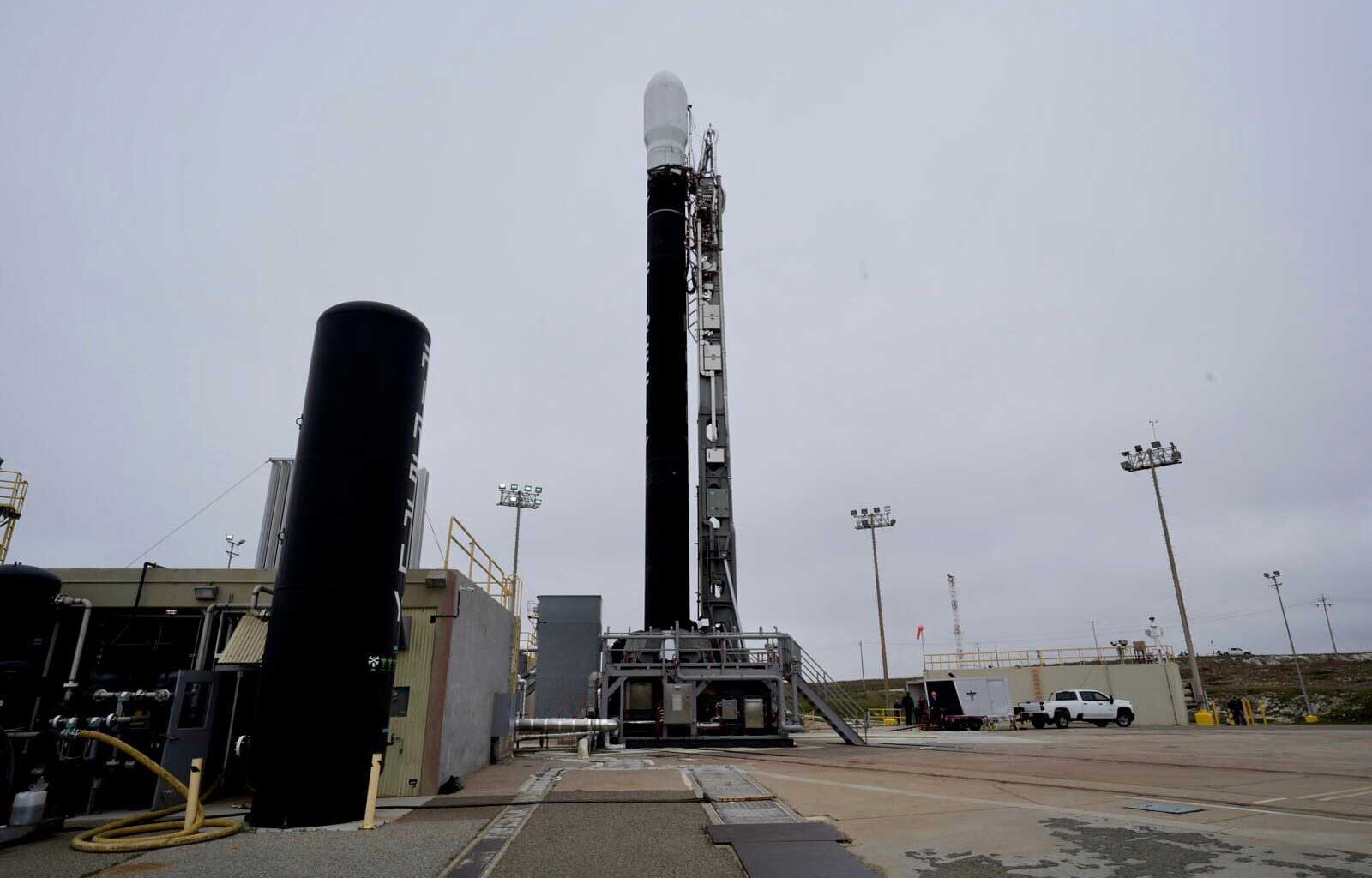
The Alpha rocket won’t fly Monday at Vandenberg Space Force Base, according to Firefly Aerospace.
“Out of an abundance of caution, Firefly made the decision to stand down on today’s Alpha Flight 7 test flight to investigate a sensor reading that was out of range,” Firefly representatives posted on social media.
Once verification is complete, the team will work with Vandenberg officials to confirm the next available launch date, Firefly added.
While Tuesday had been a backup opportunity, it wasn’t clear if the team could fully assess the sensor issue and make any needed fixes in time.
The team scrubbed Monday’s countdown after crews had started fueling the rocket for the Stairway to Seven mission.
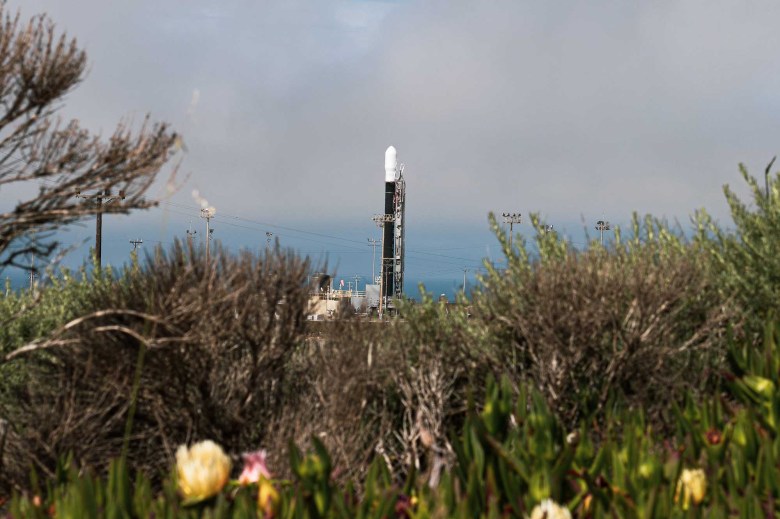
A Firefly Aerospace Alpha rocket stands at Space Launch Complex-2 on Vandenberg Space Force Base awaiting liftoff for its seventh mission. Credit: Firefly Aerospace photo
Following several flaws on earlier launches, Firefly has labeled this as a test flight to demonstrate the first- and second-staged boosters perform as planned.
The flight also will demonstrate several features from the next-generation Alpha rocket.
exas-based Firefly created Alpha to carry smaller payloads for national security, commercial and civil missions.
Alpha, stand 96.7 feet tal,l employs carbon fiber composite structure to lift heavier payloads at a lower cost, according to Firefly. The small vehicle can carry payloads weighing up to 2,205 pounds.
In comparison, Alpha stands shorter than the 229.6-foot-tall Falcon 9 rocket built by SpaceX. That firm’s rocket can deliver payloads to low-Earth orbit weighing up to 55,000 pounds.
The Alpha rocket debut liftoff met a dramatic end Sept. 2, 2021 shortly after lifting off from Vandenberg.
The firm’s following missions have encountered mixed results, with Alpha’s most recent liftoff in April experiencing a glitch that kept the satellites from reaching orbit.