
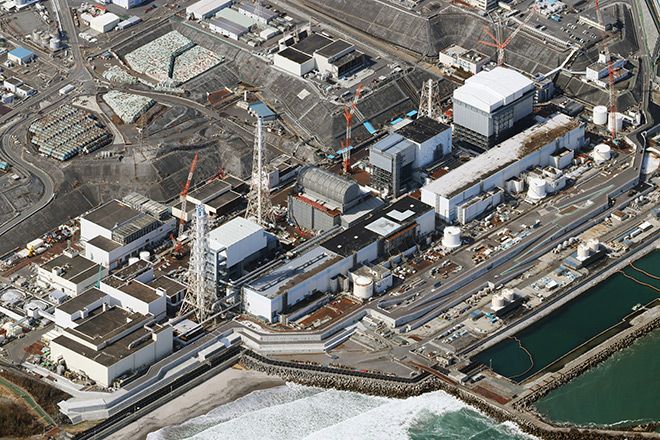
A research group is urging the government and Tokyo Electric Power Co. to redo their road map for decommissioning the crippled Fukushima No. 1 nuclear power plant by 2051, calling the goal unrealistic in a study published March 10.
The “Research group on the future of 1F decommissioning,” headed by Waseda University professor Shunji Matsuoka, is instead calling for a new approach focused on achievable interim goals.
Established in 2019, the group comprises sociology and nuclear power experts, as well as Fukushima Prefecture residents.
The group has consulted with officials from TEPCO, the economy ministry, and the Secretariat of the Nuclear Regulation Authority, among other experts, to discuss the challenges of the decommissioning work and Fukushima’s recovery.
The government created a road map in December 2011 aiming for completion of decommissioning by 2051, but progress has stalled in the long-term effort.
Less than one gram of an estimated 880 tons of melted nuclear fuel debris has been removed.
Matsuoka estimates that it will take 68 to 170 years to remove all the fuel debris from the three damaged reactors at the plant.
“Most experts in the nuclear field believe that it is impossible,” the proposal stated.
It warned that clinging to the 2051 deadline only to abandon it later will cause the government, TEPCO, and the advising Nuclear Damage Compensation and Decommissioning Support Organization to lose public trust and support.
Noting that the future of the decommissioning work is uncertain, the proposal argued that it is difficult to define the final state at this point.
Instead, it proposed setting an “interim goal” of reaching a state where the spent nuclear fuel, fuel debris and radioactive waste can be stably managed.
It stated that specific criteria for this interim goal require consideration from social aspects, such as cost, in addition to technical ones.
It said that discussing and considering the matter together with a wide range of people in Fukushima and Japan is important for gaining a social consensus.
The report also addressed the interim storage facilities near the plant that store the decontaminated soil and waste until their final disposal.
It stated that integrally managing waste from both the plant and the facilities is “an issue that should be considered broadly open to the people of Fukushima and Japanese society.”
The proposal can be found on the group’s website: (https://prj-matsuoka311.w.waseda.jp/research/)