
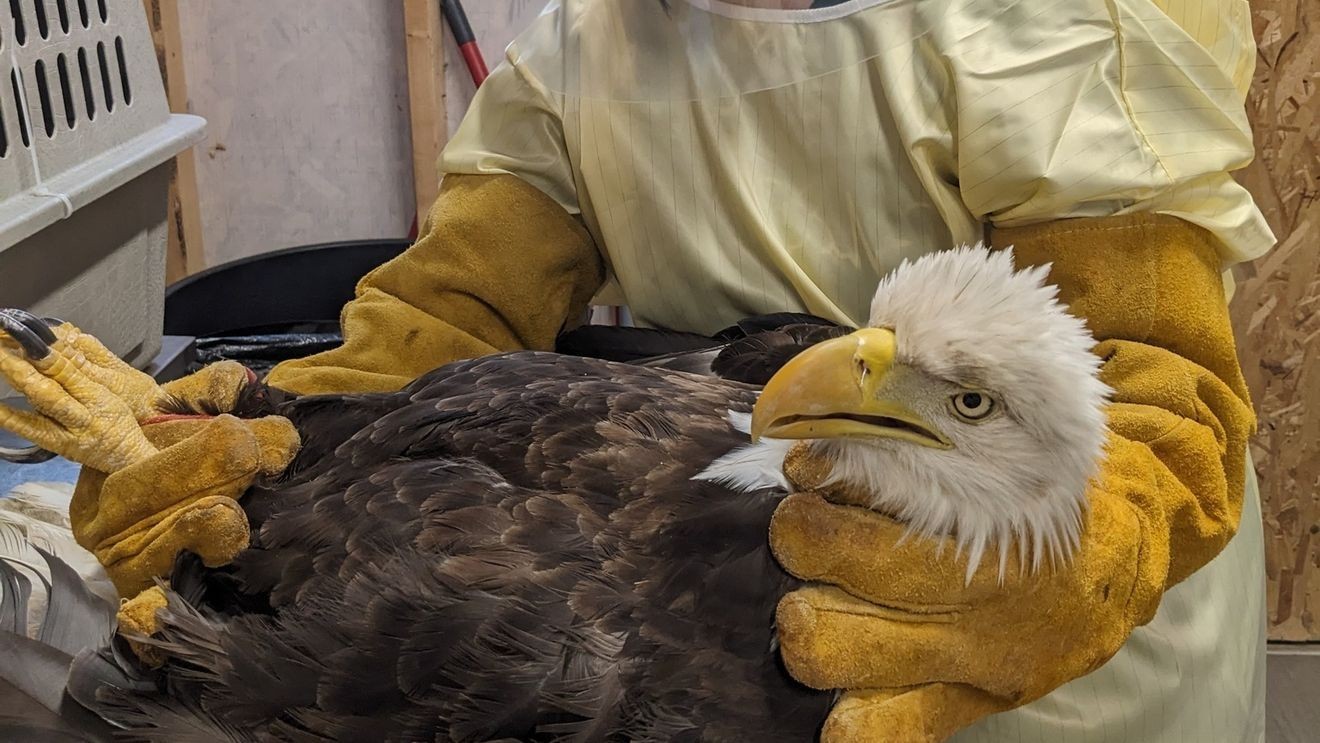
ROANOKE, Va. (WSET) — A bald eagle known as Maggie died from lead poisoning Monday morning after she was found too weak to fly beneath her nest of eggs in Craig County, where she and her mate had been documented for years.
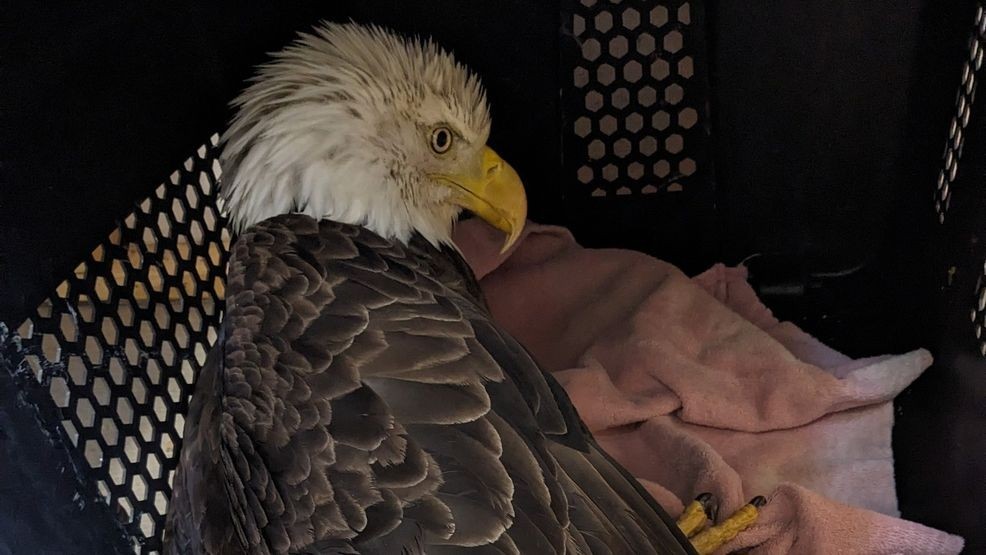
A bald eagle known to local wildlife watchers as “Maggie” was taken to the Southwest Virginia Wildlife Center of Roanoke on Sunday, March 8. She sadly passed away the following day due to lead poisoning. (Southwest Virginia Wildlife Center of Roanoke)
According to tests run at the Southwest Virginia Wildlife Center, Maggie had critically high lead levels. Experts say eagles often consume ammunition fragments while scavenging.
It wasn’t all that long ago that bald eagles were on the endangered species list, and if we’re not careful, we can easily put them back there, and simple things like lead are completely avoidable,” said Chester Leonard, executive director of the Southwest Virginia Wildlife Center.
The eagle’s mate remains at the Craig County nest, where he now needs to care for the nest alone. “He is capable of caring for the nest on his own, but it is much harder without his partner,” said the wildlife center.
SEE ALSO: Virginia Safari Park reopens with new animals and excitement
Leonard described the toll of treating poisoned birds at the center as emotional. “It’s just, from our perspective, seeing these big, beautiful birds coming in that should normally be healthy and thriving, just kind of crashing our arms. It takes a toll on us, too. It’s really an emotional moment having to deal with these patients,” he said.
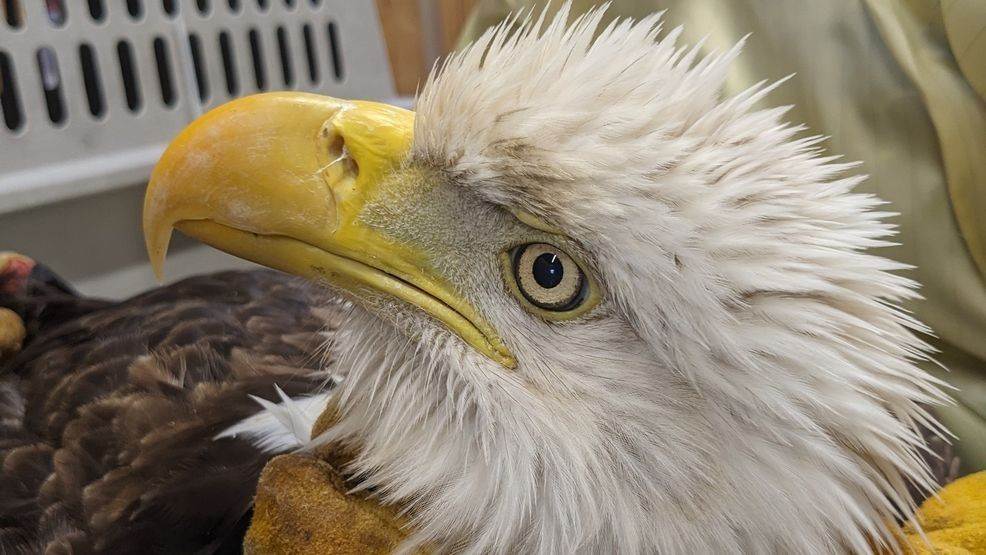
A bald eagle known to local wildlife watchers as “Maggie” was taken to the{ }Southwest Virginia Wildlife Center of Roanoke on Sunday, March 8. She sadly passed away the following day due to lead poisoning. (Southwest Virginia Wildlife Center of Roanoke)
Last year, nine out of 10 eagles admitted to the center had elevated lead levels. The issue is also growing among waterfowl and vultures.
The Southwest Virginia Wildlife Center is working to raise awareness and considering future legislative action to address the problem.