
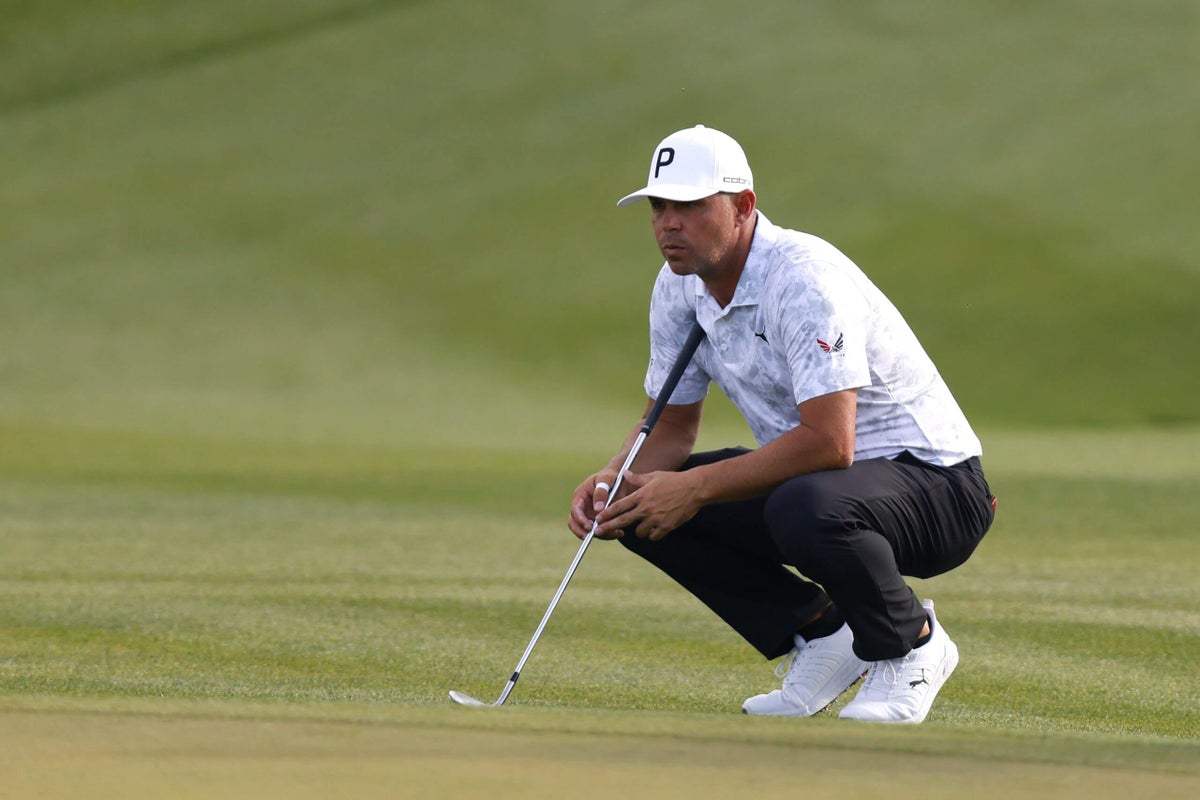
PONTE VEDRA BEACH, Fla. — Gary Woodland doesn’t have to hide anymore.
As he played a practice round at TPC Sawgrass on Tuesday, the major champion explained the difficult decision to publicly discuss his ongoing battle with post-traumatic stress disorder. He shared distressing details about his struggles — stemming from a 2023 surgery on his brain — in a sit-down interview with Golf Channel’s “Live From” on Monday evening.
“My belief is that this will be a big relief off my back, and I’ll be able to focus my energy where I need to,” Woodland said in a follow-up conversation with The Athletic.
Following the release of the sit-down interview, Woodland received an outpouring of support from the golf community, with dozens of peers sharing the 17-minute YouTube video.
Gary Woodland sits down with Rex Hoggard to discuss his struggle with PTSD following brain surgery in September of 2023. pic.twitter.com/zf7A3EFulk
— Golf Channel (@GolfChannel) March 10, 2026
“It’s obviously still pretty fresh,” Woodland said. “The tour is a big family, and they’ve given me a lot of support over the last couple of years since I came back. Today’s been different. It’s been nice. I think some people are surprised, obviously. The love and support has been amazing, and I’m very thankful for that.”
In the fall of 2023, doctors removed a benign lesion from Woodland’s brain in a craniotomy. In the months prior, the major champion didn’t know what was wrong with him — at 39 years old, he began experiencing extreme anxiety and panic attacks. He described waking up in the middle of the night during tournaments, clutching his bed, thinking he was falling to his death.
“Didn’t matter if I was driving a car or on an airplane. I thought everything was going to kill me,” Woodland said in 2024.
It turned out the tumor was pressing against the portion of his brain that controls fear, and the episodes were partial seizures. The surgery helped remove the majority of the growth through a “baseball-sized hole” in the side of Woodland’s skull.
Woodland returned to competition just four months later, but debilitating symptoms continued from the traumatic and life-threatening experience. Monday, for the first time, Woodland revealed he had been diagnosed with PTSD in the fallout of that recovery process, and his recovery has been a constant hurdle in his daily life.
“Every week I come out, and everyone is so excited and happy that I’m back,” Woodland said during the tearful Golf Channel interview. “And I appreciate the love and support, but inside, I feel like I’m dying. I feel like I’m living a lie.”
Woodland described one particularly harrowing episode at the Procore Championship last September. He entered the field that week for a Ryder Cup group-bonding trip, as he was elected an assistant captain of the U.S. team. On one hole, a volunteer walked behind him and startled him, triggering panic. Woodland broke down on the spot, his eyesight going blurry, and he started “bawling” in the middle of the fairway. Woodland pushed through the symptoms, remarkably finishing the event in a tie for 19th place.
“I don’t know how I did it,” Woodland said of that tournament in Napa Valley. “My caddie (Brennan Little) was amazing. He’s been with me through this whole thing. He understands. I couldn’t see, so he told me where to hit it — every putt. He just told me what to do, and I got lucky and made some putts. It helped that I was staying with the Ryder Cup guys that week. The captains all knew. When I got back, I didn’t have to hide it. If I wasn’t with those guys that week, I don’t think I would have been able to do that.”
Woodland said it was a process to weigh the pros and cons of bringing his struggle into the public eye. He consulted with professionals about the decision. But ultimately, Woodland doesn’t want to waste what little energy he has every day on hiding the condition. Coming clean about everything he was going through could serve as a stress-reliever, he said.
Woodland also knew that speaking about PTSD might help others who need a wake-up call. Woodland has talked to several veterans about the disorder, and there is a resounding consensus about the recovery: You cannot go about it alone.
“If someone needs to hear that, know that I’m battling too,” Woodland says.
After this week’s Players Championship, Woodland will play three consecutive events on tour. Doctors have said tournament golf isn’t necessarily an ideal environment for Woodland because it is often stressful and overstimulating. But Woodland maintains he will continue to play golf, as difficult as it is, because it is his dream.
“We’ll see how this goes,” Woodland said. “But hopefully, yesterday was a step of me gaining some energy and focusing on this recovery.”