
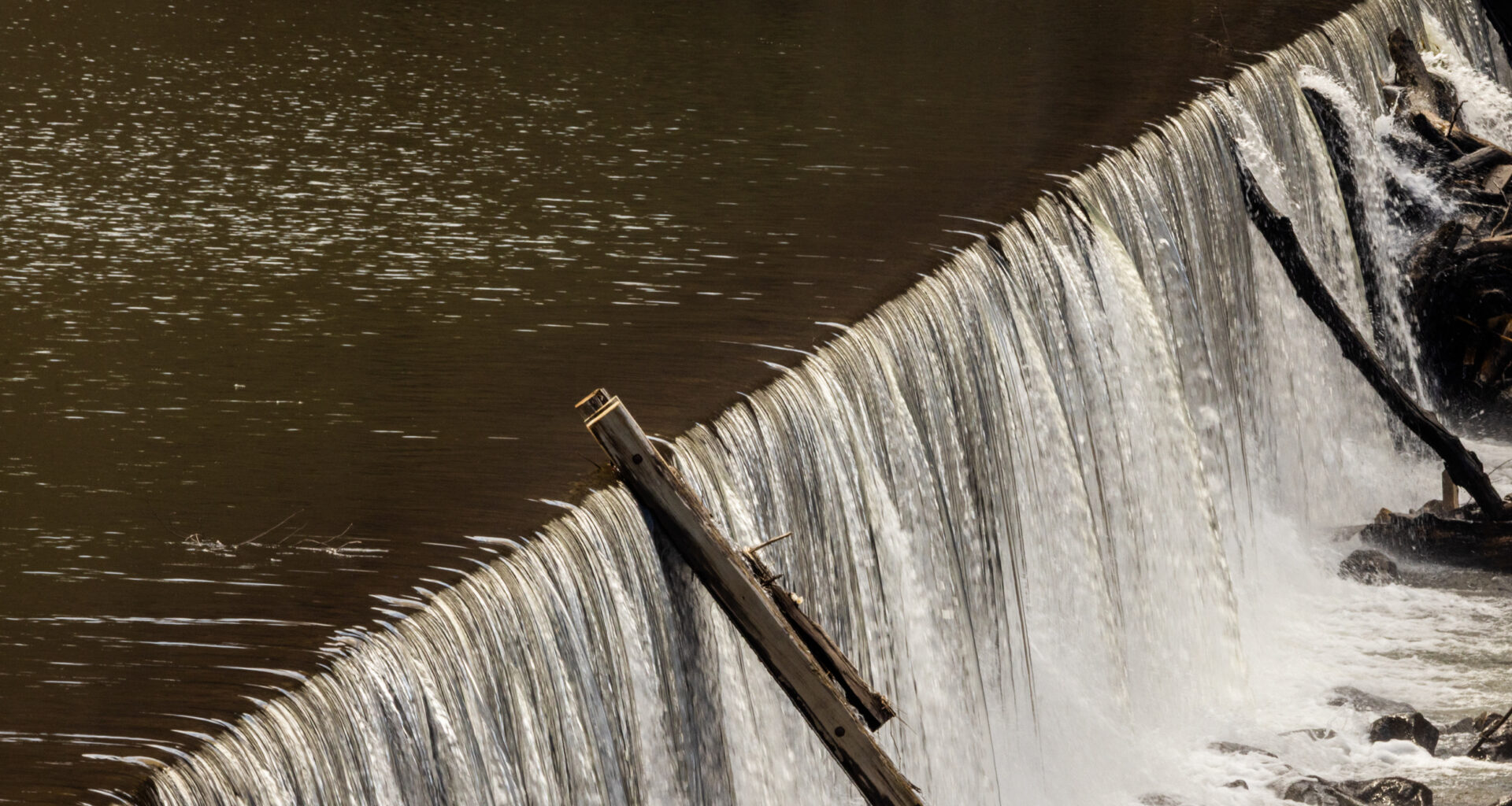
From its headwaters in Transylvania County, the French Broad River flows freely for 75 miles before hitting the 122-year-old Craggy Dam in Woodfin.
Environmentalists and outdoorspeople have long dreamed of the benefits of removing the dam, owned by the Metropolitan Sewerage District of Buncombe County. And in 2022, buoyed by the Bipartisan Infrastructure Law, which earmarked $800 million in federal funding for dam removal, the conservation nonprofit American Rivers met with MSD and Woodfin officials and agreed to commission a study on the matter.
Four years later, that study has arrived, and its results would seem to bode well for the notion of reconnecting the river. Furnished to MSD officials in December, it finds no environmental, economic, or regulatory prohibitions to dam removal. It cites benefits ranging from improved fish migration and whitewater sport to the reduction of flood levels and on-river safety risks. Meanwhile, a coalition of conservation groups, recreation interests and local businesses has backed the idea.
But at a Feb. 18 meeting of the MSD’s board of directors — its first since the feasibility report appeared — the utility’s staff threw cold water on the proposal and openly criticized its proponents.
The dam, built to harness hydroelectricity for Asheville’s streetcar system, is now used to help power MSD’s treatment plant. The MSD has little interest in replacing that energy, Tom Hartye, the MSD’s general manager, said at the meeting. He also accused American Rivers of disregarding the MSD staffers’ concerns and politically pressuring board members via a recently released video about the upsides of dam removal.
Hartye said the MSD has already picked a consultant to provide a valuation on the dam, a revelation that surprised and worried dam-removal advocates, who believe that process should be collaborative. They were also thrown by his suggestion that the utility could go ahead with costly improvements to the hydroelectric system before a decision is made on whether to keep the dam.
Their concerns are both practical — American Rivers would lead the efforts to find a buyer for the dam to facilitate the removal, and it can only do that if it’s confident in the valuation — and ethical, as they believe public participation is needed for a decision with potentially widespread impacts: Hundreds of thousands of people live within the watershed, and millions visit it every year.
“MSD is a public utility,” said Erin McCombs, the southeast conservation director for American Rivers and an Asheville resident. “This warrants the community understanding what’s really going on. It has really significant impacts. We’re just working to make sure that happens.”
Less flooding, more paddling
The unimpeded run of the French Broad upstream of Craggy Dam serves as the backbone for a sprawling freshwater ecosystem. Its network of waterways, from the river’s mainstem to its smallest tributaries, totals more than 3,700 miles — enough, if unfurled like a ball of yarn, to stretch between the coasts of the United States. Below Craggy, the river continues for 16 miles — connecting to another 1,460 miles of streams — before hitting Marshall’s Capitola Dam, itself the subject of an ongoing dam-removal campaign.
Now advocates’ task is to convince officials that connecting the two segments would bring wide-ranging benefits well worth the effort.
Kevin Colburn, who lives in Buncombe County and is the national stewardship director of the nonprofit American Whitewater, has worked on more than 100 dam-removal efforts in his career. Most of them wind up staying, he said; when dams are taken down, the impetus is often financial.
“It’s usually a reckoning with future costs,” he said. “It’s that the costs of modernizing a dam or making it stable through the future exceeds the benefit.”
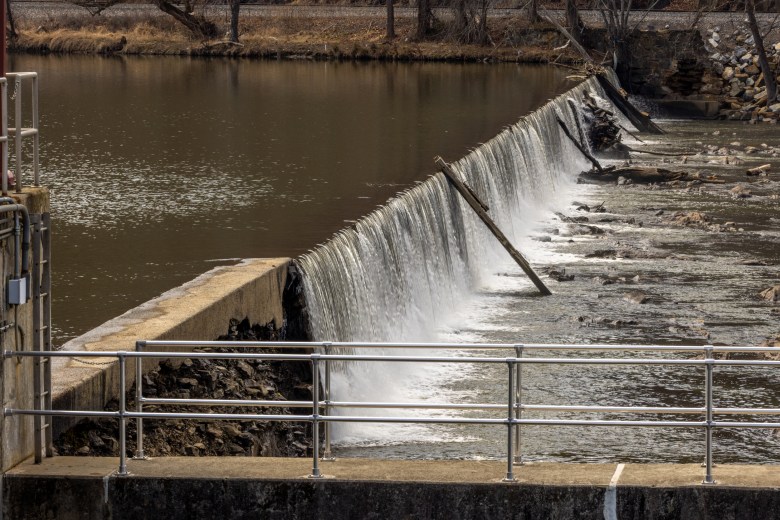
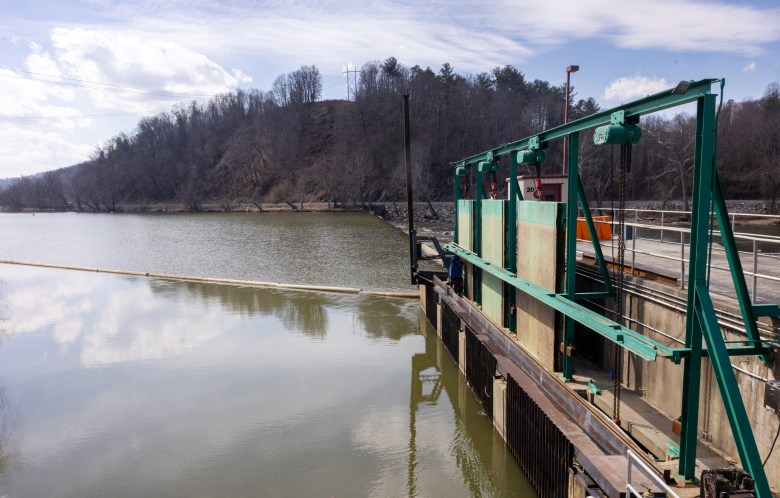
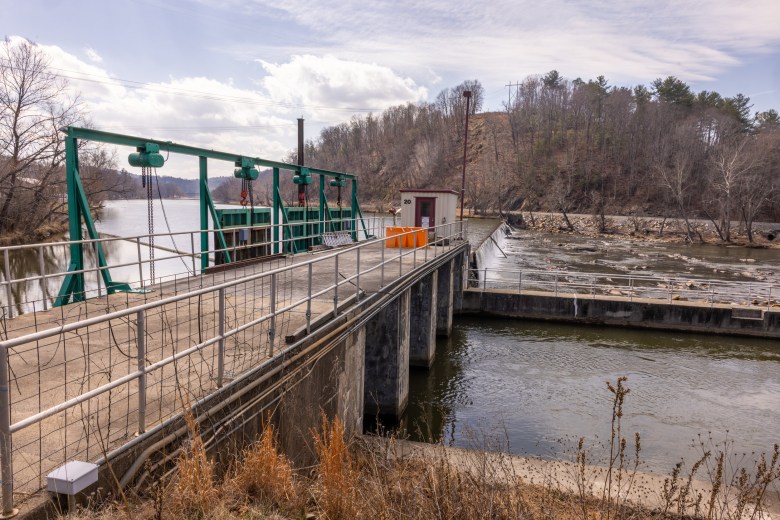
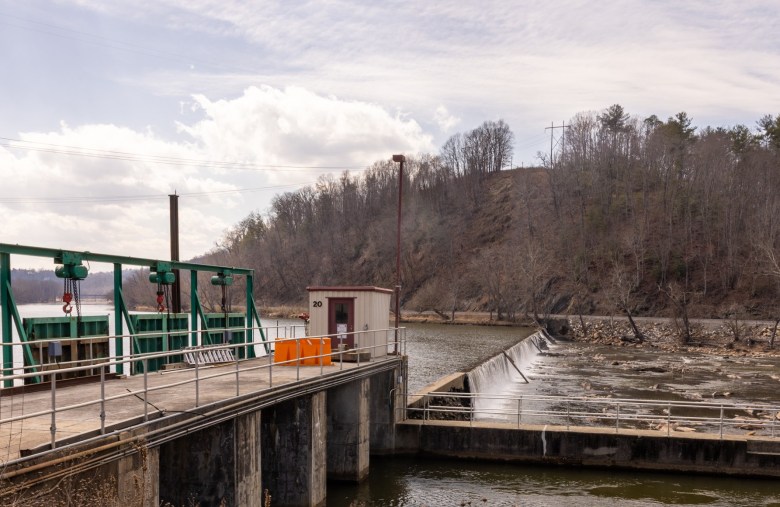 The Craggy Dam in Woodfin was built in 1904 to harness hydroelectricity for Asheville’s streetcar system and now helps power the Metropolitan Sewerage District of Buncombe County’s wastewater treatment plant. // Watchdog photos by Katie Linsky Shaw
While the feasibility study, funded by a grant from the North Carolina Wildlife Resources Commission, was underway, a pair of reports on the condition and future costs of the MSD’s hydroelectric system were also being finished. The latter reports found that the MSD would indeed face substantial maintenance costs: Some important aspects of the system were found to be in poor condition, while others were working well but nearing the end of their life expectancy. The necessary repairs — 40 of them in the coming decade alone — were projected to cost nearly $4 million.
Soon after, the feasibility study affirmed many of the prospective benefits to which advocates had pointed. Broadly, dam removal improves ecological health and water quality; as the report notes, the Environmental Quality Institute has graded water downstream of the dam as being worse than water upstream of it.
Connecting the river could also bring substantial recreational benefits, with economic ones in turn. Because of the dam’s location and property ownership on either side of the French Broad, paddlers have no legal access to the stretch of river between Riverside Park and Ledges Whitewater Park — “an outstanding whitewater run right in Asheville,” Colburn said.
Lowhead dams like Craggy are so hazardous that they’re commonly called “drowning machines,” and removing it would be a boon to safety, Colburn said, with a recreation boom on the French Broad poised to continue with the impending opening of the Taylor’s Wave whitewater feature at Riverside Park.
Though the feasibility study began before Tropical Storm Helene hit western North Carolina in 2024, the storm’s destruction along the French Broad underscores another benefit: the estimated reduction in flood stages of 7 to 10 feet for properties near the dam.
French Broad River Academy cofounder Will Yeiser told MSD board members last month that the change would protect the nonprofit school from regular heavy-rain floods and make it more resilient to major events like Helene. Watershed Drybags founder Eric Revels, speaking on behalf of businesses at the nearby Mill at Riverside, backed the removal proposal for similar reasons.
“I think that this question of dam removal, this opportunity for dam removal, is the single most important thing we should consider in our lifetimes for the health of the French Broad and what it means to our community,” said Marc Hunt, a former Asheville City Council member and a conservationist with a background in whitewater outfitting. “I truly believe that.”
Power struggle
These benefits would require some tradeoffs, most notably concerning the source of the MSD’s power. The dam produces nearly half of the utility’s power. The feasibility study points to two options for replacing it: buying it off the power grid from Duke Energy or building a solar power facility. The latter would allow the MSD to continue to limit its carbon emissions but would be the most expensive, and staff has already made clear that the idea is a nonstarter.
 “MSD is a public utility,” said Erin McCombs, the southeast conservation director for American Rivers and an Asheville resident. “This warrants the community understanding what’s really going on. It has really significant impacts. We’re just working to make sure that happens.” // Photo provided by Erin McCombs
“MSD is not interested in being in the solar business,” Hunter Carson, the MSD’s engineering director, told board members last month. A slide from his PowerPoint presentation expressed a nearly identical sentiment — in all-caps, underlined, with two exclamation points.
That leaves grid power. At a cost of $21 million over the next 27 years, per the feasibility report’s estimates, it would be cheaper than solar (between $27 million and $32 million, depending on tax credit qualifications) but more expensive than keeping hydroelectric (about $16 million). Dam-removal advocates have said they don’t want ratepayers to bear the cost of the change, so the difference would have to be built into the sale of the dam.
While increasing emissions isn’t ideal, the advocates said, they believe that, given the relatively small amount of energy used by the utility, it’s a reasonable price to pay for a transition away from hydroelectricity, itself not a truly green source.
But MSD staff may have already slammed the door on that route, too.
Hartye, the general manager, declined an interview request for this story. In lieu of commenting, he sent a copy of the PowerPoint Carson presented at the February meeting, along with a draft of his own prepared comments.
Those comments largely aligned with what Hartye told MSD board members, according to an audio recording reviewed by Asheville Watchdog. But he left out one crucial sentiment from his written notes: that the MSD and its engineer of record “do not think that dam removal is the best thing for the environment at large when weighing the reduction of (greenhouse gasses) provided by the dam versus improved fish migration, particularly with 2 other existing dams just downstream.”
For MSD, a rare case of public scrutiny
Though talks about removing the dam began years ago, McCombs said it was only when American Rivers delivered the feasibility report late last year that MSD staff made clear that they had no intention of pursuing dam removal on their own. Should the MSD board approve the concept, they would instead look to sell it to a third party, which would facilitate the removal — expected to cost between $6.3 million and $8.7 million, the feasibility study says — then return the land to public hands.
The 2021 Bipartisan Infrastructure Law funding that sparked the removal conversation has come and gone, but “there’s still a lot of money on the landscape,” McCombs said, at both state and federal levels. The North Carolina Department of Environmental Quality is interested in dam removal, she said, and the Division of Water Resources and Land and Water Fund have contributed to similar projects in the past. The U.S. Fish and Wildlife Service and National Oceanic and Atmospheric Administration have also supported dam-removal efforts.
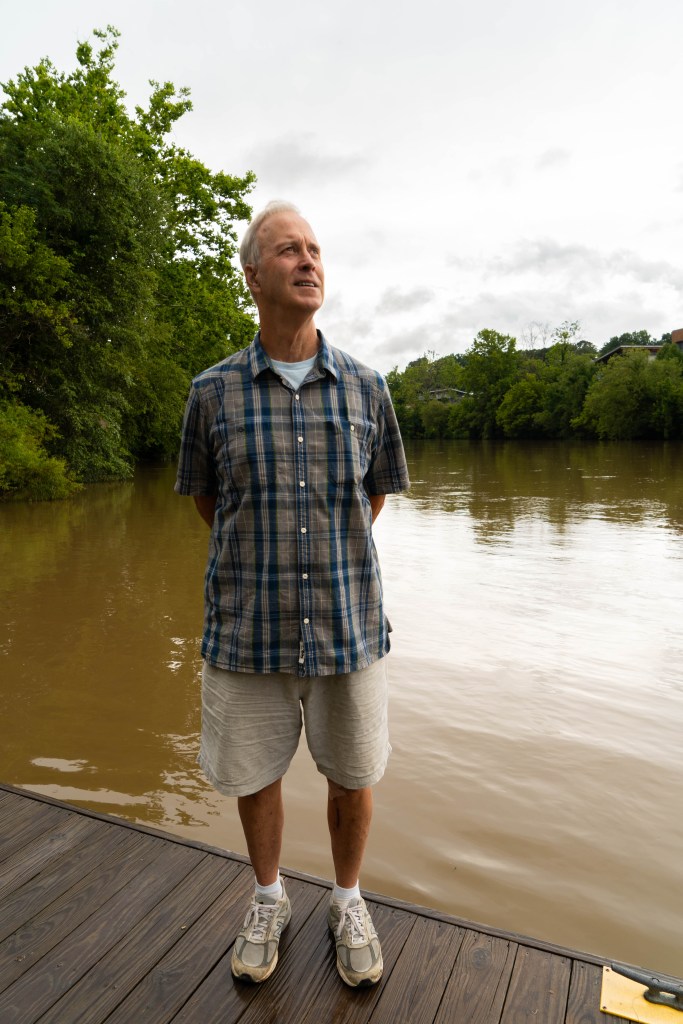 The decision about the removal of Craggy Dam is “the single most important thing we should consider in our lifetimes for the health of the French Broad and what it means to our community,” said Marc Hunt, a former Asheville City Council member and a conservationist with a background in whitewater outfitting. // Watchdog file photo by Starr Sariego
“We know in the wake of Helene that there is money available to make sure that communities could build back in a resilient way,” McCombs said.
Before any of that can happen, though, the dam needs a price tag. Expecting a collaborative effort, advocates said they were taken aback when Hartye said he planned to hire “a national, reputable firm to actually put a value and cost on the dam.” He later identified the firm as Charlotte-based Raftelis Financial Consultants.
Board members told Hartye that they agreed that the valuation process would need to move forward transparently, with the MSD and American Rivers coming to an agreement on the consultant. Those conversations could happen publicly at the next MSD board meeting on March 18. Asheville Mayor Esther Manheimer, a member of the board, said in an interview last week that an open process would allow all sides to be on the same page with regard to the technical and legal aspects of any sale.
“I am sympathetic to the problem of potentially ending up with a product that’s not helpful in this discussion,” she said.
MSD matters rarely spill into public view, and its meetings are almost never contentious, Hunt said.
“It is, ‘Approve a sewer line extension in this neighborhood over here and replace this extension over here and approve this contract,’” he said. “MSD is very well led. You can quote me on that. I am proud of the work our MSD has done: The quality of treatment, the discharge into the river, all of that is best practices approaches.”
But the utility’s technical and unglamorous remit also means it’s unaccustomed to public scrutiny, he said, perhaps a reason for the recent flaring of tensions.
“Here we’ve got a topic where there is a very large compelling set of interests that the public will have in the French Broad River that juxtapose against what is important internally to the MSD and their operations,” he said. “I appreciate how disruptive this moment can be for MSD leadership and management, but I will stand by the efforts that the coalition group and American Rivers and I myself have made to help the public learn about this and become aware.”
As to Hartye’s assertion that American Rivers ignored MSD staff input, McCombs said the utility weighed in throughout the process and that its feedback was incorporated. Its most recent comments came after the report was finalized, she said, and largely concerned specific technical matters, important to discuss down the road but not appropriate for this conceptual-design phase. She emphasized that the only way to move forward is hand-in-hand.
“We really want to continue to have the dialogue and for it to not be foreclosed,” she said. “American Rivers wants to be a partner and a coequal collaborator on the valuation study. It is a waste of money if the MSD puts together a valuation that the people interested in purchasing the dam don’t agree with.”
Asheville Watchdog welcomes thoughtful reader comments on this story, which has been republished on our Facebook page. Please submit your comments there.
Asheville Watchdog is a nonprofit news team producing stories that matter to Asheville and Buncombe County. Jack Evans is an investigative reporter who previously worked at the Tampa Bay Times. You can reach him via email at jevans@avlwatchdog.org. The Watchdog’s reporting is made possible by donations from the community. To show your support for this vital public service go to avlwatchdog.org/support-our-publication/.
Related