
EDITOR’S NOTE: Call to Earth is a CNN editorial series committed to reporting on the environmental challenges facing our planet, together with the solutions. Rolex’s Perpetual Planet Initiative has partnered with CNN to drive awareness and education around key sustainability issues and to inspire positive action.
The Nkangala people of southeast Angola have an origin story: One day, a small elephant walked away from the herd and headed for the Quembo River. At the water’s edge, it began to remove its skin. A watching hunter helped the elephant, and from the creature, a woman emerged. The two formed a union, and from them, the Nkangala were born.
They see themselves as the children of elephants, and today they consider themselves the sacred animal’s keeper. But for decades, the Nkangala have been protecting ghosts.
A 27-year civil war beginning in 1975 made exploration of Angola’s remote highlands — already a near-impenetrable, largely uninhabited landscape the size of England — impossible. It also made it the perfect place for the world’s largest land animal to hide.
South African explorer Steve Boyes dreamed of this herd for a long time. Starting around a decade ago he began venturing into the land, setting 180 camera traps, motion and acoustic and heat sensors, and flew over it in a helicopter. No elephants materialized. They became Boyes’ obsession; a compelling mystery that pulled him into the wilderness, even as part of him questioned whether it was a mystery best left unsolved.
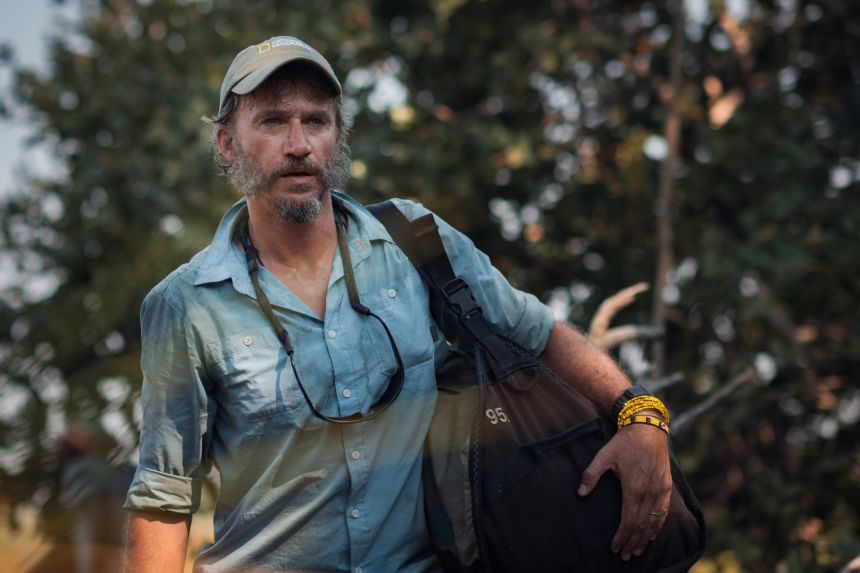
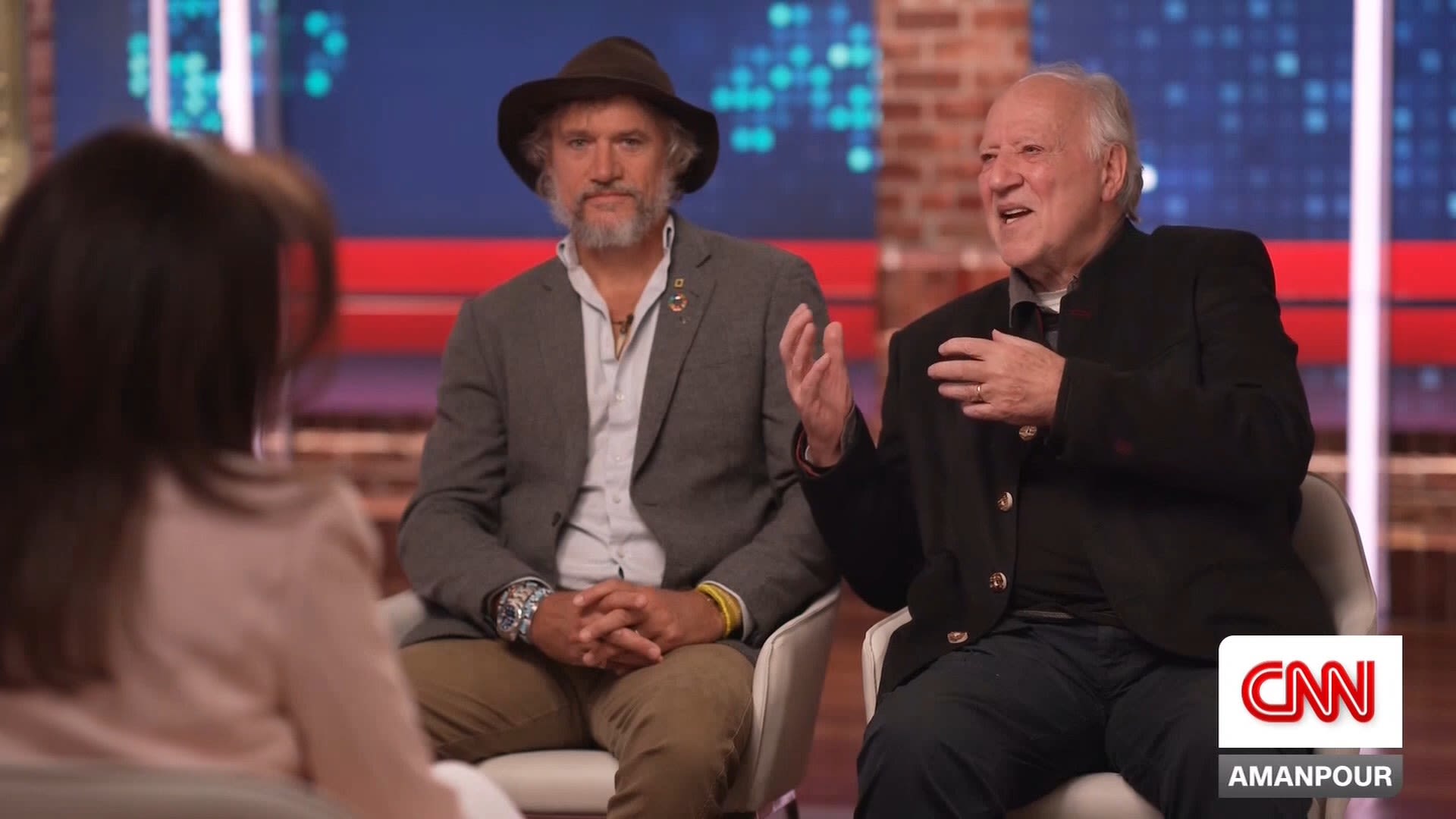
“It’s almost like the pursuit of the white whale of ‘Moby Dick,’” said feted German director Werner Herzog, who made Boyes and his quarry the subject of his latest film. His documentary “Ghost Elephants” follows Boyes’ 2024 expedition to find Angola’s mythic herd. The filmmaker, in his inimitable style, narrates the story of the explorer and a team of KhoiSan master trackers from Angola and Namibia, who achieved what technology could not.
“Normally,” Herzog said, in nature documentaries “a crew finds a new species or is successful. There’s high fiving and tears being shed. Not so in my film. I’m saying one thing that you never hear: now Steve Boyes has to live with his success.”
After years of chasing ghosts, Boyes caught up with the elephants. It’s now his mission to protect them.
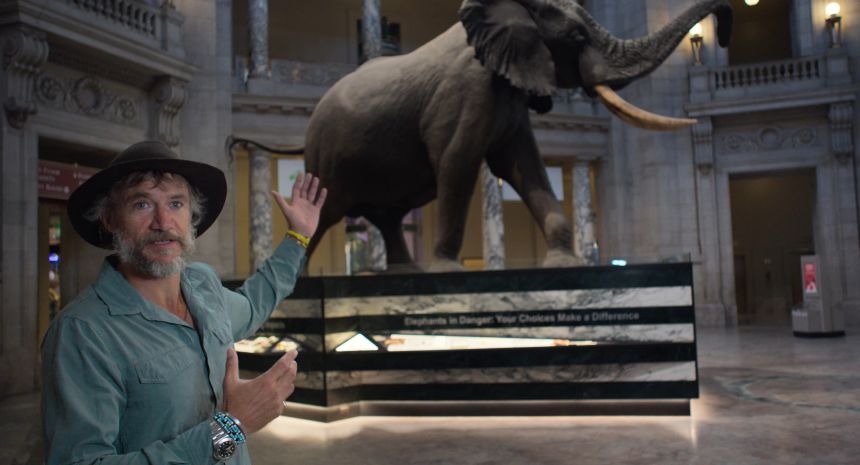
Herzog’s film begins in the Smithsonian’s National Museum of Natural History in Washington, DC. There, Boyes meets “Henry,” the remains of a 13 foot tall, 11-ton bull elephant, the largest ever recorded. The animal was shot dead by a Hungarian-born hunter in Angola in 1955, and Boyes posits it’s an ancestor of today’s “ghost” population.
The explorer had by this point spent many months scouring Angola’s highlands and its vast plateau comprising wetlands, peatlands and forests. The plateau is known in the local Luchazi language as “Lisima lya Mwono,” the Source of Life, and it’s from there that the Okavango River flows south. Helicopters cannot land on the terrain and cars can only travel so far, Boyes told CNN. Even motorbikes have their limitations and must be carried over rivers. Along parts of the fringes lie active minefields.
“There was this eerie feel to the place. There’s just nothing, no people,” said Boyes. “I’d find (elephant) footprints and I’d run after them as far as I could and then … nothing.”
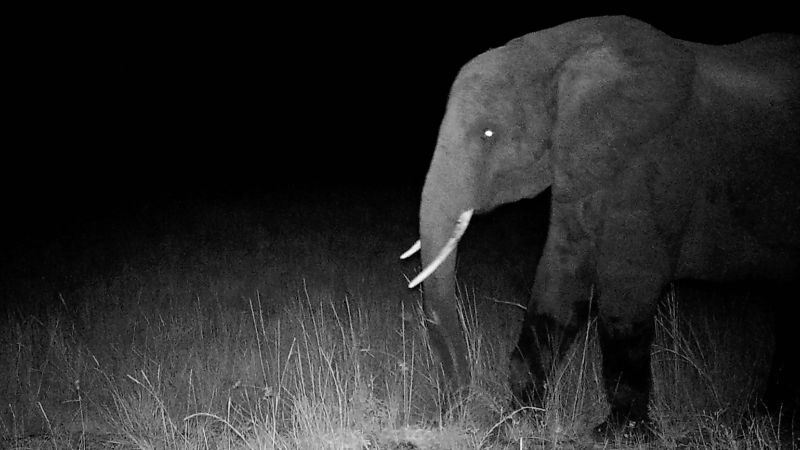
He and his team had documented 275 new species and new populations of cheetahs, leopards and lions, but found no elephants. Then, after seven years studying the area, a camera trap shared nighttime images of a female elephant. Proof. Efforts were redoubled.
 ” class=”image__dam-img image__dam-img–loading” onload=’this.classList.remove(‘image__dam-img–loading’)’ onerror=”imageLoadError(this)” height=”1080″ width=”1920″/>
Werner Herzog on his new documentary “Ghost Elephants”
 ” class=”image__dam-img image__dam-img–loading” onload=’this.classList.remove(‘image__dam-img–loading’)’ onerror=”imageLoadError(this)” height=”1080″ width=”1920″ loading=’lazy’/>
Werner Herzog on his new documentary “Ghost Elephants”
4:11
The 2024 expedition attempted to see the elephants by eye and to take samples, to learn more about the genetics of the isolated population, and if Henry was related.
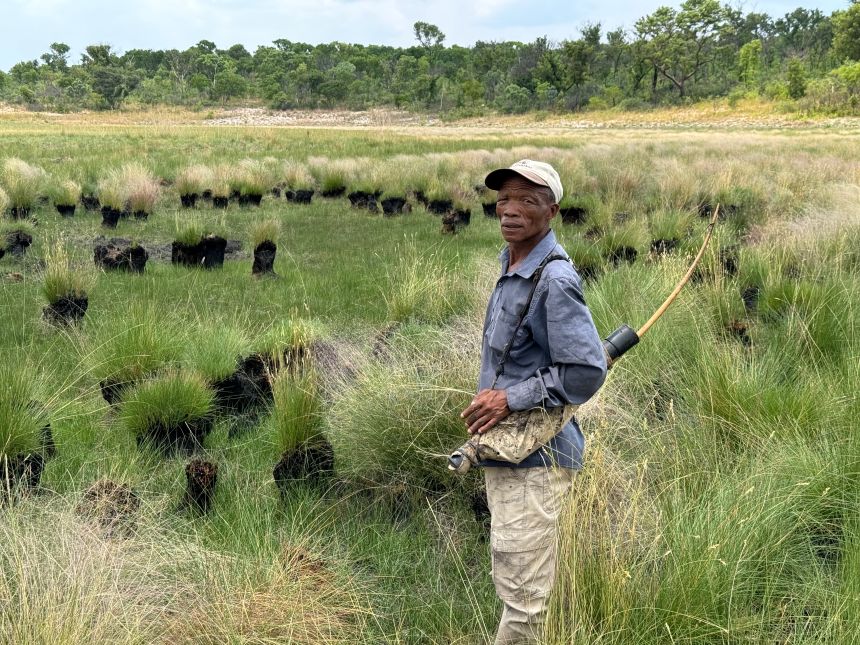
Boyes and Angolan ethnobiologist Kerllen Costa enlisted three trackers living in Namibia: Xui, Xui Dawid, and Kobus. Herzog initially joined the camp as an adviser to the film crew, “but on the first (or) second day of filming it was obvious I had to step in,” he said. “I was shaping the parallel, deeper, separate story about dreams, ghosts and the spirits of elephants.”
The writer-director shows community members dancing until Kobus falls into a trance, where he feels the spirit of an elephant enter his body, reflecting what Herzog called the film’s “inner voyage.”
Once in Angola, the group added more Angolan trackers and connected with leaders of Luchazi kingdoms on the margins of the highlands, including the Nkangala, who granted them permission to enter the land on the condition they took a team of the king’s hunters with them.
After months in the highlands, the expedition was heading toward failure. “I’d completely given up,” admitted Boyes.
The elephants’ acute hearing forced the team to work in silence, making planning tricky. One time, Boyes said, he gave someone an instruction out loud and other team members banned him from tracking for two days. “I went and camped away from camp by myself (and) sulked,” he said.
With only a few days left, at dawn Xui followed tracks left by the king’s hunters overnight. Boyes was in tow. Two hours later, they were face to face with a bull.
“Xui walked straight to that elephant,” said Boyes. “I am convinced that he knew. I had no idea. I was just going for my last walk, defeated, hoping Werner would be happy with a film with no evidence.”
Instead, Boyes’ camera phone recorded an elephant around 12 feet tall, he estimates — “probably two foot taller than any other elephant I’ve seen (and) three tons heavier.” He was massive, but also noticeably different to the average African elephant, with stubby tusks and longer legs. Based on tree markings from where he rubbed, and Boyes’ own observations, he believes this bull may be the largest land mammal alive.
The bull fled when a customized arrow designed to collect genetic material was fired at him. Boyes’ team pursued the animal on foot for five hours before their water ran out and they were forced to turn back, he said.
The explorer returned to camp, and from Angola, with samples that would help unlock the secrets of the bull, Henry and Angola’s ghost elephants. They may also be a vital tool in the herd’s survival.
The emotional, grueling dream discovery may be behind him, but Boyes continues his search, returning to Angola’s rugged highlands twice since his initial sighting of the bull in 2024.
From these subsequent expeditions, the team have collected more DNA from other ghost elephant herds: “We found one breeding herd had five babies, and we got to sample from each of those dung to understand who the fathers are,” Boyes said.
Analyses of the DNA analysis from the filmed 2024 expedition have shown so far that the ghost elephants are distinct from all other sequenced populations.
“The matrilineal line of the ghost elephants is entirely unique,” Boyes said, “it isn’t replicated anywhere else in Africa, and it also demonstrates that these animals have been isolated with the Nkangala people in those valleys for a very long period of time.”
But painting the full picture of Henry has been tricky. The first DNA samples taken from Henry’s skull yielded insufficient data for definitive answers on his ancestry, Boyes told CNN. He hopes new samples will eventually solve the mystery.
While much is still to be revealed about the ghost elephants through genetics, their exact whereabouts will remain secret, Herzog said. The film vividly shows how remote and harsh the landscape is and how inaccessible these giants are.
Beyond an unwavering search for the elusive elephants, there is another ghost Boyes is after. “I call it our unicorn — an extinct black rhino (the Chobe rhinoceros) that disappeared in Botswana, Namibia and Angola,” Boyes said. “It was mainly in the Okavango Delta in the early 80s, just when the poaching was at its worst.”
Hunters once reported seeing the rhinos west of where the ghost elephants roam, in the same vast wilderness Boyes now surveys. But with each passing year, those accounts fade further into the past and the trail grows colder. “We have done lots of searching for these animals as well,” he said.
Lisima lya Mwono also carries an ethereal pull for Boyes — a chance to feel Earth in its most raw, untouched form. “It’s the experience of going back in time and it’s perfect again … places so uncreated by man, only created by elephants,” Boyes said. “It’s a dreamscape and I can’t get enough of it.”
Out of that devotion to the place, he founded the Lisima Foundation, a nonprofit that he calls his long-term commitment to the landscape and its people.
The African way of life is to live with wildlife, Boyes said — and conservation must follow that principle by partnering with local communities and traditional leaders, who are the guardians of this landscape.
In January 2026, Lisima lya Mwono was designated as Angola’s first Wetland of International Importance under the Ramsar Convention — a global environmental treaty dedicated to protecting wetlands. The designation recognizes the region’s importance in sustaining water systems and biodiversity across the Okavango basin.
The discovery of the ghost elephants has become a driving force behind safeguarding the mystical land they inhabit: “That is the impact of this film,” Boyes said, “That (this place) will be one of, if not the largest, protected landscapes on the planet.”