
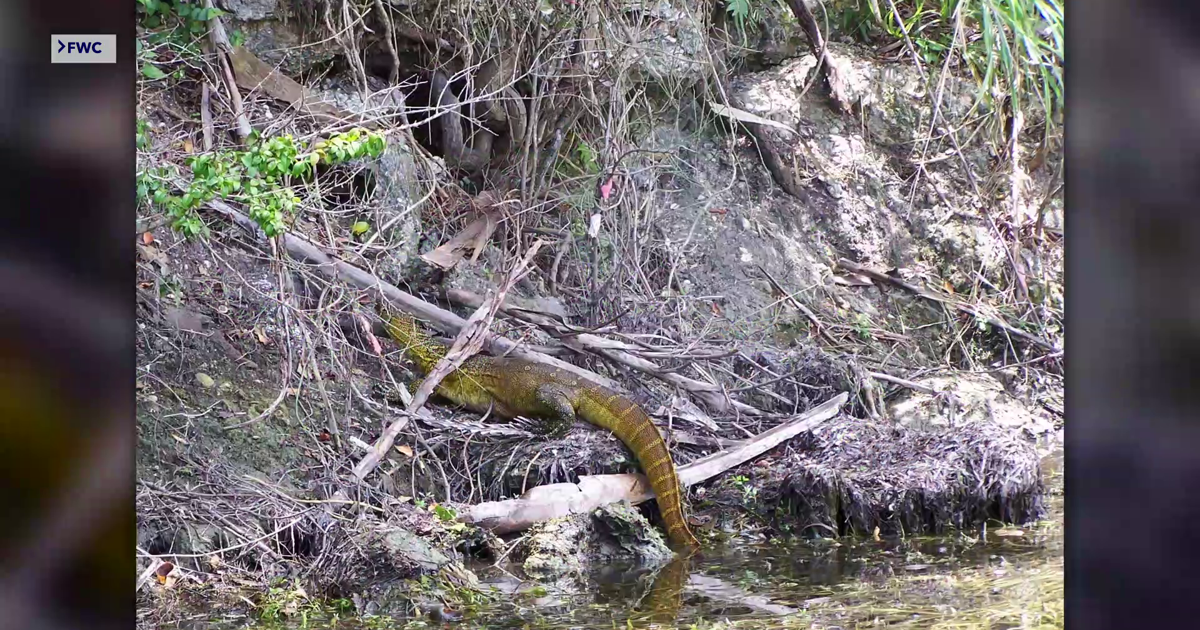
CAPE CORAL, Fla. — Nile monitor lizards, an invasive species, are making their presence known in Cape Coral as temperatures rise.
These reptiles are not only large and hungry but also pose a threat to native wildlife.
Cape Coral environmental biologist Harry Phillips shared his experiences with these creatures, noting their defensive behavior.
“I have been whipped by their tail, which is like one of their defenses, more so than been scratched or bitten,” said Phillips. “It feels like getting whacked with a towel.”
Phillips described the lizards as having a distinctive appearance.
“They are a, like a olive green color. They have these yellow sort of medallions that circle around their body, and they’re bright yellow, and they’re slender snake like they, they have a flicking tongue, like a snake,” said Phillips.
These lizards are attracted to water, much like the residents of Cape Coral.
“Much like residents here in Cape Coral, they just want to be near the water and enjoy that water source,” said Phillips.
Cape Coral’s extensive canal system makes it a prime location for these lizards. Phillips highlighted their impact on local wildlife.
“They could potentially eat, threatened species such as the burrowing owls,” said Phillips. “We do find whole clutches of turtle eggs, aquatic turtle eggs in their gut contents, which could include, of course, the gopher tortoise, which is another protected species here in Florida.”
Phillips explained that this time of year is particularly active for the lizards.
“This time of year they get hungry,” said Phillips. “They haven’t really been eating over the dry winter months. So we have a lot of luck getting them this time of year.”
Over the past 20 years, nearly 800 Nile monitor lizards have been captured in Cape Coral. Phillips emphasized their intelligence but noted they can still be trapped.
“They’re very smart and but, you know, they’re not smart enough to where we can’t trap them,” said Phillips.
The city of Cape Coral reported that Nile monitor lizard numbers are declining due to trapping and development. However, there are still pockets of them throughout the area. Residents are encouraged to report sightings to the city’s trapping team, and those outside the Cape Coral area should contact the Florida Fish and Wildlife Conservation Commission.
The FWC monitors local populations of Nile monitors and considers them a high priority for removal. They work with partners to control populations through surveys and removals. The FWC also regulates the possession of live Nile monitors.
Residents who see a Nile monitor lizard should contact the FWC’s Invasive Species Hotline and provide an exact location. The FWC advises against attempting to capture the lizards, as they can be dangerous.
For more information on Nile monitor lizards and how to report sightings, visit the FWC’s website.