
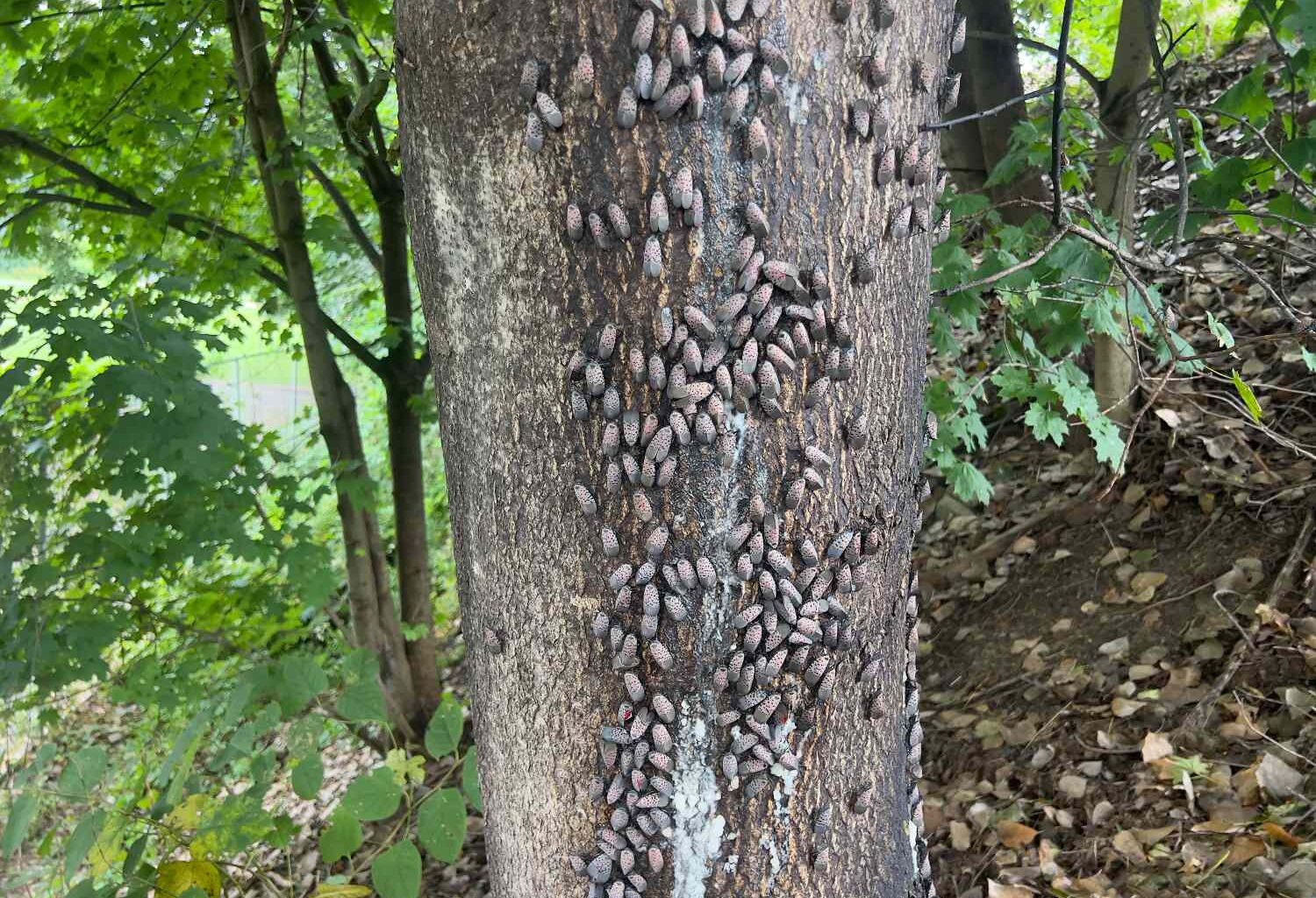
While native insects—even those we don’t love such as mosquitoes, biting flies, and ants have roles to play in our eco-system, invasive insects are a different story. These are species that have hitchhiked their way to the U.S. on plants, in baggage, and on cargo ships or planes to find a new home here.
The biggest concern is that, if left unchecked, invasive pests can devastate native plants, wildlife, and crops. “Invasive insects often spread in larger numbers than they normally would do because they have no natural competitors, disease, or predators,” says Lewis Bartlett, PhD, assistant professor of entomology and honeybee health at the University of Georgia. “They have none of the usual limitations.”
If you think you’ve seen an invasive pest, do some sleuthing. “With an invasive pest such as spotted lanternfly, for example, a healthy assumption is that if you see one, there are probably more,” says Chris Hayes, PhD, extension associate professor of structural pest management at North Carolina State University. “Be vigilant, inspect the plants in your garden, and report any suspected sightings.”
To help stop the spread of invasives, contact your local university coop county extension service, state department of agriculture, or the USDA Animal and Plant Health Inspection Service (APHIS) to report a sighting.
While invasive pests vary from region to region across the country, here are a few of the most concerning found in the Southeast and what you should do if you see one:
Yellow-Legged Hornet
Credit:
Allan Smith-Pardo, USDA APHIS PPQ, Bugwood.org
Native to Southeast Asia, the yellow-legged hornet (Vespa velutina), or YLH, is a social wasp species, meaning it builds large nests with up to 6,000 workers. “Yellow-legged hornets feed on a variety of insects, including honeybees,” says Anne LeBrun, APHIS Plant Protection Quarantine (PPQ) national policy manager for yellow-legged hornet. “If allowed to establish in the United States, these invasive pests could threaten populations of domestic and feral honey bees—some of which are already endangered—and other native pollinators. Their presence could also disrupt the pollination of many crops.”
First identified in 2023 in Savannah, Georgia, YLH has since spread about to several counties in South Carolina. “YLHs are specialist predators that are uniquely able to position themselves outside a hive to intercept returning honeybees,” says Bartlett. “They also gather nectar and forage on protein, such as roadkill, to feed their larvae. They are of significant concern right now due to the risk of establishment because we have seen how destructive YLH has been in other places, such as Europe and in its non-native ranges in Asia.”
What they look like:
YLHs are about an inch long. The hornet’s head is mostly black with some front-facing yellow or orange and black eyes. The thorax is mostly solid brown or black, while the abdomen has alternating bands of dark brown/black and yellow-orange. The legs are brown or black, ending in yellow segments, says LeBrun.
These insects also often may be mistaken for bald-faced hornets or other similarly-appearing species, says Bartlett. They can sting (though it’s no worse than the sting of any other wasp), but the danger is that you may encounter them in much larger numbers due to their nest size.
When you’ll see them:
You’ll likely see YLH in the spring and early summer with peak activity in the afternoon. In February or March, they build their first nest, or embryo nest, which resembles the papery nest of other kind of hornets or yellowjackets. It’s often attached to the eaves of a house or shed. By summer, they abandon the first nest and build a larger secondary nest, usually in a tall tree, says Bartlett.
What to do:
In early spring, small embryo nests that can be reached from the ground can be treated with sprays as you would any wasp. But if you’re allergic to stings, it’s high up in a tree, or it’s a large nest (and these nests can be so big that they fill the back of a pickup truck!), it should be professionally removed, says Bartlett.
Regardless, take a photo and report it to your state’s department of agriculture, says LeBrun. Some states, such as Georgia and South Carolina, also have YLH websites for reporting.
Spotted Lanternfly
Credit:
Getty Images
Native to Asia, the spotted lanternfly (Lycorma delicatula), or SLF, is a planthopper that feeds on a wide range of plants, including grapevines, hops, stone fruit trees, and hardwood trees. When it feeds, it excretes a sticky, sugary fluid that promotes sooty mold growth that can further damage plants. “The SLF lays eggs on any hard surface including grills, vehicles, trailers, firewood, outdoor furniture, bikes and toys,” says Melinda Sullivan, APHIS PPQ national policy manager for spotted lanternfly.
First detected in Pennsylvania in 2014 likely from goods shipped from overseas, today 19 states have some degree of infestation, including Maryland, South Carolina, North Carolina, Tennessee, Georgia, Virginia, West Virginia, and Kentucky in the South, says Sullivan.
While SLFs don’t bite people or pets and won’t harm your house like termites, for example, “the main concern is their long-term impact on native eco-systems and certain industries and crops that could be devastated, such as grapes or hops,” says Hayes.
What they look like:
The SLF looks different depending on its life stage. From late March to September, the nymphs are black with white spots, then they turn red as they develop and grow larger. From June to September, you’ll see the adults, which are about 1-inch-long and ½-inch wide. With large, visually striking wings, adults are easier to spot than other pests, says Sullivan. The forewings have black spots at the front, with a speckled band at the rear. Hind wings are scarlet with black spots at the front and white and black bars at the rear. The abdomen is yellow with black bars.
Newly-laid egg masses, which contain 35 to 50 eggs, first look like a goopy, grayish mass, which then becomes dry and brown, says Hayes. SLFs typically lay the eggs on surfaces such as trees but will also leave behind egg masses on bricks, stones, fences, grills, and vehicles.
When you’ll see them:
You’ll see a different life stage throughout the year, but the vividly-colored adults are easiest to identify. Both nymphs and adults frequently gather in large numbers when feeding, clustering near the base or in the canopy of a plant, making them more difficult to see them, says Sullivan.
What to do:
Bottom line? Kill it first, then report it, says Hayes. Chances are, there’s more than one SLF in your garden, so inspect your yard. Learn what plants it feeds on and look for signs of these pests; then contact a professional pest control operator if you need to protect plantings in your garden.
You also should smash and scrape any egg masses you find, says Sullivan. In addition, when leaving a quarantined area, check yourself, vehicle, and belongings (such as camping equipment or RVs) to ensure you don’t have hitchhikers that you inadvertently transport to a new location. Keep windows closed because they can sneak inside vehicles. Also, take a photo of any suspected SLF in any of its life stages, and send to your state’s department of agriculture.
Asian Longhorned Beetle
Credit:
Getty Images
The Asian longhorned beetle (Anoplophora glabripennis), or ALB, is a wood-boring insect that attacks and kills hardwood trees. “ALB like maple trees the most, but it also likes birches, buckeyes, elms, and willows,” says David Gruchot, APHIS PPQ national policy manager for ALB. It will sometimes attack ash, golden raintree, katsura, London planetree, mimosa, mountain ash, and poplar trees, too.
Infested trees do not recover and will die. They also often become safety hazards. Branches can drop and trees can fall over, especially during storms, says Gruchot. First found in here in 1996, likely from wood packing materials from Asia, ALB is currently found in South Carolina, as well as in several northern states.
What it looks like:
In the warmer months, you’ll see the adult insects, which have black and white antennae that are longer than the insect’s body. The shiny black body, about the size of an almond, has white spots. It has six legs and feet that can appear bluish in color, says Gruchot.
When you’ll see them:
You may see ALBs in the warm weather months, but tree damage is observed year-round. Signs of an infestation include: Round exit holes in tree trunks or branches about the size of a dime or smaller; egg sites that are oval or round wounds chewed into the bark with weeping sap; sawdust-like material, called frass, found on the ground around the tree or on tree branches; and branches or limbs falling from an otherwise healthy-looking tree, says Gruchot.
What you should do:
Try to get a photograph of the suspected insect. If you can, capture the insect and freeze it inside a durable container to save it for identification. Most importantly, file an online report or contact your state’s plant health director, says Gruchot.
Emerald Ash Borer
Credit:
Getty Images
Native to Asia, the Emerald Ash Borer (Agrilus planipennis), or EAB, is a wood-boring beetle that is responsible for the death and decline of tens of millions of ash trees in North America. “EAB lays its eggs in the bark crevices of ash trees. The eggs hatch and the larvae burrow into the tree where they feed,” says Ron Weeks, PHD, APHIS PPA national policy manager for emerald ash borer. APHIS has detected EAB infestations in 37 states and the District of Columbia.
EAB was first found in Michigan in 2002. Unfortunately, EAB is difficult to detect early when pest populations are small because damage to the trees will be hidden under the bark, and the tree decline is gradual, says Weeks. The beetle is well-suited to the North American climate and is a good flyer, spreading naturally. People also contribute to its spread by moving EAB-infested firewood, logs, or nursery stock.
What they look like:
EAB adults are about ½-inch long and are metallic green with a coppery-red abdomen. The larvae burrow into the tree and feed on the inner bark and phloem, creating S-shaped markings. They pupate in winter and emerge as adults in spring, leaving D-shaped exit holes, says Weeks.
When you’ll see them:
Adults may be seen all summer and are most active during the day when the weather is warm and sunny. During storms, they move to protected locations in bark crevices or cling to foliage, says Weeks. You also may see damage such as dead branches at the top of ash trees and vertical cracks in tree bark. Another potential sign is an increase in woodpecker activity in the affected tree.
What you should do:
If you think you’ve spotted an EAB or notice ash tree damage caused by an infestation, complete an report form, says Weeks. You also can snap a picture of the insect and damage to ash trees, or place an adult in a container and freeze it or larvae in a container with rubbing alcohol to aid proper identification.