
Young adults with depression exhibit unusual cellular energy patterns in both their brains and blood, characterized by cells that overwork at rest but fail to respond adequately to physical stress. This biological signature of fatigue suggests that early medical intervention could help restore cellular balance before longer-term physical damage occurs. The research was published in the journal Translational Psychiatry.
Fatigue is a common and disabling symptom of major depressive disorder. Despite its prevalence, the biological origins of this profound exhaustion remain largely mysterious. Medical professionals need a clearer picture of how depression alters the body at a microscopic level to develop better treatments.
To understand this phenomenon, researchers looked at adenosine triphosphate, commonly known as ATP. ATP acts as the primary energy currency for all living cells. It provides the fuel required for basic biological functions, from muscle contractions to the transmission of nerve signals in the brain.
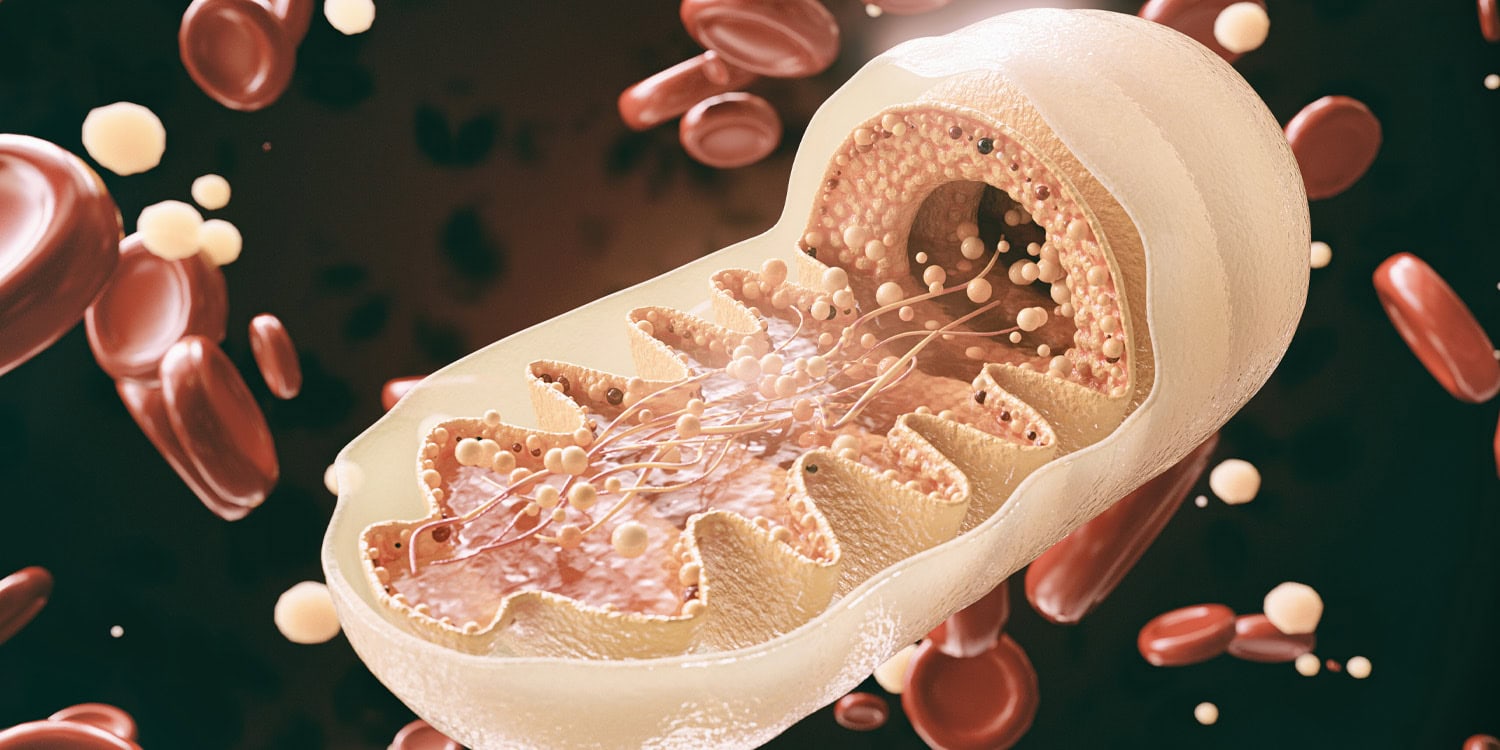
The human brain demands an immense amount of energy just to maintain its baseline operations. Even when a person is resting, the brain consumes a large portion of the body’s glucose and oxygen to keep its cells alive and communicating. It relies heavily on mitochondria, which are the tiny power plants inside cells responsible for generating ATP.
If this cellular energy production falters, the brain cannot function optimally. When brain cells cannot maintain their necessary energy levels, it can lead to symptoms like profound tiredness, physical sluggishness, and cognitive slowing. This energy deficit theory has existed for years, but studying it in living human brains has always been technically difficult.
Kathryn R. Cullen, a psychiatrist at the University of Minnesota, led a team of researchers to investigate these energy dynamics in human patients. They suspected that young adults experiencing early stages of depression might show measurable deficits in how their cells produce and use ATP. The researchers wanted to see if these cellular changes appeared simultaneously in the central nervous system and the peripheral circulatory system.
To achieve this, the team decided to look at immune cells circulating in the blood as well as neurons in the brain. Blood cells are much easier to collect and study than brain tissue. If the researchers could prove that blood cells and brain cells share the same energy problems, simple blood tests might one day help diagnose or monitor depression.
The research team recruited a group of volunteers between the ages of 18 and 24. This included individuals diagnosed with major depressive disorder and a control group of healthy participants. All participants underwent a thorough clinical assessment to determine the severity of their depression and fatigue.
To measure brain energy, the investigators used an incredibly powerful 7-Tesla magnetic resonance imaging scanner. Most hospital scanners operate at much lower magnetic strengths and only show the physical structure of the brain. This specialized 7-Tesla machine allows scientists to safely look at the chemical makeup of brain tissue in living people.
This advanced scanning technology allowed the team to look specifically at the visual cortex, a region at the back of the brain. The visual cortex was chosen because it sits close to the skull, making it easier for the scanner to pick up clear chemical signals. Instead of just taking a static picture of the brain’s anatomy, the scanner tracked the real-time chemical reactions involved in ATP production.
By tracking these chemical exchanges, researchers could calculate exactly how fast the brain cells were manufacturing new energy molecules. On the same day as the brain scans, the team also drew blood samples from the participants. They isolated specific immune cells from the blood to measure their baseline ATP levels.
The researchers then applied chemicals to these immune cells in a laboratory setting to intentionally stress their mitochondria. These chemicals act like a treadmill test for the cells, forcing them to burn energy as fast as they can. This mimics a state of high energy demand and reveals the maximum capacity of the cellular power plants.
The results challenged the initial expectations of the research team. In the visual cortex, the young adults with depression were actually producing ATP at a higher rate than the healthy control group. The blood samples mirrored this hyperactivity, showing elevated levels of ATP in the immune cells of the depressed participants while at rest.
Higher rates of ATP production in the brain and higher ATP concentrations in the blood both correlated with the severity of the patients’ self-reported fatigue. The participants who felt the most exhausted had the highest levels of baseline cellular energy activity. Susannah Tye, an associate professor at the University of Queensland who collaborated on the study, noted the uniqueness of this dual discovery.
“This suggests that depression symptoms may be rooted in fundamental changes in the way brain and blood cells use energy,” Tye said. She added that fatigue is notoriously hard to treat, and these biological insights might eventually guide more directed medical interventions. It can often take years for patients to find the right treatment for their illness.
The blood cell stress tests revealed another layer of the cellular dysfunction. When the researchers forced the immune cells to work harder using chemical stressors, the cells from the healthy participants easily ramped up their oxygen consumption. They seamlessly produced more energy to meet the simulated threat.
In contrast, the cells from the depressed participants showed a blunted response. They lacked the spare capacity to meet the increased demand, quickly reaching their maximum output limit. Roger Varela, a researcher at the University of Queensland, explained that the cells of depressed individuals seem to operate in overdrive just to maintain normal resting functions.
“This suggests cells may be overworking early in the illness, which could lead to longer-term problems,” Varela said. The constant overexertion leaves the cells without a reserve tank to handle additional stress. Because they are already running at full speed, they have nothing left to give when energy demands increase.
“This was surprising, because you might expect energy production in cells would be lower for people with depression,”Varela said. Instead, the data points to a biological compensation mechanism. The body senses an energy crisis and cranks up production at rest to compensate, but the mitochondria eventually hit a ceiling when pushed further.
This reduced capacity to cope with higher energy demands could be the root cause of the low mood and reduced motivation seen in patients. Varela hopes that highlighting the physical reality of the disease will change public perceptions and reduce the stigma surrounding mental illness. “This shows multiple changes occur in the body, including in the brain and the blood, and that depression impacts energy at a cellular level,” he said.
While these observations offer a new perspective on depression, the study has several limitations. The sample size was quite small, with usable brain imaging data available for only 18 participants. The researchers note that these results must be replicated in a much larger group of people to confirm the patterns.
Many of the depressed participants were also taking psychiatric medications and had other co-occurring conditions, like anxiety. These variables make it difficult to completely isolate the specific effects of depression from the potential effects of drugs or other mental health disorders. When the researchers adjusted their mathematical models to account for age and sex, some of the group differences were not statistically significant.
Future research will need to track patients over long periods to see if this cellular overwork eventually leads to a total collapse of energy production later in life. Some medical professionals suspect that chronic overexertion of mitochondria could contribute to neurodegeneration as patients age. Understanding this timeline could help doctors intervene early enough to preserve cellular function.
Ultimately, recognizing depression as a whole-body metabolic condition could open up entirely new avenues for drug development. Rather than focusing solely on brain chemicals like serotonin, future medicines might target the mitochondria directly. By helping cells manage their energy more efficiently, doctors might finally be able to alleviate the crushing fatigue that affects so many young adults with depression.
The study, “ATP bioenergetics and fatigue in young adults with and without major depression,” was authored by Kathryn R. Cullen, Susannah J. Tye, Bonnie Klimes-Dougan, Hannes M. Wiesner, Roger B. Varela, Brooke Morath, Lin Zhang, Wei Chen, and Xiao-Hong Zhu.