
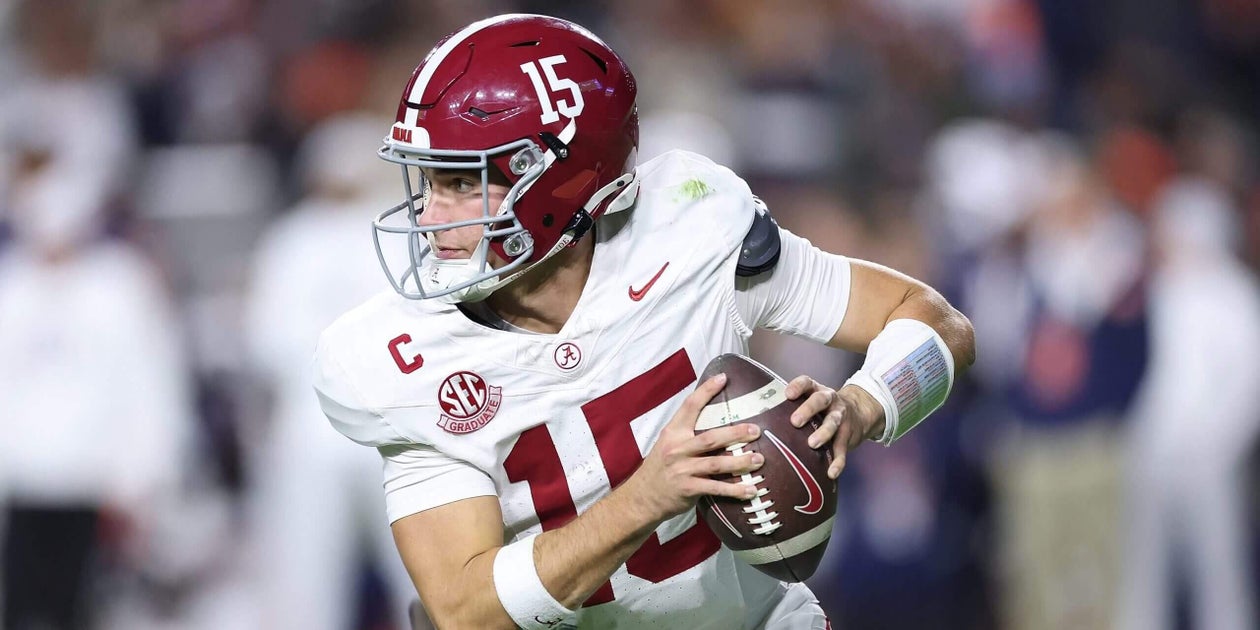
The consensus belief is that Alabama’s Ty Simpson is the No. 2 quarterback in this NFL Draft class behind Indiana’s Fernando Mendoza, but opinions are all over the place about whether Simpson should be a first-round pick.
Simpson made a strong case that he should be a first-round quarterback through the first eight games of the season, impressing with his aggressiveness and accuracy. However, his play tailed off — which could be attributed to a case of gastritis that caused him to lose 20 pounds late in the season — and he was knocked out of his final game in the College Football Playoff against Indiana. Still, there is buzz that Simpson could be drafted in the first round. Did he show enough in his 15 starts to warrant such an investment? Let’s look at the film.
Simpson played in a “pro-style” passing game at Alabama under offensive coordinator Ryan Grubb. Grubb only coached one season in the NFL, but the structure of his passing game resembles what you see on Sundays more than most other college offenses. Part of Simpson’s appeal is that, at times, you can see him executing translatable plays at a high level. Many of his best passes are highly accurate anticipation throws over the middle of the field.
In this clip, Simpson got his head around after the play fake, saw the backside underneath defender run with the through route. As he got to the dig route, there was still the “hook” defender in his passing window, but he anticipated his receiver running past him and threw a perfect ball that allowed his receiver to protect himself.
Here, Simpson had a “dagger” concept (dig/vertical combo) called, which is the most popular third-and-long concept in the NFL. As he got his head around, he saw the linebacker run with the inside vertical. Then he saw the next underneath defender bite on the underneath route, so he ripped a perfect pass to the dig route.
Some young quarterbacks struggle to throw to the middle of the field because of congestion or what they perceive to be congestion, but Simpson doesn’t hesitate. He trusts what he sees and throws accurately in that area of the field. It’s easy to imagine a coach from a heavy play-action system falling in love with Simpson because of his ability to execute these types of concepts.
However, there are times when Simpson doesn’t seem to be aware of backside defenders. He does a good job of identifying coverage pre-snap, but can struggle to adapt if defenders aren’t where he thinks they’ll be post-snap.
Eastern Illinois, 7:17 remaining in the second quarter, first-and-10
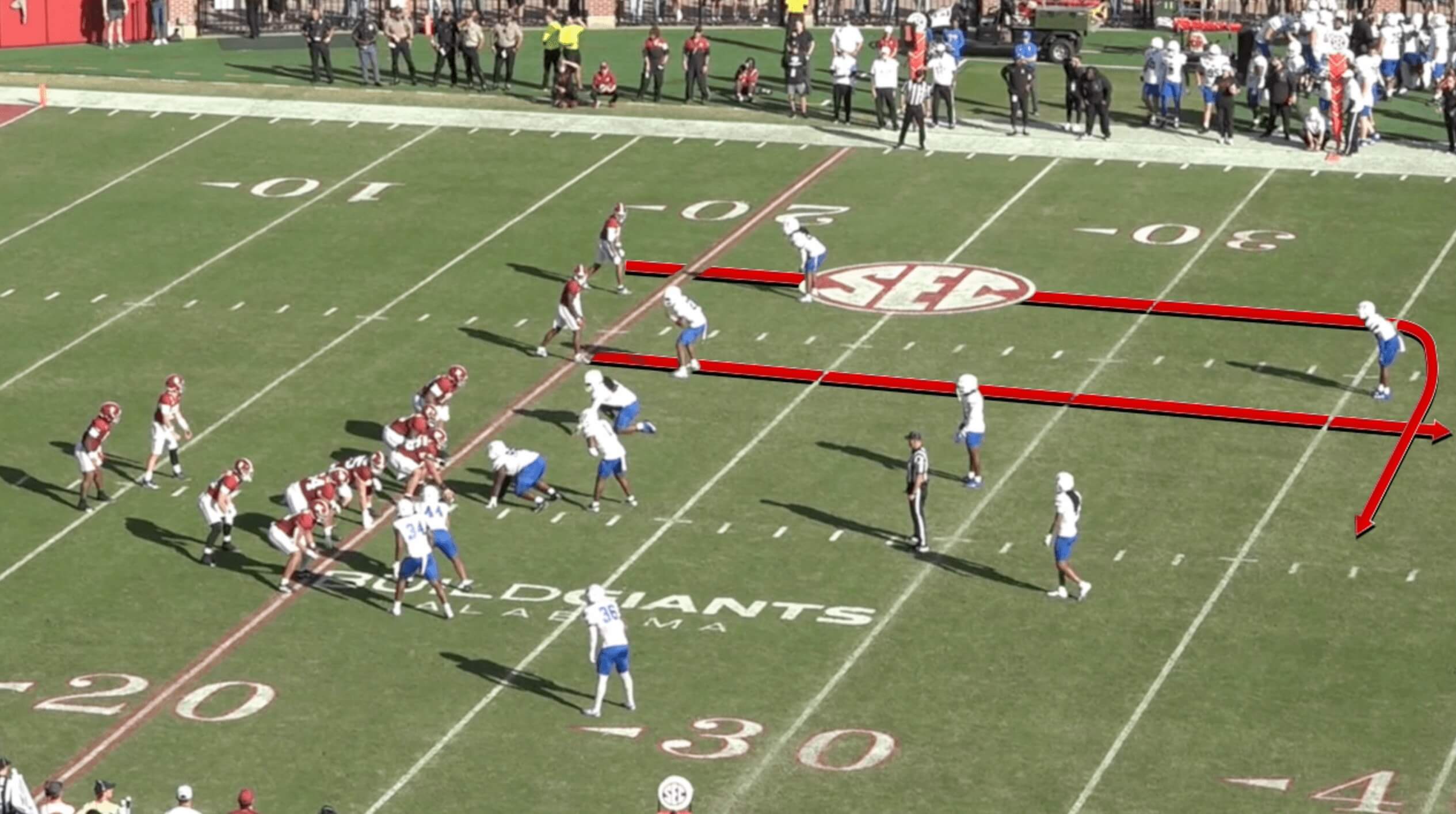
Here, Alabama had a two-man dagger concept called against Eastern Illinois.
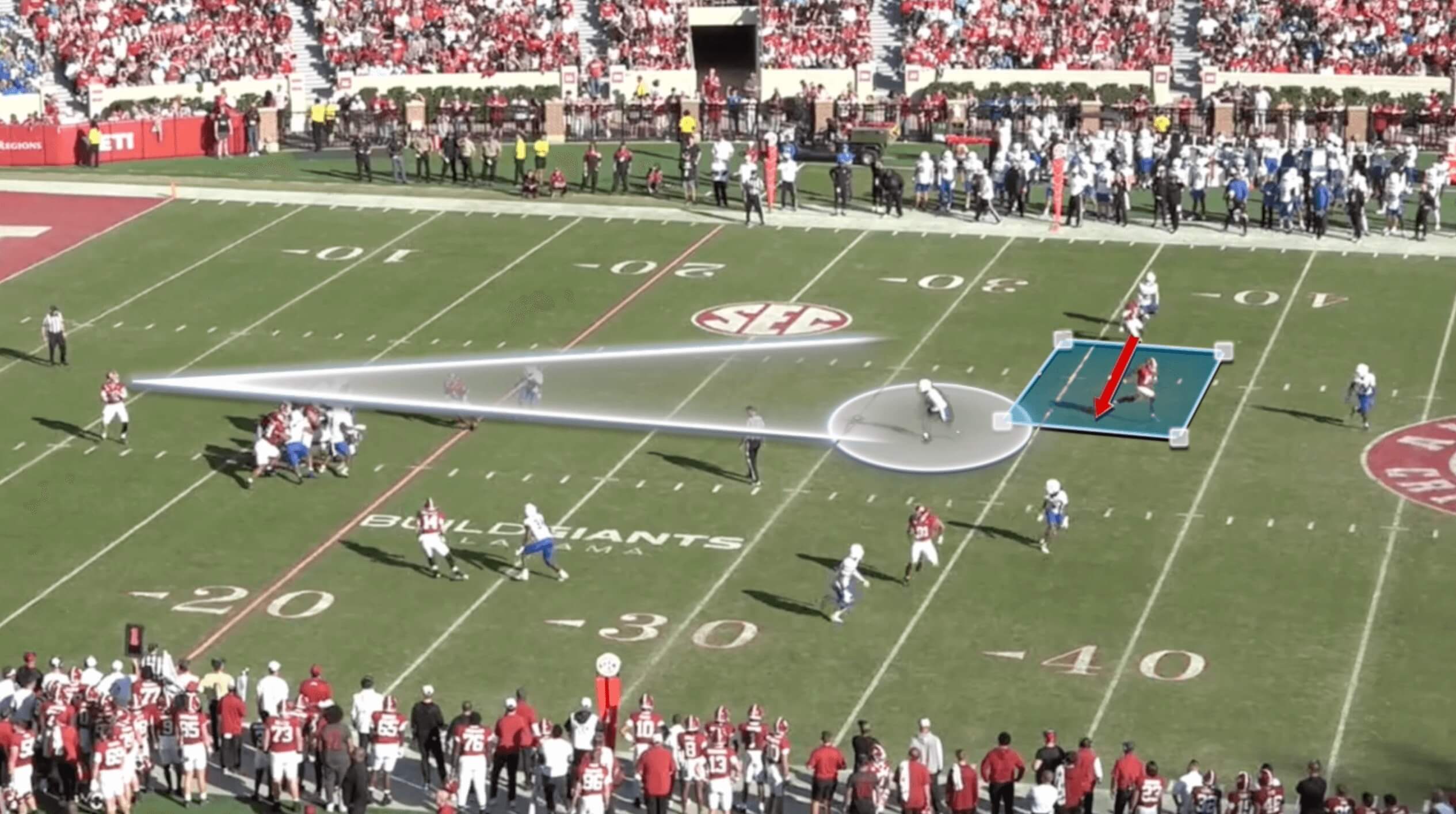
The inside vertical took the safety out of the picture, so Simpson thought he had a window open for the dig route. However, Simpson either didn’t see the hook defender inside or thought he could beat him with his arm.
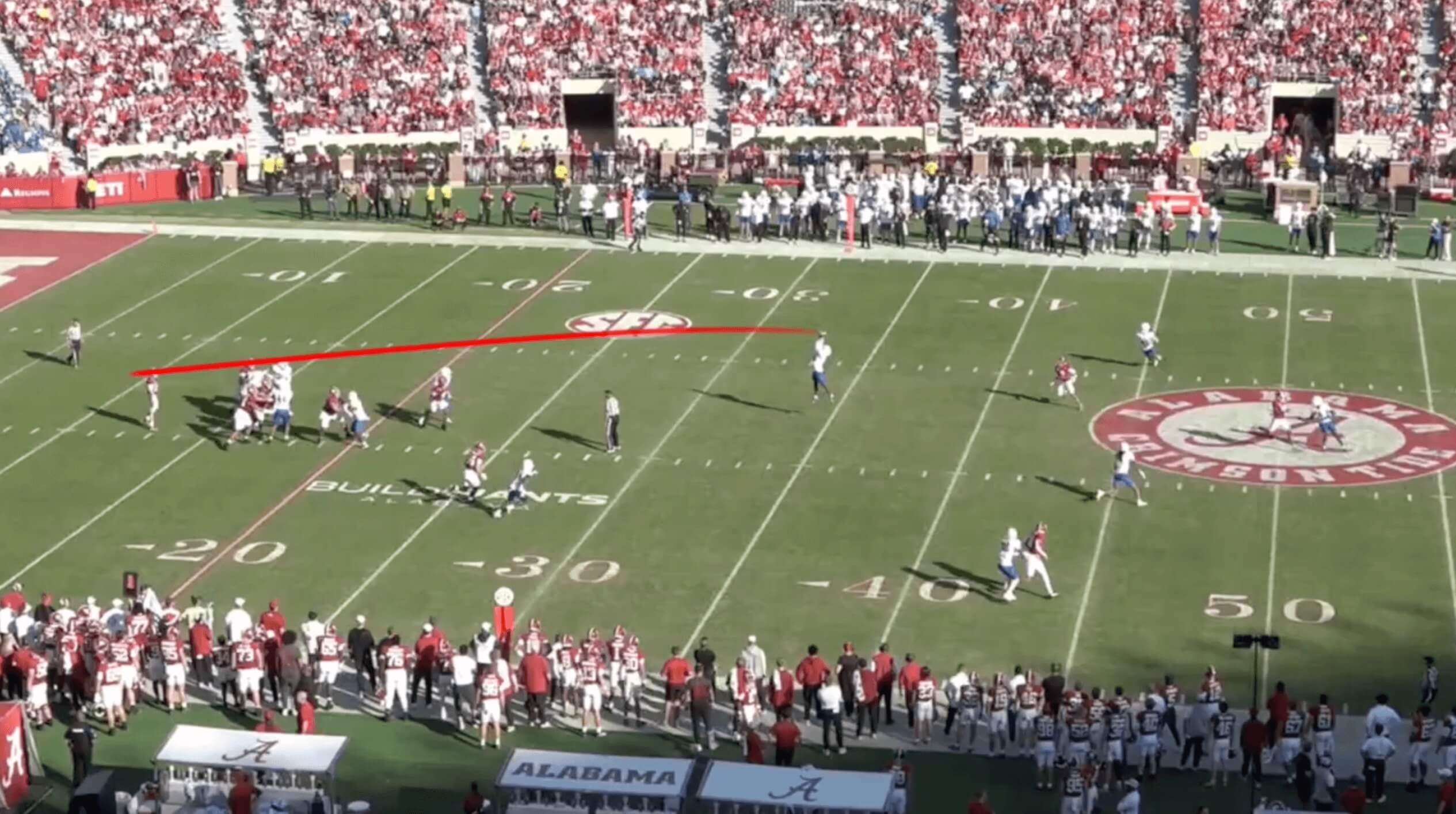
But the hook defender was in a perfect position to pick off the pass.
Oklahoma, 2:28 remaining in the first quarter, first-and-10
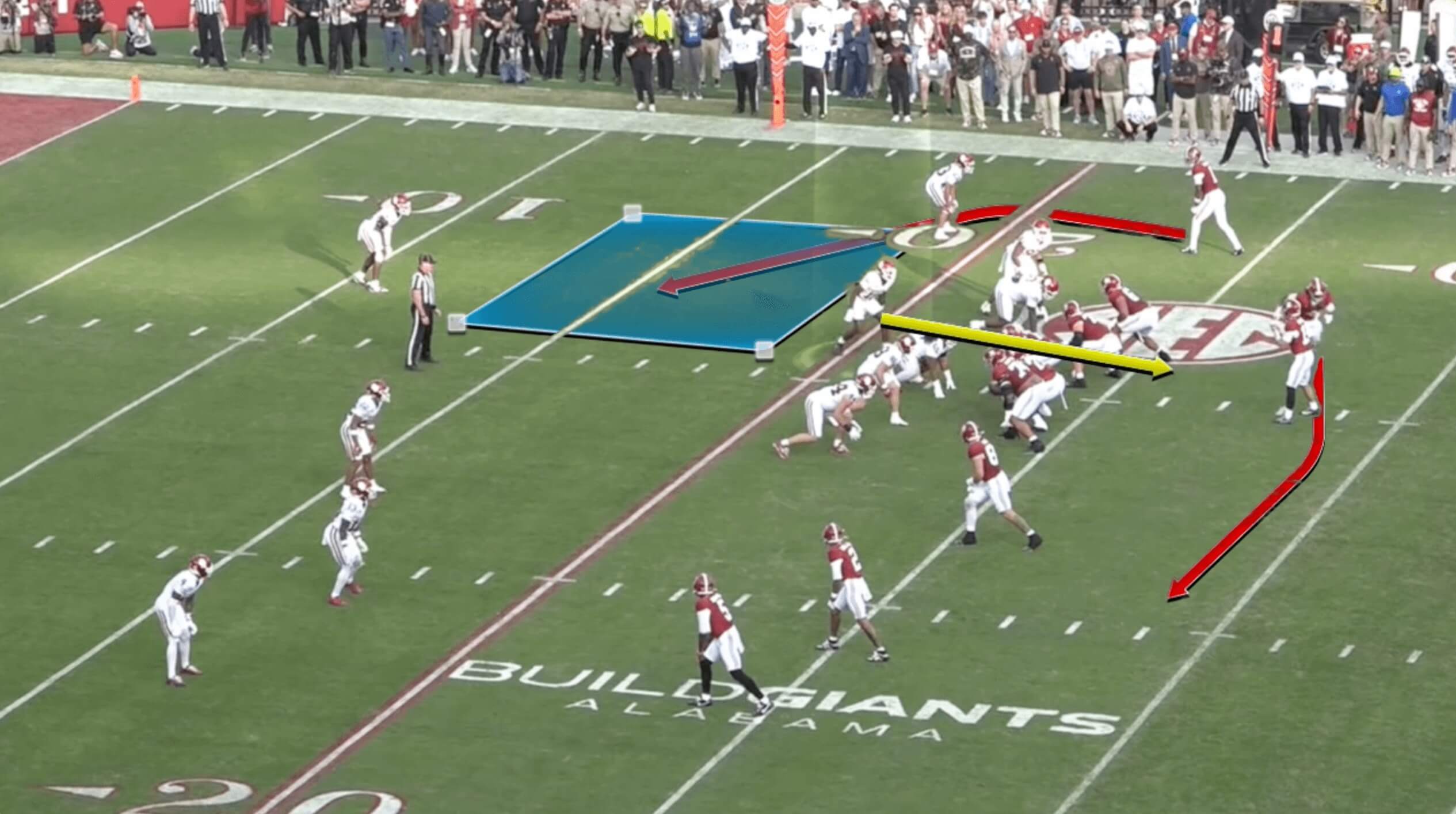
On this play against Oklahoma, Alabama began in an empty formation but motioned a player across the formation to isolate the X receiver to the top of the screen. After the motion, the defender who was on the slot moved up to the line of scrimmage to show blitz. Seeing this, Simpson assumed he would have a window to throw the “glance” route.
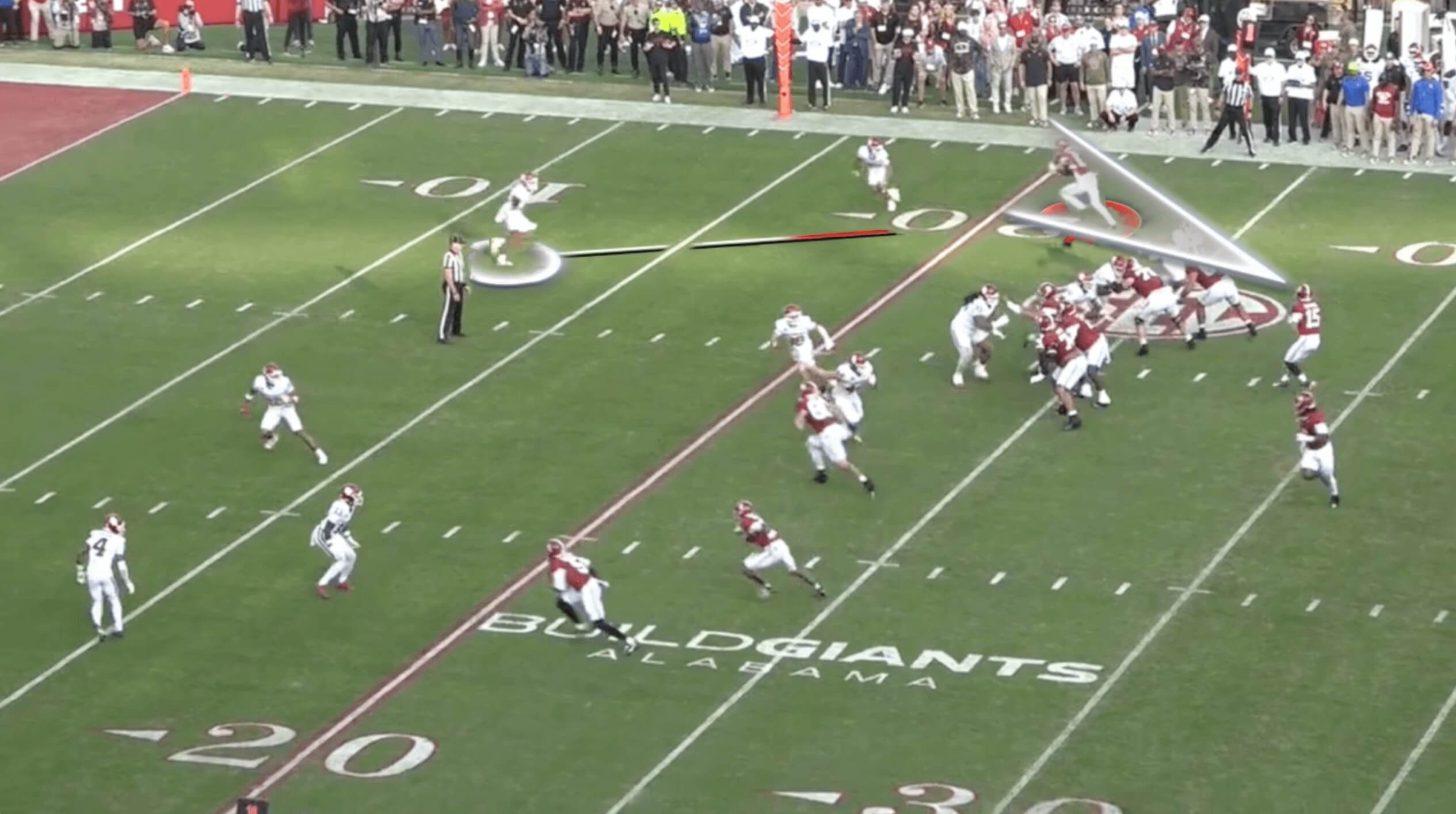
After the snap, Simpson locked onto the glance route and didn’t see the free safety barreling down on it.
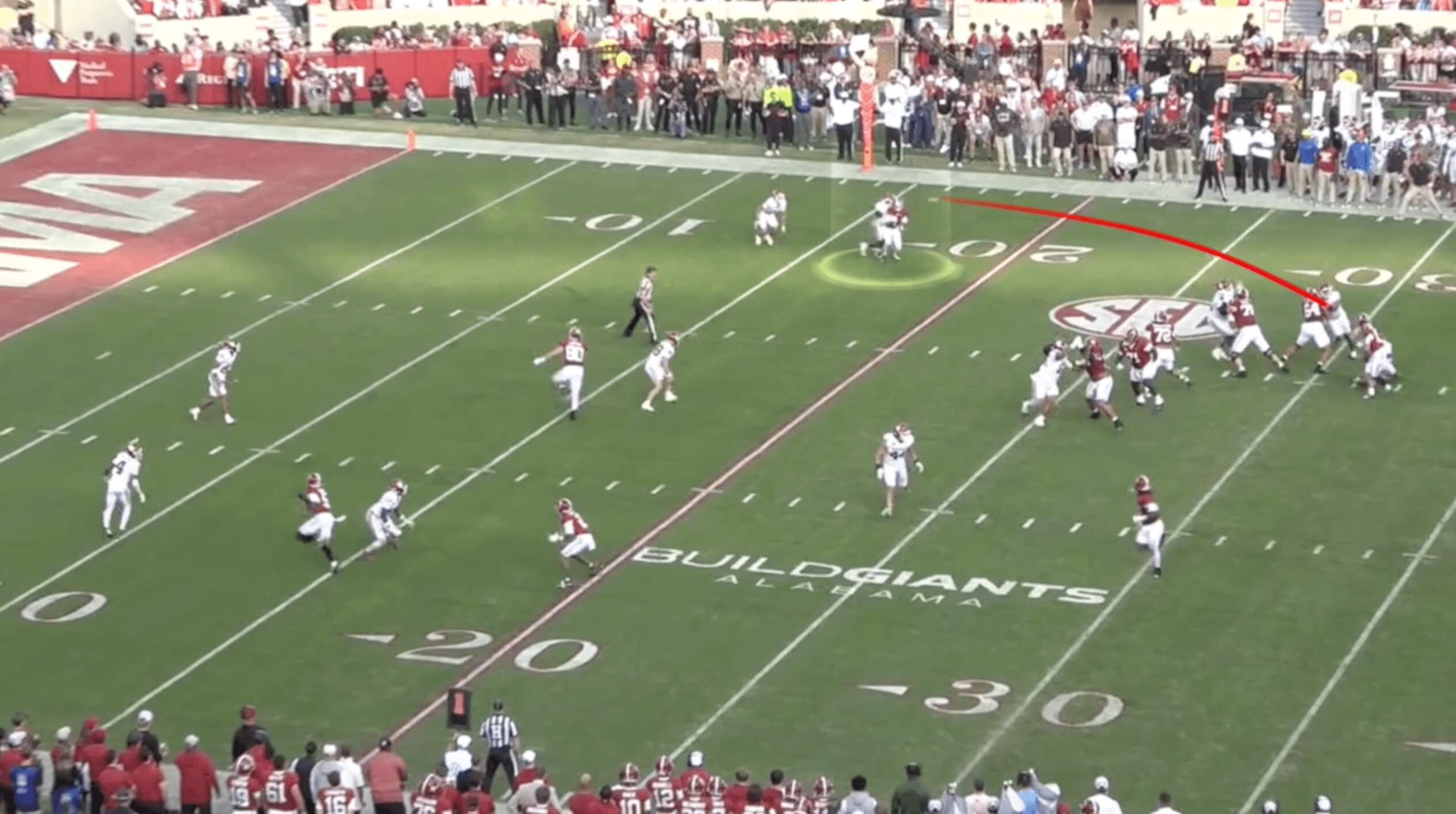
The ball was tipped up and intercepted. These types of throws show up on Simpson’s film over and over.
Either Simpson is struggling to adapt when defenders aren’t where he expects them to be based on his pre-snap read or he gets tunnel vision when he thinks he has an open receiver. There are times when he seems to struggle to see over the line of scrimmage as well.
At the combine, Simpson measured in just a little over 6-foot-1, which puts him in the 20th percentile for quarterbacks. He gained his weight back but still came in at just 211 pounds, which puts him in the 17th percentile.
In the last 20 years, there have been only six quarterbacks who were 6-foot-1 or shorter and less than 215 pounds who have started more than 40 games in the NFL: Drew Brees, Russell Wilson, Baker Mayfield, Michael Vick, Kyler Murray and Bryce Young. Brees was an outlier because, although he was athletic, he was more of a pocket passer. The jury is still out on Young, but his size has clearly been a hindrance. Scrambling is/was a big part of Wilson, Mayfield, Murray and Vick’s games. Simpson is nimble, but he is a pocket passer. So, is Simpson’s ability as a pocket passer special enough for him to be an outlier like Brees?
Size doesn’t just affect play; it affects durability. Simpson has only started 15 games, but he left his final game with cracked ribs. To Simpson’s credit, he did play the entire regular season in a heavy-passing attack and took a lot of hits, but his durability because of his size will be a concern.
Simpson has an above-average arm and can be very accurate when he has a clean pocket. When he wasn’t pressured, his off-target rate was just 9.9 percent. However, his accuracy dipped when he was pressured. His off-target rate jumped to 23.5 percent.
Though he had talented receivers, they left a lot of yards on the field with drop after drop. Ryan Williams, who many expected to have an explosive sophomore year, dropped 13 passes this past season. Additionally, Alabama had one of the worst run games in the country, ranking 125th in rushing yards per game (104.1). Simpson had to carry the offense with his arm.
If a team decides to draft him in the first round, they’ll be heavily weighing what they saw in the first half of the season. In the first eight games, Simpson’s EPA per drop-back was 0.15 (0.2 is elite), and he threw 20 touchdowns to just one interception. In the final seven games, his EPA per drop-back was -0.07, and he threw for 8 touchdowns and four interceptions. The gastritis may have been a big factor in his drop-off in play, but he also played against better teams.
Another red flag is his lack of experience (15 starts). We’ve seen quarterbacks with little starting experience struggle in the league. Teams have made exceptions for quarterbacks with intriguing physical traits whom they believe they could develop, but Simpson doesn’t have that.
He’s a fundamentally sound quarterback who has shown he can handle a pro-style offense with a lot of pre-snap ability, which gives him a floor. He’s an aggressive passer who can make all the throws. A bet on Simpson is a bet that he can overcome his lack of size with his mind because he won’t be a superior athlete like some of the quarterbacks who have succeeded with his size. Based on all the factors I’ve outlined, I see him as more of a third-round pick who will get pushed up to the second round because of a weak overall class.