
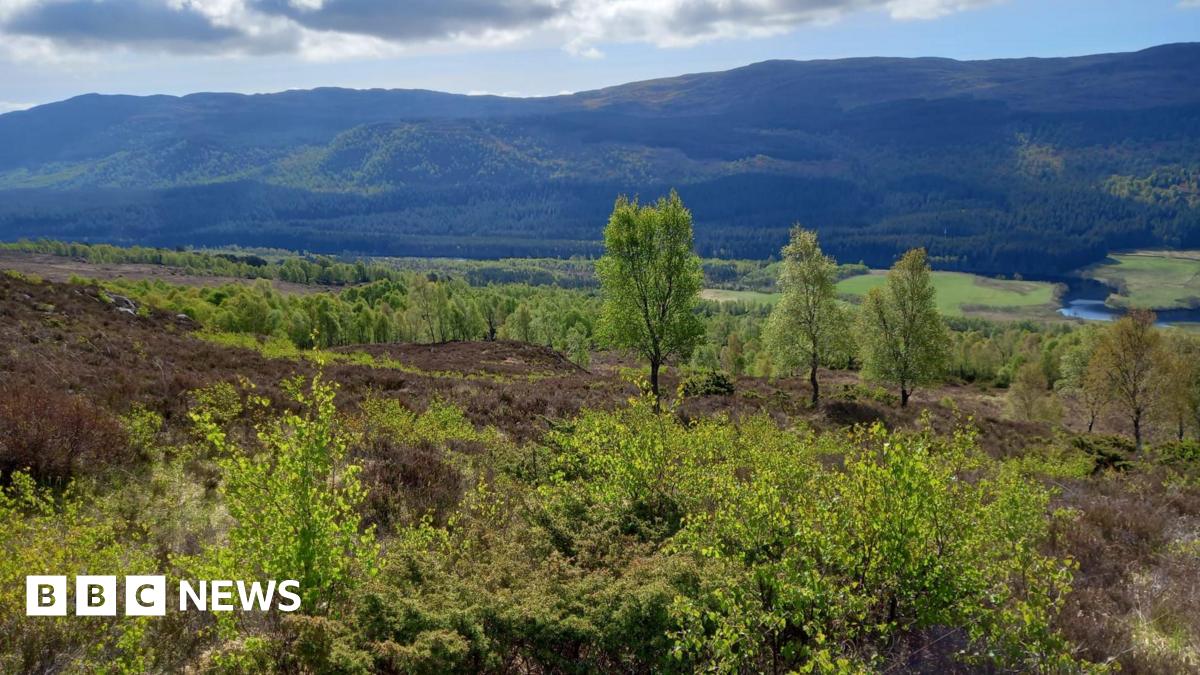
The estate uses a “dynamic conservation” technique to protect the trees’ genetic diversity. The land is encouraged to regenerate naturally within its specific environment and weather conditions.
Tom Sim, a Forest Research scientist, said: “The juniper and silver birch at Dundreggan are naturally occurring without historic planting.
“They’ve likely adapted to local conditions over many generations.”
Juniper is a slow-growing evergreen shrub or small tree, with small blue-green needles and berries that ripen to a dark, blue-purple colour.
The species support biodiversity by providing shelter and food for wildlife. Juniper berries are also used to produce gin.
Silver birch is a fast-growing species which spreads over open ground. The tree’s roots draw up nutrients, and its leaves add richness to soil.
Steve Micklewright, CEO of the charity Trees For Life, said: “We often think all trees are the same, but they are as diverse as people.
“The more genetic diversity there is, the more chance they have of long-term survival.”
The Gene Conservation Unit status means Dundreggan’s juniper and silver birch will be monitored to ensure their survival and natural regeneration.