
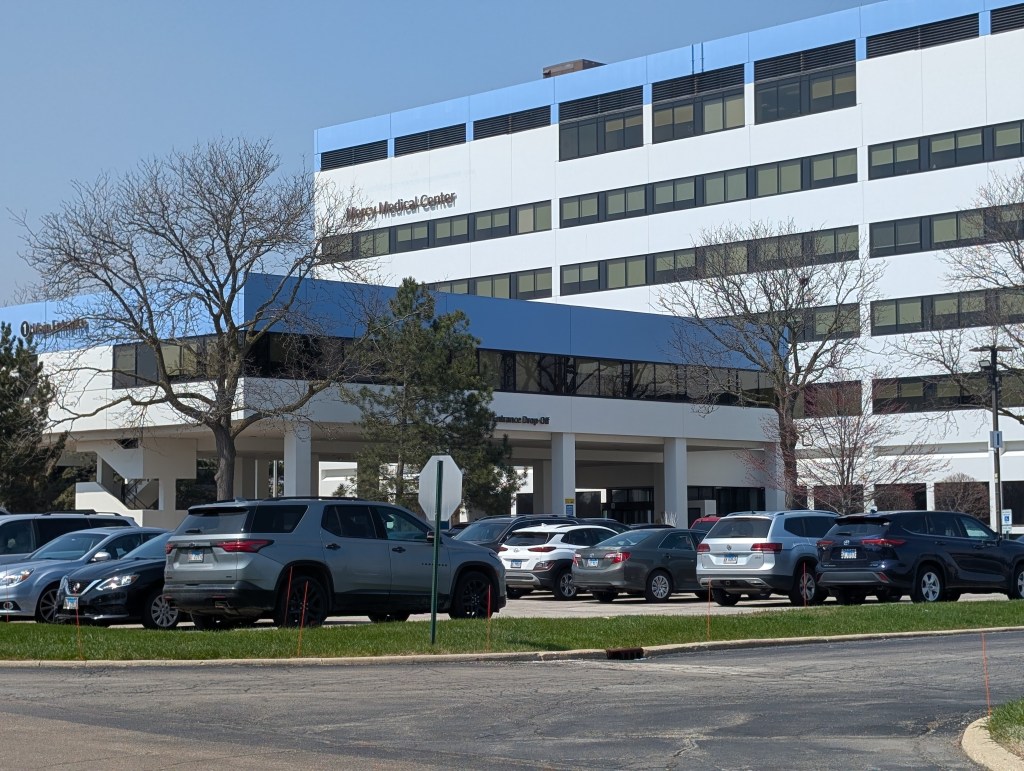
Prime Healthcare, which owns eight Illinois hospitals, may soon no longer be in-network with the state’s largest health insurer, Blue Cross and Blue Shield of Illinois — a situation that could force some patients to switch doctors or pay more for care.
Blue Cross and Blue Shield of Illinois sent letters to members earlier this month informing them that Prime has “notified us that they intend for their hospitals, doctors and health care professionals to leave our networks on June 1, 2026.”
Prime and the insurer are in the midst of contract negotiations but have not yet come to an agreement.
Health systems and insurers periodically renegotiate contracts that dictate how much insurers will pay health systems for medical services, in exchange for a health system being included in an insurer’s network.
If no agreement is reached, Blue Cross members with HMOs would no longer have coverage for health care at Prime hospitals, except in emergencies. Blue Cross members with PPOs could still get care through Prime but would have to pay more out-of-pocket for the care because it would be considered out-of-network.
“We value the care Prime provides to our members and communities and are working closely with them to come to a mutual agreement,” Erika Callahan, a spokesperson for Blue Cross and Blue Shield of Illinois, said in a statement Thursday. “If an agreement is not reached by June 1, 2026, Prime Healthcare facilities, hospitals and health care professionals will no longer be in-network.”
When asked how many people might be affected or how many received the letters, Callahan said “we do not discuss the details of contract negotiations.”
A Prime spokesperson also said in a statement that Prime is “actively engaged” in negotiations with Blue Cross. Prime hospitals and physicians are still in-network with Blue Cross at the moment, the statement said.
“BCBSIL may have prematurely issued termination notices that unfortunately created confusion for patients, however our hospitals remain committed to supporting our patients and working toward a solution that protects access and continuity of care,” Prime said.
Prime is hopeful that Blue Cross “will honor the essential role these hospitals and physicians play in their communities and work collaboratively with us to reach an agreement that protects patients, allows quality care to continue and preserves access before any potential changes would take effect,” Prime said in the statement.
Prime’s Illinois hospitals include Holy Family Medical Center in Des Plaines, Mercy Medical Center in Aurora, Resurrection Medical Center in Chicago, St. Francis Hospital in Evanston, St. Joseph Medical Center in Joliet, St. Joseph Hospital in Elgin, St. Mary’s Hospital in Kankakee and St. Mary of Nazareth Hospital in Chicago.
Prime is relatively new on the scene in Illinois, having bought the hospitals from nonprofit Ascension in March 2025 for more than $370 million. Prime is a for-profit company based in California and has more than 50 hospitals across the country.
Under the deal, six of the hospitals became for-profit, while two – St. Francis in Evanston and St. Mary’s in Kankakee – kept their not-for-profit statuses as part of Prime’s affiliated charity called the Prime Healthcare Foundation.
Since that purchase, Prime has faced criticism from lawmakers and the Illinois Nurses Association over changes it’s made – though Prime says that it and the Prime Healthcare Foundation have already invested more than $104 million in infrastructure, technology and equipment at the hospitals.
In May, Illinois Sens. Dick Durbin and Tammy Duckworth sent a letter to the head of Prime expressing concerns, after Prime decided to suspend inpatient pediatric care at St. Joseph Medical Center in Joliet, and after Mercy Medical Center in Aurora lost its designation as a Level II trauma center.
Prime responded, at the time, by saying it’s focused on a mission of turning around struggling community hospitals across the country, and that the Illinois hospitals were losing about $200 million a year before Prime bought them. Prime said maintaining services with low patient demand is not sustainable, nor good for the quality of care.
Members of the Illinois Nurses Association also criticized Prime’s management of St. Joseph in Joliet at a meeting of the Illinois Health Facilities and Services Review Board this past week.
At that meeting, the board voted 8-1 to approve Prime’s application to spend $5.5 million to create a new outpatient surgical center in Joliet. The board’s vote, however, followed public remarks by members of the Illinois Nurses Association who complained that many nurses and doctors have left St. Joseph in Joliet since Prime took over, and they decried certain cuts.
“Our concerns are how are they going to open this facility when it seems like they are not funding and investing in the primary building that (they) purchased a year ago,” said Kaitlynd French, with the Illinois Nurses Association.
Prime said in a statement to the Tribune on Friday that it has invested more than $11 million in the Joliet facility and equipment upgrades since buying it a year ago, and it’s planning to invest another $20 million this year.
Before Prime bought the Joliet hospital, it was losing about $90 million a year, said Fred Ortega, a Prime spokesperson. That loss is now about half of what it was, Ortega said.
“The ambulatory surgery center approved by the Illinois Health Facilities and Services Review Board is intended to complement hospital services and improve access to outpatient surgical care for the community while allowing the hospital to focus resources on higher-acuity care,” Prime said in the statement.