
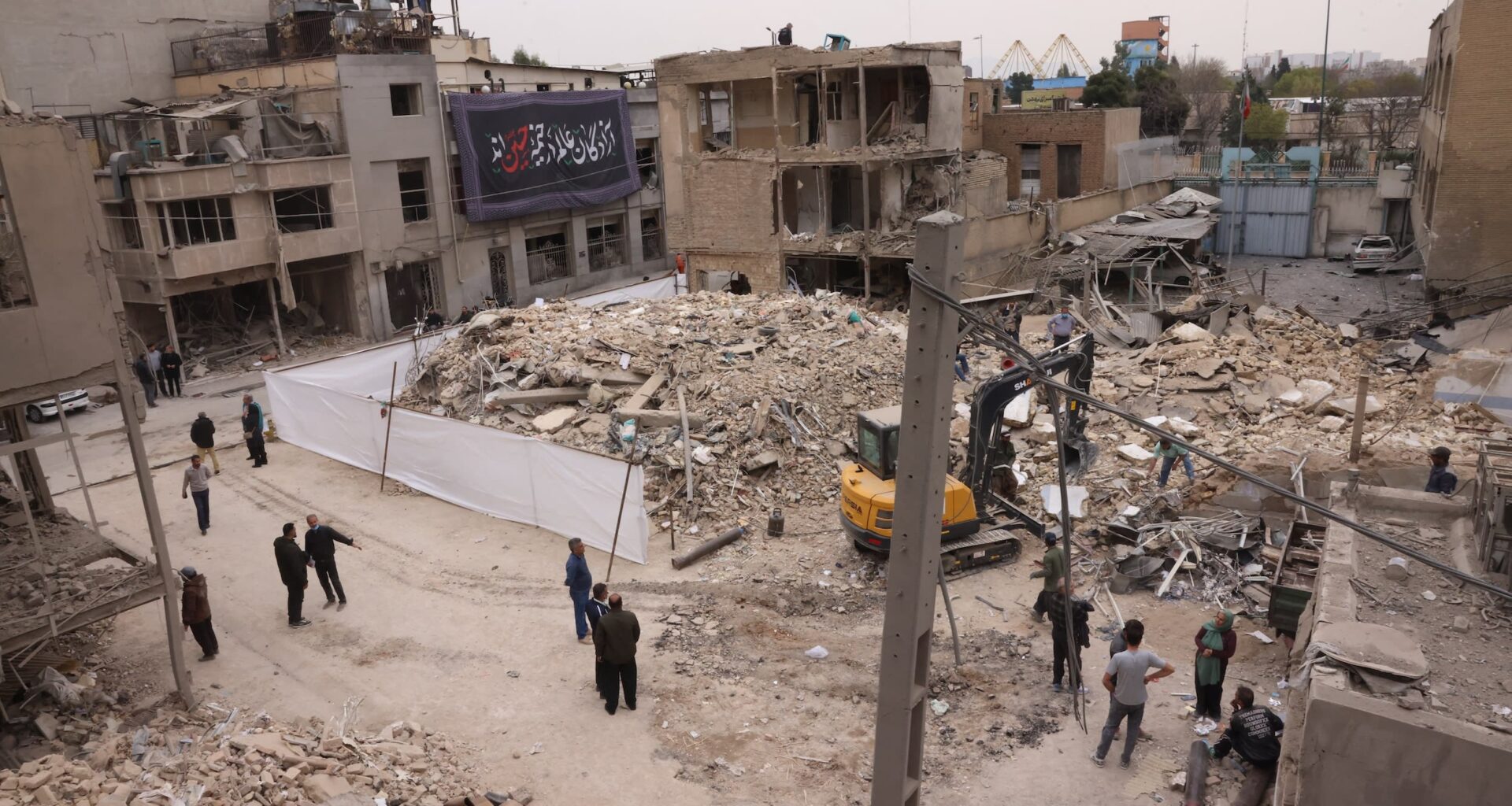
The U.S.-Israeli war with Iran stretched into its sixteenth day on Sunday with more U.S. troops and warships headed to the Middle East and President Donald Trump urging other countries to send warships to the region to help reopen the Strait of Hormuz, the closure of which has sent gas prices soaring.
Energy Secretary Chris Wright said there were no guarantees that oil prices will come down in the coming weeks even as he defended the U.S. military operation. “There’s no guarantees in wars at all,” he said on ABC’s “This Week.”
Israel said it launched new strikes on Iran, which retaliated with fresh strikes on Israel and U.S. targets in neighboring countries. And U.S. Central Command said “strikes from U.S. forces continue to be unpredictable, dynamic, and decisive” touting Sunday morning that “U.S. dominance builds over vast swaths of Iran.”
But the cost of the war is mounting. Kevin Hassett, director of the White House’s National Economic Council, said Sunday on CBS News’ “Face the Nation” that the United States has spent $12 billion “so far” on the war. But he predicted the “global economy is going to have a big positive shock as soon as this is over.”
The Pentagon on Saturday night identified the six U.S. service members killed last week when a refueling aircraft crashed in Iraq. They were: Maj. John A. Klinner, 33, of Auburn, Ala.; Capt. Ariana G. Savino, 31, of Covington, Wash.; Tech. Sgt. Ashley B. Pruitt, 34, of Bardstown, Ky., Capt. Seth R. Koval, 38, of Mooresville, Ind.; Capt. Curtis J. Angst, 30, of Wilmington, Ohio; Tech. Sgt. Tyler H. Simmons, 28, of Columbus, Ohio.
Play

Iran’s effective shutdown of the Strait of Hormuz, a critical oil and gas chokepoint and shipping route, continues to severely disrupt global markets. Gas prices continue to rise amid the war, averaging roughly $3.67 per gallon, according to motorist group AAA. Last month’s average was $2.93.
At least 1,319 Iranians, including more than 200 children, have been killed since the war began, according to U.S.-based Human Rights Activists News Agency. The International Organization for Migration said Sunday that deteriorating conditions in Iranian cities were “driving increasingly complex mobility patterns,” forcing many to leave their homes for safer areas or even neighboring countries like Afghanistan and Pakistan.
Recommended

Erum Salam is a breaking news reporter for MS NOW, with a focus on how global events and foreign policy shape U.S. politics. She previously was a breaking news reporter for The Guardian.

© 2026 Versant Media, LLC
