
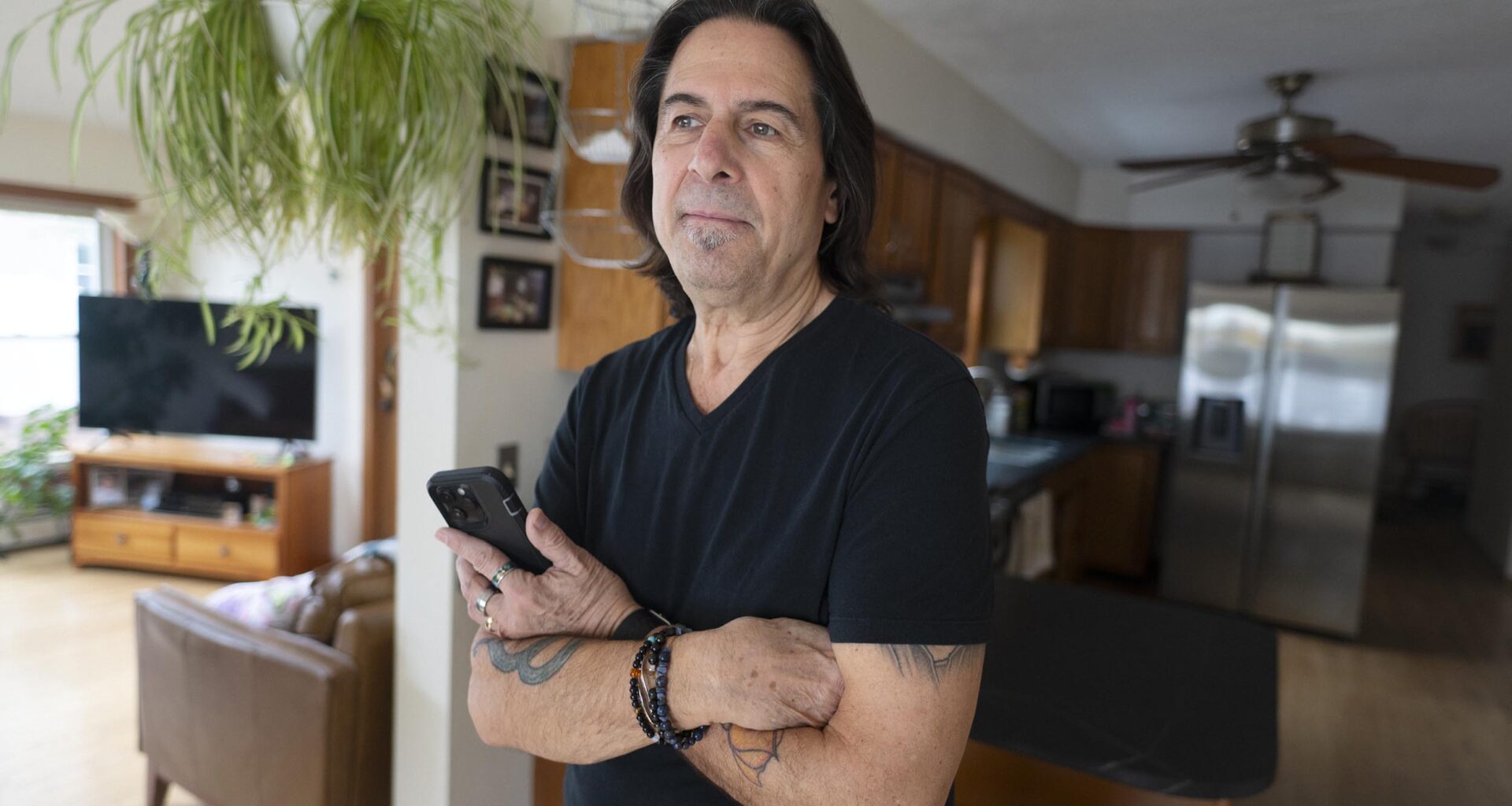
 Charlie Papillo of Colchester has had to purchase private supplemental insurance to replace the Medicare Advantage coverage he used to have. Seen at home on Thursday, March 12, 2026, Photo by Glenn Russell/VTDigger
After decades of self-employment and buying her own health insurance, Ruth Miller of Chittenden County felt “relief” at turning 65 and transitioning into Medicare.
With a Medicare Advantage plan through BlueCross BlueShield, she was finally able to get the “much-needed” cataract surgery that she’d long delayed. She got a bone density scan, a minor surgery and her cheap generic prescription covered. She paid modest co-pays and no additional premium for the Advantage plan.
Then, at the end of 2025, BlueCross BlueShield of Vermont stopped offering any of its Medicare Advantage plans in the state. UnitedHealth care did the same, leaving only a smattering of Humana plans in select counties as practically the only remaining Advantage plans Vermonters could opt into.
READ MORE
by Olivia Gieger
October 1, 2025, 1:01 pmOctober 2, 2025, 11:18 am
It is part of a broader trend across the U.S. as insurers see Medicare Advantage plans becoming less profitable. Changing federal rules and higher utilization restricted insurers ability to make money from the plans, and thus many are pulling back their offerings for 2026. In Vermont, this retreat has been particularly acute.
Miller found herself in a situation tens of thousands of Vermonters over 65 were also cast into by the start of the new year. With their Medicare Advantage plans gone, these Vermonters defaulted back to traditional Medicare and are now trying to find ways to pay for all the pieces of health care Medicare does not cover.
Two and a half months into the new Advantage-less reality, the transition has worked out relatively smoothly for some Vermonters. For others, it has initiated a series of slow, cumulative costs that become a financial death knell — while making health care even harder to access.
For Miller, the loss of her Advantage plan meant going back on regular Medicare, which ends up costing her $203 a month, and opting for a prescription drug plan through Humana, which costs $8.40 a month, she said. Despite continuing to work full-time hours, she still cannot afford the additional $178 per month premium on a Medigap supplemental plan that would cover the portion of care that Medicare does not.
Without the supplemental plan, she is left holding the bill for 20% of the expenses for any outpatient services, as is standard for Medicare. Even without Medigap, she is now paying three times what she had been when buying her own insurance through Vermont Health Connect.
“I will once again be triaging what I need to urgently take care of, and what must wait until I have the money to afford a Medigap plan,” Miller wrote in an email.
She is one of the many Vermonters navigating health care without a supplemental Medicare plan. The federal health coverage program for those over 65 or with certain disabilities consists of four parts. Part A covers inpatient care, while Part B covers outpatient care, for which a patient must pay 20% of the expenses. Part D covers prescription drugs, but an individual needs to opt into that plan for coverage. There is no vision or dental coverage under traditional Medicare.
Part C is synonymous with Medicare Advantage. Those plans, run by private insurers, aim to reconcile all of these disparate parts of Medicare into one cohesive package. Often they include vision and dental, stipends for buying over the counter drugs or health care items and incentives for staying active. Beneficiaries often do not have to pay premiums on top of what Medicare already takes out of their Social Security payments.
Comparatively, in Vermont the premiums for the Medigap plans are staggeringly expensive. Still, those who can afford them often do purchase the plans to cover the 20% of outpatient care Medicare doesn’t pay for.
Laura Streets felt she needed to opt into Medigap and prescription plans or risk a higher premium in the future. The Morristown resident is paying $183 per month for one of the cheapest Medigap plans available to her. It is double what she had been paying previously for coverage. The cost of the prescription coverage is more than any prescriptions she takes, she said.
A similar story is true for Charlie Papillo, a Colchester resident who has relatively low medical needs but opted for a Medigap plan.
After losing MVP’s Advantage plan, Papillo opted for BlueCross BlueShield’s, only to lose that at the end of last year.
“I have to say that with any of my Advantage plans, I’ve never had a problem with anything,” he said. “Even if you had a major procedure or something, everything was pretty much covered. I mean, I paid very, very little.”
It’s too early in the year, Papillo said, to really see if his coverage is different. He’s had his annual checkup, which Medicare and his Medigap plan covered.
The biggest difference has been the cost. “The beauty of an Advantage plan was that whatever Medicare charged you out of your Social Security, the Advantage plan took that and didn’t charge you any more,” he said.
Now, he’s piecing together all the disparate parts of coverage he’d previously streamlined with Advantage. “It’s actually pretty confusing,” Papillo said.
He now has a Medigap plan with a high deductible that costs him $52 a month, a $16 monthly premium for prescription coverage, on top of what Medicare already takes from Social Security.
These small individual charges cumulatively become quite costly — especially for Medicare beneficiaries on a fixed income through Social Security or disability benefits.
It’s a sentiment that dozens of Vermonters who lost their Advantage plans expressed to VTDigger. More than 50 people responded to the news organization’s inquiry, sharing experiences of how they are uniquely navigating the loss of their Advantage plans.
They are finding ways through, but not without a high price tag.
This is what worries Sam Carleton, the director of Vermont’s State Health Insurance Program (SHIP), which provides assistance to Medicare beneficiaries in the state.
The sheer “sticker shock” of the plans worries him — and is what he hears the most frustration about from the beneficiaries he works with. That, and the lack of vision and dental coverage in traditional Medicare, he added.
But he sees more nuance than pure frustration. “It’s a little interesting too, because the dental and vision coverage in Advantage plans wasn’t super robust,” he said. “It offered some but not a ton, sometimes a comically little amount, frankly.”
The same may pan out to be true for the rest of an Advantage plan’s offerings, he said. While some plans worked really well for people, others could be exploitative and confusing to navigate, with prior authorizations and other complications.
“I think once people get used to what the billing cycle is going to be like, I think they’re going to like it more,” he said of traditional Medicare and Medigap plans. “I think it’s going to make more sense. There’ll be less curve balls thrown throughout the year.”
Still, the cost remains high — especially for the healthier beneficiaries who may not need all that much health care but still pay high Medigap premiums.
The one silver lining Cartleton sees is that at the start of the year, the state was able to expand its Medicare Savings Program.
As of Jan. 1, the income limit for Vermonters to receive assistance with their Medicare premiums and some deductibles has risen, making more than 14,300 people eligible for support, according to an estimate from the Vermont Office of the Health Care Advocate.
The broadened eligibility is a small success story, Carleton said, in a health care landscape when so many are struggling to foot the bill for insurance, let alone their medical bills.