
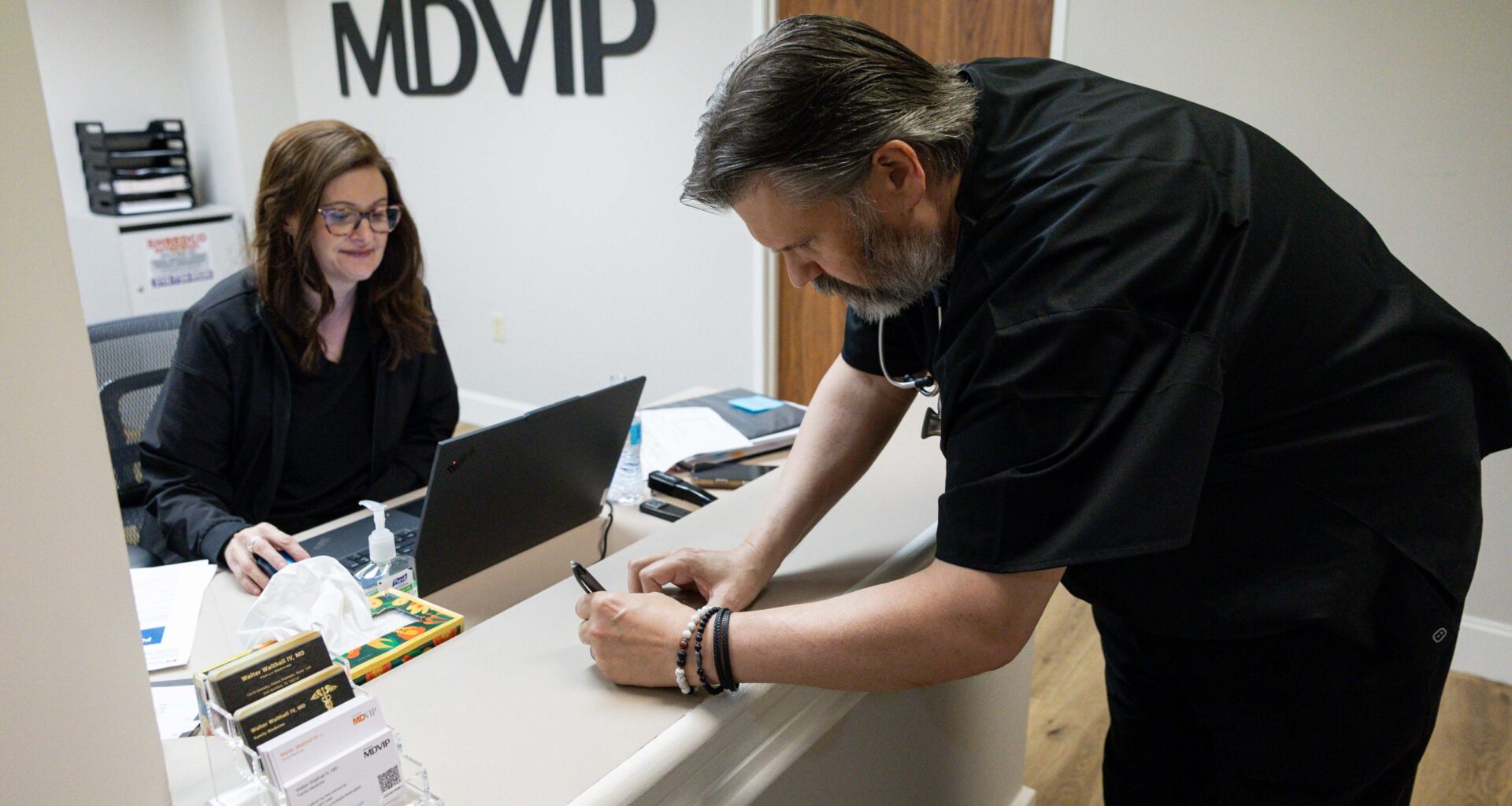
Before Dr. Walter Walthall switched to practicing at a membership-based medical clinic, he worried he might burn out “in a glorious blaze.”
The longtime San Antonio family medicine doctor recently opened his own membership-based clinic, part of a growing care model that charges patients a monthly or annual fee and often reduces reliance on insurance billing.
Clinics operating under the model often advertise same- or next-day appointments, longer visits with physicians and an increased emphasis on preventive care and wellness.
Though a small share of the overall health care system, these models are growing quickly. From 2018 to 2023, the number of direct primary care and concierge practices grew by 83%, and the number of clinicians participating in them increased by 78%, according to a 2025 study published in Health Affairs.
In San Antonio, a number of membership-based clinics have opened over the past two decades. Some operate independently, while others partner with national companies that provide administrative and business support.
 The atrium at the Oakwell Farms business park that leads patients to Dr. Walter Walthall’s membership medicine practice. Credit: Amber Esparza / San Antonio Report
Walthall practices under MDVIP, a national network of more than 1,400 physicians in 46 states and Washington, D.C. The company provides marketing, technology and administrative support while physicians maintain ownership of their practices.
With Walthall opening his practice in December, MDVIP now has 18 physicians in San Antonio and 141 in Texas, more than it has in any other state.
A variety of other membership-based clinics can be found across the area, including clinics like Tailored MD and San Antonio Direct Primary Care. UT Health San Antonio also has its own concierge clinic.
Patients at MDVIP-affiliated practices typically pay an annual membership fee in addition to maintaining health insurance coverage. In San Antonio, the fee is about $2,500 per year, according to Walthall.
Costs for membership-based primary care vary widely. Some direct primary care clinics charge monthly fees of roughly $50 to $150, while concierge-style practices may cost several thousand dollars annually.
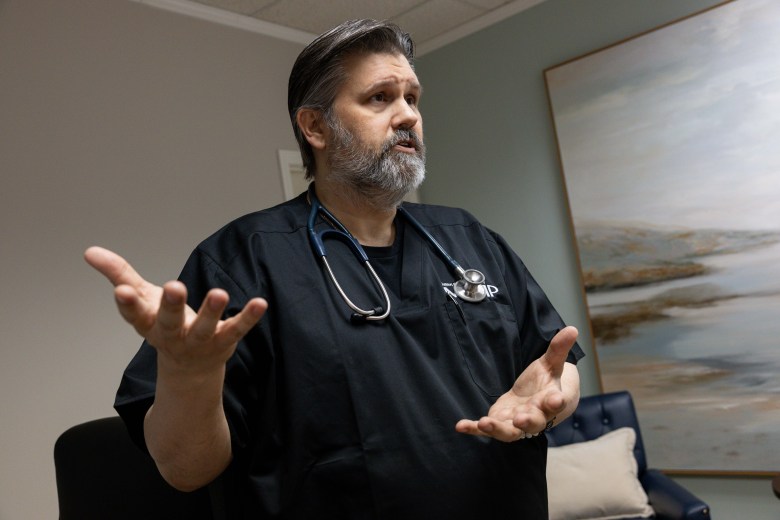 Family Medicine doctor Walter Walthall talks about the differences in his practice and relationship with patients after switching to a membership-based model compared to his previous work load with a local health care system. Credit: Amber Esparza / San Antonio Report
MDVIP’s fee covers an annual exam as part of their wellness program that includes in-depth screenings followed up by an individualized action plan for patients.
While supporters behind the model say it allows for a more personalized primary care, some providers worry that smaller patient panels, often a few hundred patients compared with thousands in traditional practices, could limit access to primary care if the model expands widely.
The San Antonio Report visited Walthall at his clinic to discuss why he switched from traditional primary care and how the membership-based model works for physicians and patients.
The interview has been edited for length and clarity.
Where were you before you opened this practice?
I was at North San Antonio Healthcare [Associates] for about 25 years, over there with six providers. It’s busy, it’s packed, it’s stressful. Sometimes [patients] can’t even find a seat. I would see anywhere from 20 to 30 patients a day and have 15-minute appointment times. You can’t do appointments in 15 minutes. To me, there’s so much more to a person.
I think most people can at least appreciate that the current system we have is not optimal. We need to make some changes to it. I don’t place fault or blame on anyone. I think there’s a lot of places where we fall short.
If I saw [a patient], let’s say you had cellulitis on your arm, and I said, come back in a week. Let me take a look at it. When you went to make an appointment, it would be three, four weeks out. My patient then would have to go to a mid-level provider, which is fine. The mid-level providers in North San Antonio are excellent. But I lose contact with the patient, and for me, I like having that contact. I like to see and follow through with patients.
 Dr. Walthall goes over a set of anonymized patient data with special testing that he uses to build a more familiar relationship with his patients and tailor his work to their health care needs. Credit: Amber Esparza / San Antonio Report
I spent 30 years doing medicine the way that insurance wanted us to do it, and I kept up with it. But I think at this point in time, what I’m finding is that the demands are more. I can do it, but I don’t feel like I’m giving my best to my patients.
I love guidelines, but I don’t like cookie-cutter medicine. You have to take a look at people, not diseases, and you have to understand that what may be best for you may not be best for you and me. When you’ve got a short time with the patient, we end up going back to this cookie-cutter model, because it’s just the path of least resistance.
And so I had a decision I needed to make at the beginning of last year. It was like, I can do this another two or three years, and I’m going to burn out in a glorious blaze, or I can find a way to maybe restructure this so that I can do it another 10 or 15 years and take my time with my patients.
How does this model differ from a traditional primary care provider?
We will see anywhere from six to 12 [patients] on average on any given day. The goal of this practice is to make sure that patients can be seen on the same day, if not the same day, at least by the next day. MDVIP caps out at 600 patients. That’s the maximum they would allow me to have. I wanted to start at a much smaller number and build so I have set, over the next year, a number that we want to get to. Right now I’m approaching 300 [patients].
By focusing on fewer patients, we are able to deliver more personalized care. Our motto is to put people over process. We put relationships over rush. My patients have my phone number. They’re not afraid to use it. I got a call last night at about 12 o’clock. Concerns about blood pressure.
What kinds of patients do you get here? What are people’s reasons for joining a practice like this?
The patients that are here want to be here, and they’re actively engaged in making sure that they are doing the very best that they can for their health.
What’s interesting from a socioeconomic status is you would think, as I did when I was moving over, that we would see higher socioeconomic status people coming over because of that payment. That would be a hurdle.
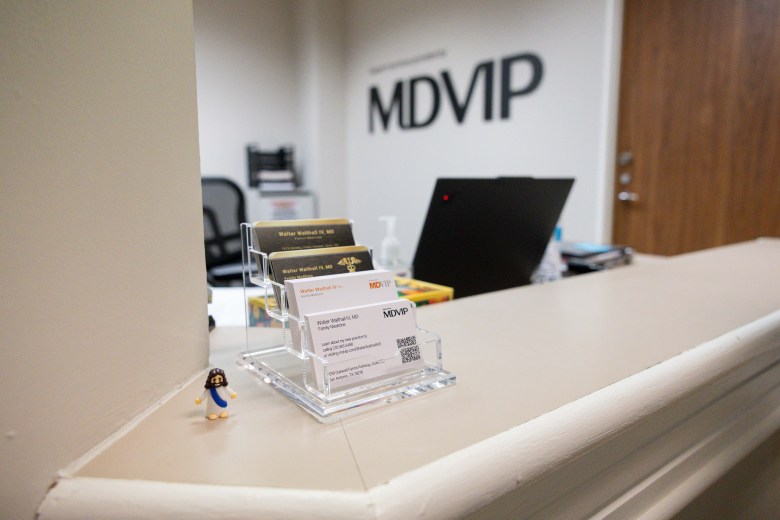 Dr. Walthall’s business cards contain his personal phone number, allowing patients to directly reach the doctor anytime they have a medical concern, a perk of the membership medicine model he offers. Credit: Amber Esparza / San Antonio Report
[But] my clinic mirrors what I had [at North San Antonio Healthcare], which I find very interesting and exciting. We all hopefully in our careers have extra money to put to something. Some people put it into model airplanes. There are people that put that extra money and invest it into their health. Those are the people that I see.
You can say [people interested in] longevity, but I would say more quality of life is what people want. As we get older, we want to be able to still be able to do the things we want to do. It’s not great if I lived to 95 but I’m bed-bound for the last 15 years.
Do you think more practices like yours will open in San Antonio?
It comes back to supply and demand. If patients want this, then I do think you will see more of us. I want all of my [previous] patients over here, if I can get them on board with taking a proactive approach to their health.
One of the biggest issues that we have is, how do you get medical students to pick primary care over a specialty? When I graduated medical school, we broke the record for the number of med students applying to family practice residency programs, we had a big uptrend, and then it started falling again.
From a physician’s standpoint, [the direct primary care model] allows us to actually implement all the tools we were trained with. I used to leave my office at 4:30 in the afternoon, burnt out and tired. Now I leave my office at 5:30 or 6, skipping to my car. I’m in a great mood.