

Times are tough for many families, with rising living costs putting pressure on household budgets and making it harder to plan days out or holidays with children.
But creating fun experiences – and teaching kids important lessons about money – doesn’t have to be expensive.
Abi Foster, a financial expert, author and advocate for making money matters more accessible, says everyday family activities can be a powerful opportunity to help children develop healthy financial habits.
“As someone who teaches in schools, I can tell the difference between a kid that’s talking about money at home and a kid that’s not,” she says.
“Kids who don’t hear about money often become much quieter or nervous around the subject.”
In contrast, children who grow up hearing open conversations about finances tend to be more confident discussing it. “That makes me sad,” Foster adds. “Because those kids often grow into adults who don’t want to talk about money, and that can lead to a whole range of issues.”
Foster has shared several practical tips to help parents save money, as well as advice on raising financially confident children.

Family holidays don’t have to be expensive.
(Halfpoint Images via Getty Images)Plan ahead for family holidays
Planning ahead can make a significant difference to family budgets, particularly during busy periods such as school holidays.
“School holidays are expensive because everyone travels at the same time,” Foster says.
Booking attractions, transport, or accommodation early can help reduce costs. Travelling at quieter times – such as early mornings or less popular days like Sundays – can also make trips more affordable.
Parents should also review loyalty schemes and discount programmes before they travel, with Foster adding: “Railcards, supermarket loyalty schemes and attraction discounts can all help cut the cost of family outings.”
Set a clear holiday budget
While family trips can create lasting memories, Foster warns that some parents feel pressured to overspend.
“And that can lead to huge credit card bills when people spend outside their means,” she says. “Setting a holiday budget at the start of a trip can help families stay on track. Mixing a few paid activities with free outings can also keep costs manageable.”
Ultimately, Foster says, children remember the experiences they share with their parents, more than the amount spent.
She adds: “Simple things like preparing a picnic, cooking together or having a movie night at home can be really fun.”

Planning holidays and days out in advance will help lower costs.
(DragonImages via Getty Images)Look for free activities where you live
Despite rising costs, Foster says there are still plenty of free activities families can enjoy, but many parents simply don’t realise they exist.
“A lot of parents say to me, ‘There’s nothing free anymore,'” she says. “But there actually are loads of free options.”
Museums across major cities frequently host free events and activities, particularly for families. Signing up for mailing lists can help parents stay informed about upcoming programmes.
Other free options include beaches, walking trails and local parks. Libraries are another overlooked resource.
“Libraries spend a lot of time creating events for kids, especially during school holidays,” Foster says. “There are reading events, activities and even apps where you can access audiobooks.”
Many restaurants and supermarket cafés also have special deals, such as kids eat for £1, during the school holidays.

There are a variety of free activities families can do.
(Tom Werner via Getty Images)Turn everyday moments into money lessons
Financial education doesn’t need to feel like a formal lesson. Foster encourages parents to build money skills through everyday activities.
“One of the best things parents can do is create games that work within their own life,” she says.
For example, supermarket shopping can become a budgeting exercise. Parents can give children a small budget and ask them to choose items while keeping track of how much they have left.
“It helps them understand the difference in prices and what they can afford with the money they have,” Foster explains.

It is important that children learn about money in an age appropriate way.
(Elva Etienne via Getty Images)Look below eye level when grocery shopping
Small changes to shopping habits can also reduce weekly spending. One simple trick is to look below eye level on supermarket shelves.
“Supermarkets put the most expensive products at eye level because that’s where your eye goes first,” Foster explains.
Writing a shopping list and planning meals in advance can also prevent impulse purchases. Loyalty cards remain another important tool for saving money.
“In many supermarkets, they’re the only way you’ll get the best prices,” the accountant says.
Another idea Foster shares is trying a “cook with what you’ve got” night before doing the weekly shop, explaining: “Families can challenge themselves to create meals using ingredients already in the cupboard, reducing food waste and unnecessary spending.”
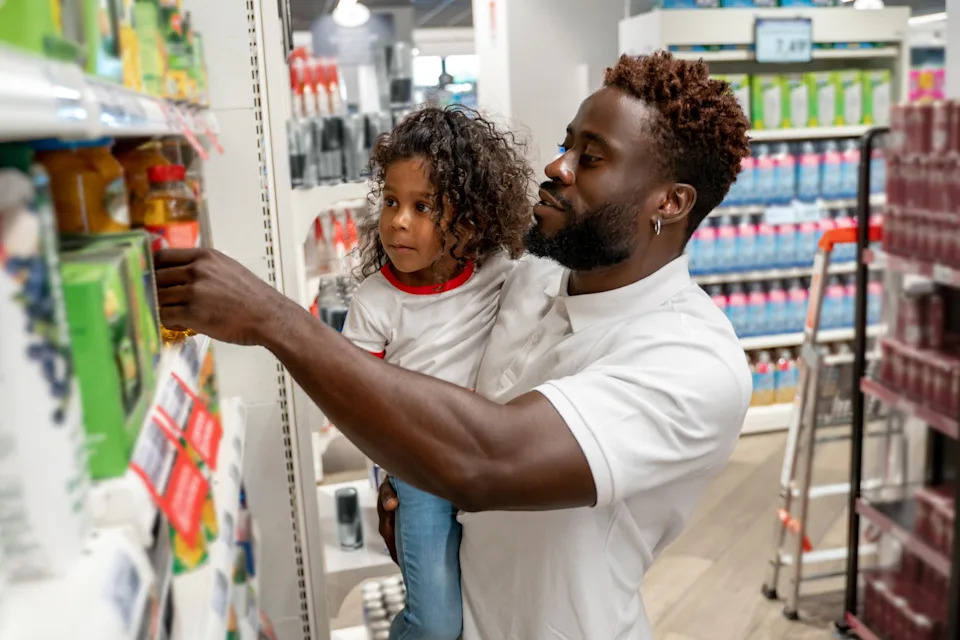
Writing a shopping list together can help shape children’s understanding of money.
(Zinkevych via Getty Images)Remember: financial habits start young
According to Foster, research suggests that children’s financial attitudes can begin forming very early.
“The stats show that your financial mindset is actually set by around age seven,” Foster says.
Children absorb how adults talk about money – whether it is seen as stressful, secretive or simply a normal part of life. That means even simple activities, such as writing a shopping list together or discussing household spending, can shape their understanding.
“Kids are like sponges,” Foster adds. “They’re often really interested in real-life problems and understanding how things work.”