


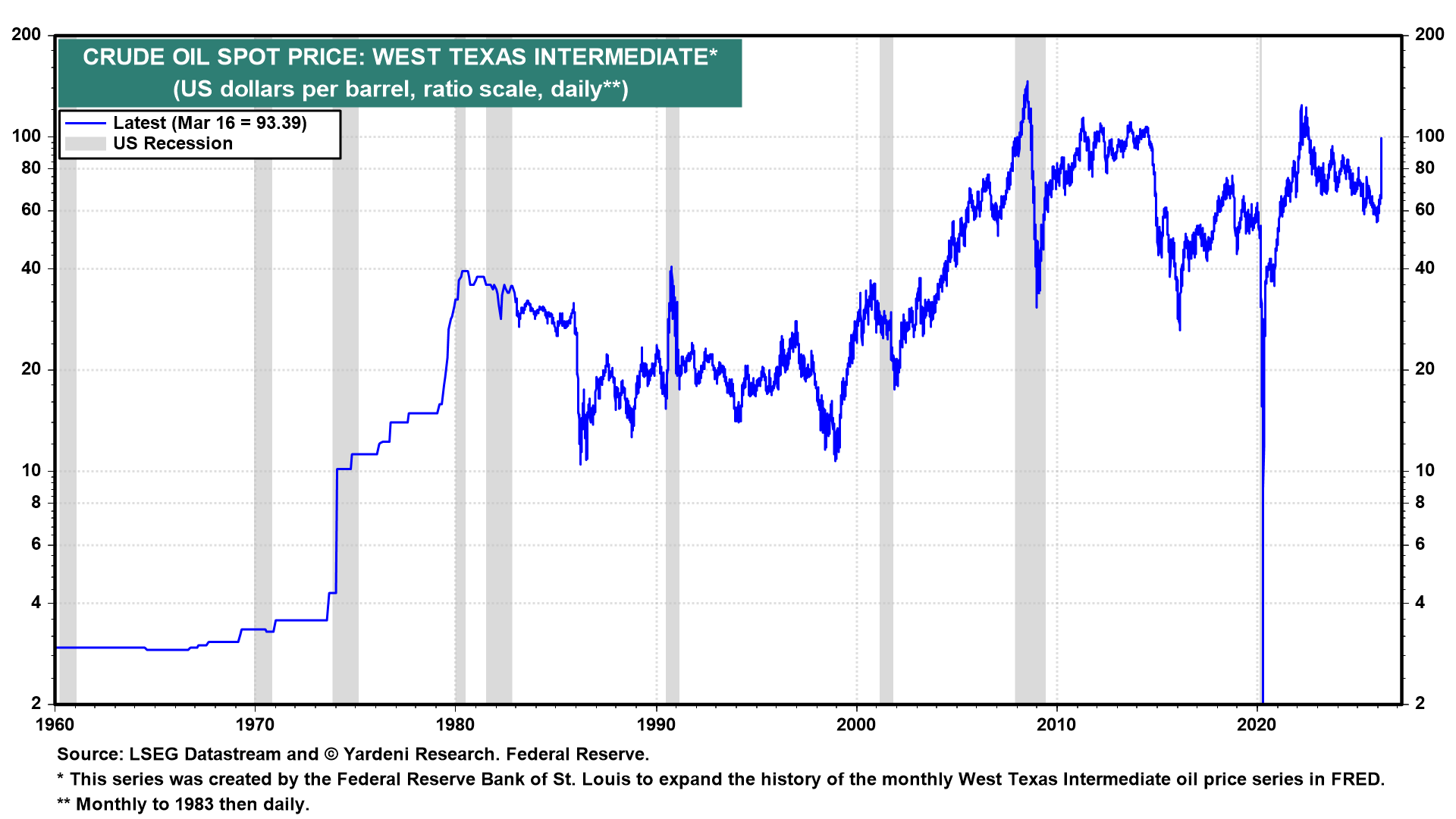
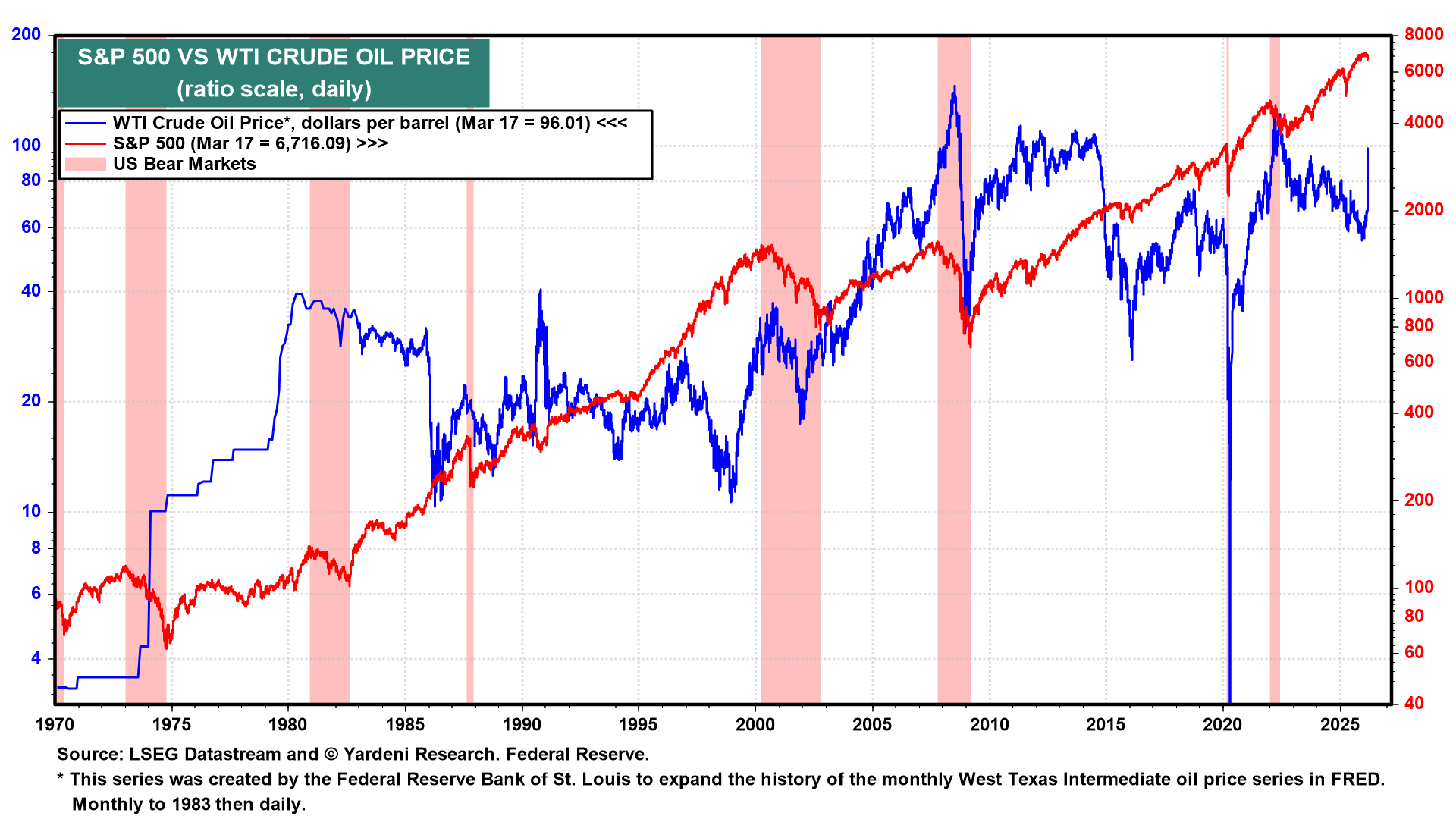
The latest crude oil price spike has drawn comparisons to previous similar spikes (charts). There were six of them before the current one, since 1970. The first five coincided with recessions. The two during the 1970s caused two recessions and boosted inflation, resulting in a lost “stagflationary” decade for the stock market.
The previous spike in 2022 coincided with a bear market in stocks, but there was no recession back then. We concluded that the economy had once again demonstrated its resilience. It has been doing that since the start of the decade, when the pandemic hit, supply chains were disrupted, inflation soared, the Fed tightened, three banks failed, tariffs were imposed, and payroll employment gains dwindled.
The economy’s resilience means that oil price shocks cause far less persistent inflation and much less severe growth disruptions than in the past. Oil shocks are less likely to trigger the kind of sustained stagflation seen in the past, particularly during the 1970s.
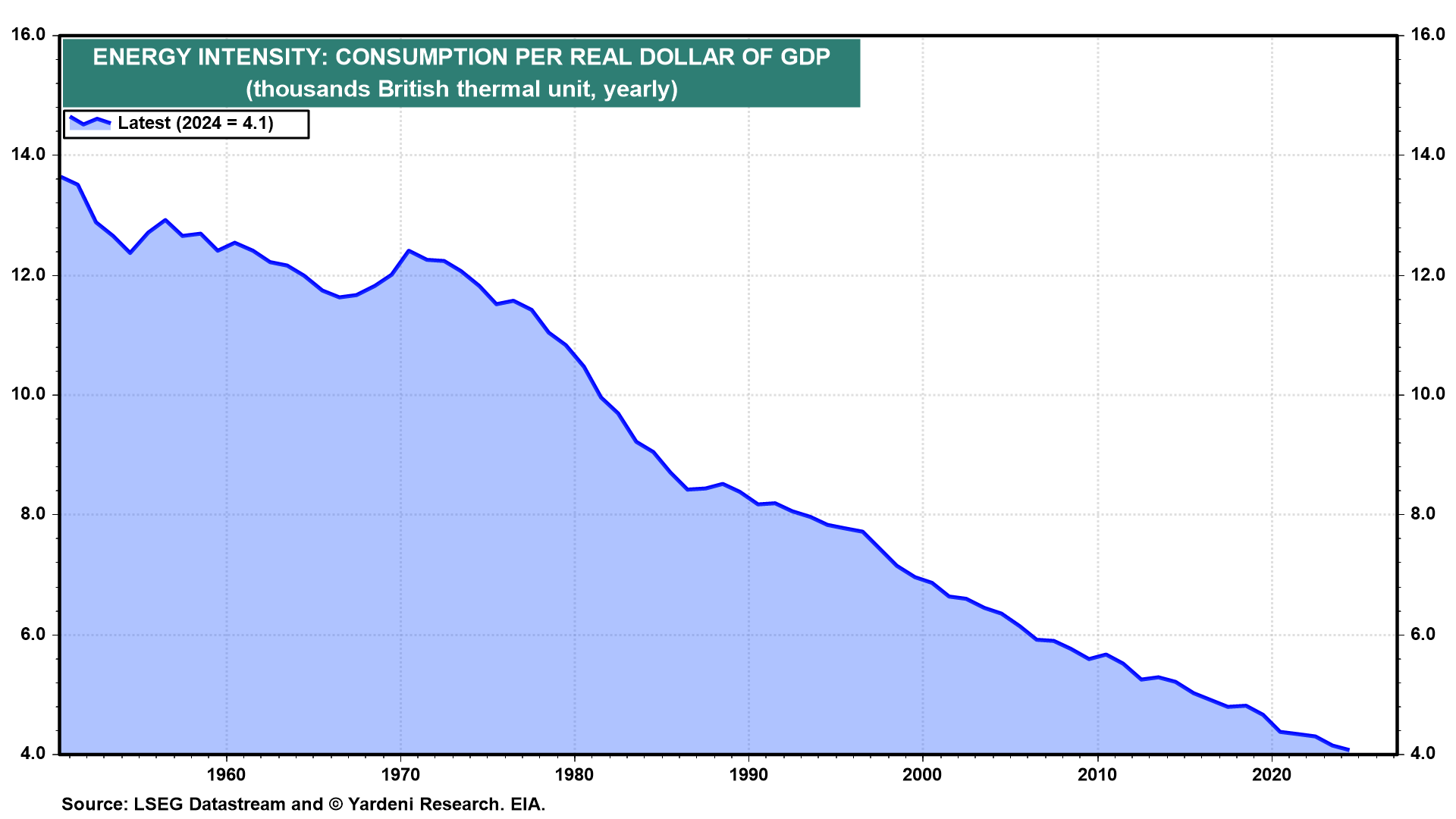
The US economy now requires significantly less energy per unit of GDP than in earlier decades, reflecting efficiency gains and a shift away from manufacturing toward services (chart). As a result, oil price spikes are less inflationary and do less damage to real economic activity than in the past when energy intensity was much higher. (Of course, energy intensity may increase unless data centers can be run more efficiently, as we expect will happen.)
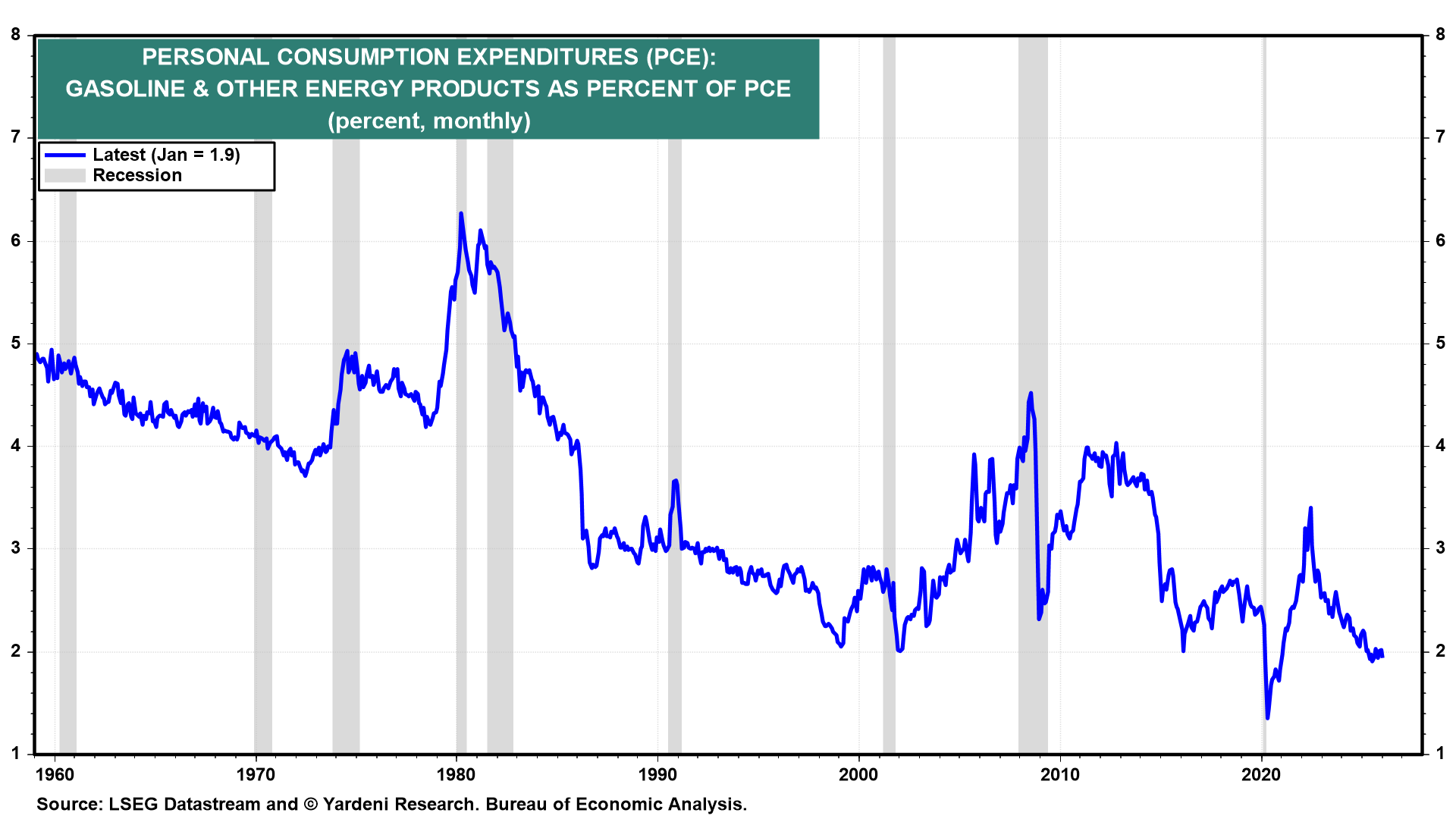
Consumers are similarly more shock-proof. Gasoline and energy products, as a share of personal consumption expenditures, have trended lower over time and are historically low (chart).
On the supply side, the US is energy-independent, a situation that was not the case in the 1970s. The production of US crude oil and other petroleum liquids has consistently exceeded total domestic demand for them since 2023 (chart).
Join thousands who rely on QuickTakes
Unlock the rest of this QuickTakes post — plus all premium content
✓ 5–8 market-moving QuickTakes each week (vs 1–3 on free)
✓ Weekly video commentary from Dr. Yardeni
✓ Complete research archive at your fingertips
Already have an account? Sign in