
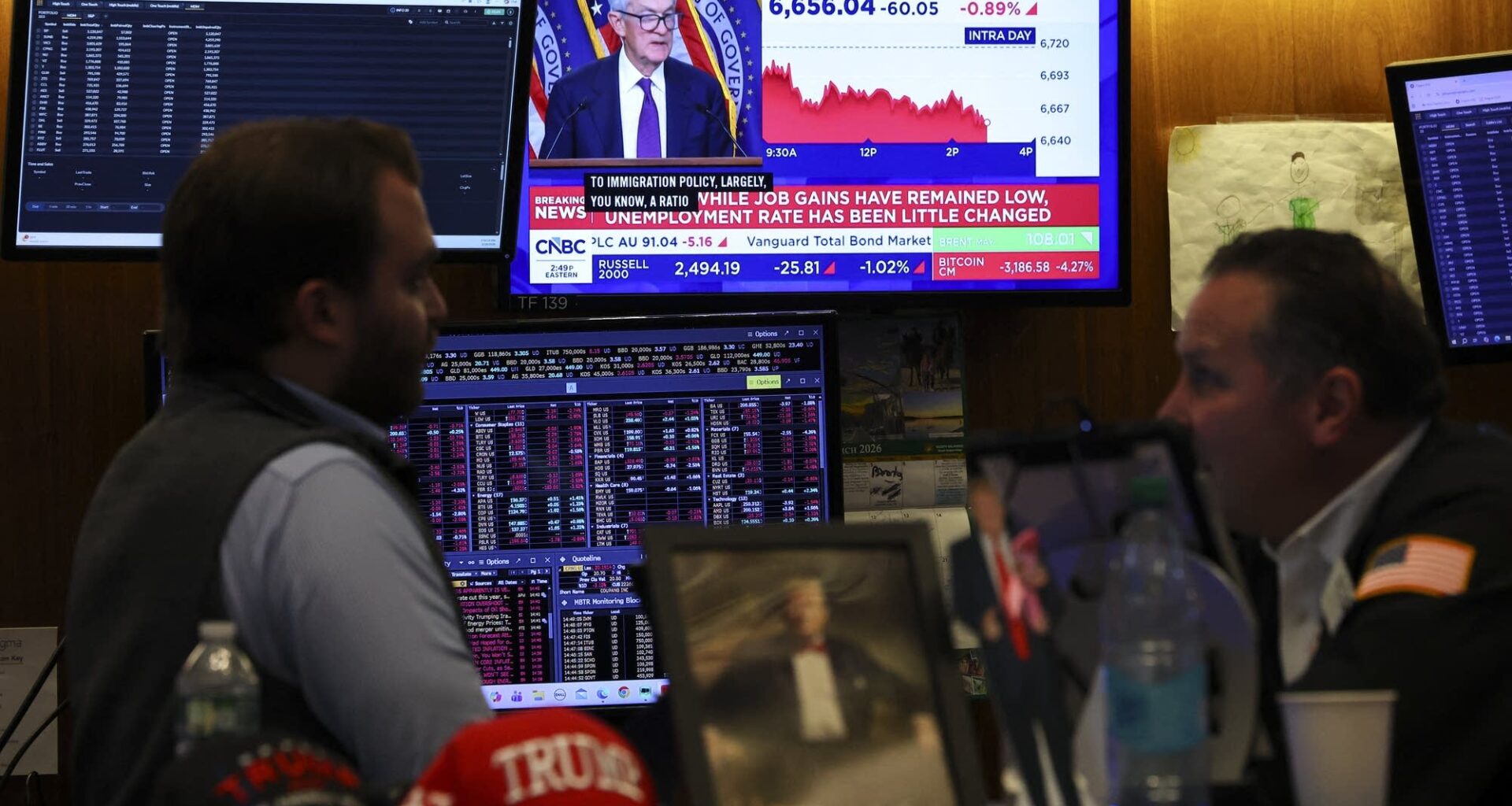
At this week’s Federal Open Market Committee meeting, every single one of the policymakers present surely had the central bank’s so-called “dual mandate” in mind. The mandate lays out two goals to promote a strong economy — maximum employment and stable prices.
Prices are not very stable right now. Consumer price inflation is still hovering above the Federal Reserve’s target of 2%, while producer prices at the wholesale level were rising strongly even before the latest oil shock from the war in Iran. And achieving maximum employment could also be a challenge for the Fed, with a job market that lately has been slowing down or maybe even stalling out.
“For some time, it’s been clear the market has weakened,” said Joe Brusuelas, chief economist at consulting firm RSM.
Over the last 12 months, the economy added 156,000 jobs. Over the year before that, it added more than a million.
But the market has stabilized quite a bit recently, said Christine Cooper, chief U.S. economist and managing director at CoStar Group.
“We had some job losses in February, we had job gains in January, some losses in December, and (they) seem to kind of offset each other,” Cooper said.
She said that with the Trump administration cutting immigration, and baby boomers retiring, slower job growth might not be such a big problem.
“As we have fewer people in the labor supply, we need fewer jobs to be added each month,” Cooper said.
But with little net job growth, there’s a sharp uptick in long-term unemployment, said John Leer, chief economist at the polling firm Morning Consult.
“You continue to see people not being able to find jobs once they were laid off,” Leer said.
And workers are starting to fall behind financially, said Laura Ullrich, director of economic research at jobs website Indeed.
“Given the stagnancy we’ve seen across many sectors in the labor market, it’s not surprising to me we’ve seen wage growth decline,” Ullrich said.
The wages employers are posting for new hires on Indeed are up just 2.1% from this time last year. Consumer prices are up 2.4%. And that brings things back to the “dual mandate.”
Brusuelas said the Fed can’t attack both ends of it at the same time.
“Given the oil and energy shock which is shaping up to be the largest since the 1970s, the Federal Reserve is going to find itself in a tension between price stability and maximum sustainable employment,” he said.
Control over inflation will be the first order of business for the Fed, Brusuelas said, before it does anything to stimulate the labor market — however much it might be struggling.
“Price stability is a precondition of maximum sustainable employment,” he said.
That’s because without price stability, employers won’t feel confident enough in the economy going forward or have the financial resources to ramp up hiring again.
Related Topics