
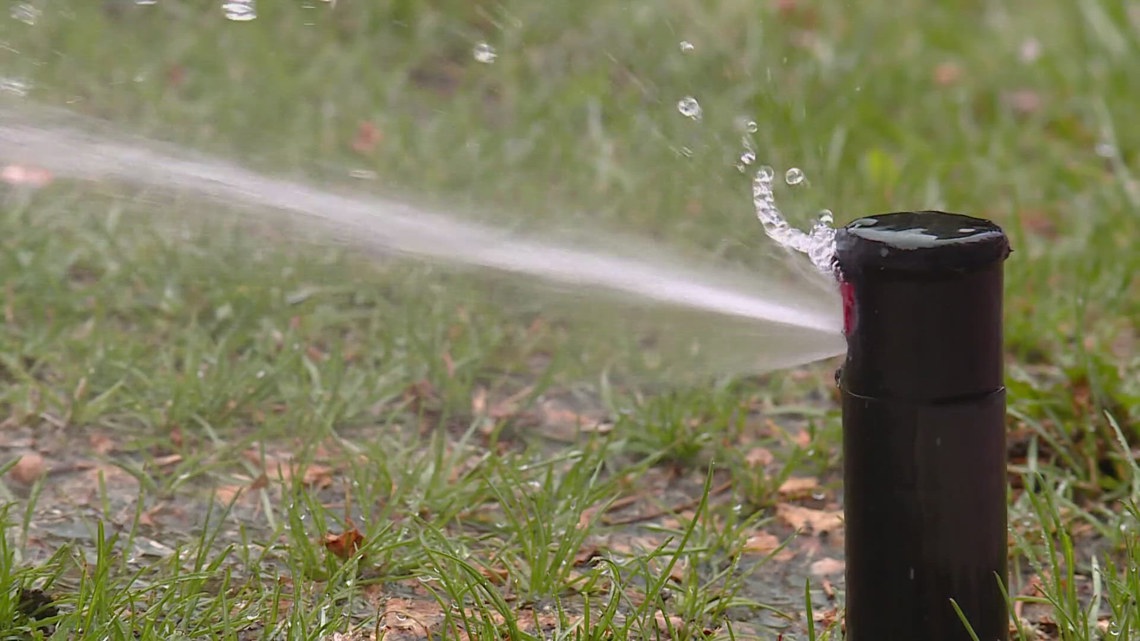
Denver Water says this is the first time since 2013 that additional limits beyond the typical summer rules that have been put in place for outdoor watering.
DENVER — Additional water restrictions in Denver are set to begin March 25, as water managers warn this year’s snowpack is among the lowest on record.
Denver Water says it plans to implement the restrictions following a board meeting, marking the first time since 2013 that additional limits beyond the typical summer rules that have been put in place for outdoor watering.
Under the restrictions, customers will be limited to watering outdoors two days per week.
“We’re going to be supply limited, and we don’t have the snowpack to fill the reservoirs,” said Nathan Elder, manager of water supply for Denver Water. “We’re going to have to ask our customers to conserve water and we’re going to have to go on mandatory water restrictions.”
Denver Water says businesses and homeowners will be assigned two watering days per week. Customers caught watering lawns outside of those days could face potential fines.
Typical summer watering rules:
Water during cooler times of the day — lawn watering is NOT allowed between 10 a.m. and 6 p.m.Water two days per week, adding a third day only when needed. (Watering more than three days is not allowed.)Do not allow water to pool in gutters, streets and alleys.Do not waste water by letting it spray on concrete and asphalt.Repair leaking sprinkler systems within 10 days.
Anticipated March 25 Stage 1 Drought Rules:
Water during cooler times of the day — lawn watering is NOT allowed between 10 a.m. and 6 p.m.Watering more than two days is not allowed.Do not allow water to pool in gutters, streets and alleys.Do not waste water by letting it spray on concrete and asphalt.Repair leaking sprinkler systems within 10 days.
RELATED: Denver Water asks customers to not turn on sprinklers during heat wave
The decision comes as the region faces a significant lack of snow, a key source of water for the Denver metro area.
“What we’re seeing right now is not good. We’re looking at a really, really low snowpack,” Elder said.
About half of Denver’s water supply comes from the South Platte River, where snowpack levels are especially concerning. The basin is sitting at just over half of normal levels and ranks as the worst on record.
In the Dillon Reservoir area, a critical storage source for Denver Water, snowpack is roughly 55% of normal. That shortfall means less water flowing into Denver-area reservoirs this spring and summer.
Denver Water officials say they had hoped for a turnaround, but long-term forecasts show continued warm and dry conditions.
“That’s not in the forecast right now. Our long-term weather forecasts are really showing continued hot, dry pattern,” Elder said.
If conditions worsen, restrictions could become even tighter. Officials say one-day-per-week watering limits are possible later this summer if the region remains hot and dry.
A complete ban on outdoor lawn watering – something Denver has never implemented – remains part of the agency’s drought plan, though officials say it is unlikely this year.
Denver Water says it won’t have a clearer picture of how much water will be available until spring runoff is measured in May and June.
To return to normal levels, the region would need an additional 7 to 7.5 feet of snow in the mountains this April.
“We’re just not expecting to fill up those reservoirs this year,” Elder said.
Water managers also warn this may not be a one-year problem.
“What we know about droughts is typically they’re not a one-year event,” Elder said. “We do need to limit demand just in case we have the same situation next year.”