
Talking about being stuck in a rut … with a gut.
You’ve tried everything to lose weight — you’re eating healthier, exercising more, managing stress better and getting adequate sleep — but nothing seems to move the needle on the scale. Have you considered your chemical exposure?
Obesogens are endocrine-disrupting chemicals (EDCs) that sabotage weight loss efforts by altering fat cell development and disrupting energy balance.
 It’s not you, it’s the obesogens! You may be struggling to lose weight because of your exposure to chemicals that promote fat accumulation. Rostislav Sedlacek – stock.adobe.com
These chemicals have fancy names like bisphenol A, phthalates and polybrominated diphenyl ethers — and unfortunately, they are pretty much everywhere.
“They are in the water, they are in the food, they are in the home,” Dr. Robert Lustig, an emeritus professor in the Department of Pediatrics and a member of the Institute for Health Policy Studies at UC San Francisco, told The Post.
Here’s everything you need to know about obesogens — including steps you can take to reduce exposure — so you can finally tip the scale in your favor.
How do obesogens work?
EDCs mimic, block or interfere with hormones that regulate growth, reproduction, metabolism and mood.
They are a growing problem because they’re in everyday items — like food packaging, cosmetics, clothes and cleaning supplies — so they’re almost impossible to avoid. You ingest, inhale or absorb them into your body.
“If endocrine-disrupting chemicals alter DNA, they are called mutagens,” Lustig said. “If they differentiate or grow adipocytes, they are called obesogens.”
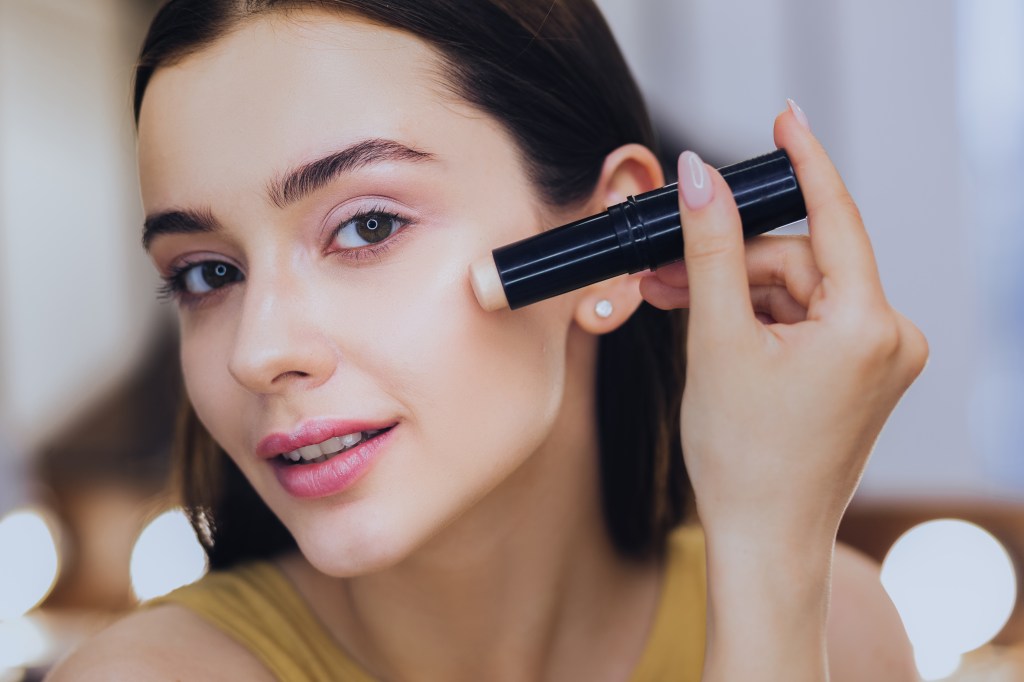 Endocrine-disrupting chemicals are frequently found in cosmetics. They can be absorbed by the skin. zinkevych – stock.adobe.com
Adipocytes are fat cells. Obesogens can increase the number and size of fat cells in the body and promote the storage of calories as fat instead of burning them for energy.
These scale shifters can also hijack hormonal control of metabolism, appetite and satiety.
How sure are we that these chemicals affect weight?
Lustig said the scientific evidence linking obesogens to obesity is “very strong.”
There’s “clear causation” in animal studies, he added, though it’s harder to demonstrate causation in humans.
“Randomized controlled trials are impossible and would be illegal,” Lustig said, nodding to the ethical concerns of exposing humans to substances suspected of causing long-term health damage.
“We do have a few historical studies that demonstrate that prenatal exposure to certain obesogens resulted in obesity at later ages.”
Which are the most powerful obesogens?
“The chemicals that are the most potent obesogens are those that act as estrogens,” Lustig said.
“Many of these are insecticides because they disrupt the insect life cycle,” he continued. “Others include organic household compounds like vinyl flooring, plasticizers and flame retardants. And, of course, the Big Kahuna — fructose, the sweet molecule in sugar.”
Obesogens include bisphenol A, found in plastic products and the lining of canned foods; phthalates in plastics, fragrances and personal care products; “forever chemicals” in non-stick cookware, waterproof fabrics and food packaging; parabens in beauty products; and organotin compounds in pesticides and PVC pipe.
How can you best avoid obesogens?
Lustig recommends buying organic food to reduce exposure to insecticides, filtering water, living far away from major freeways and high-traffic roads to minimize contact with harmful air pollutants and eating less sugar.