
Bank of Canada Governor Tiff Macklem spelled out the dual impacts of soaring oil prices for the national economy at the central bank’s meeting on Wednesday, explaining that pricier barrels of crude linked to the war in the Middle East are hitting businesses and consumers at the fuel pumps, while padding the coffers of commodity producers.
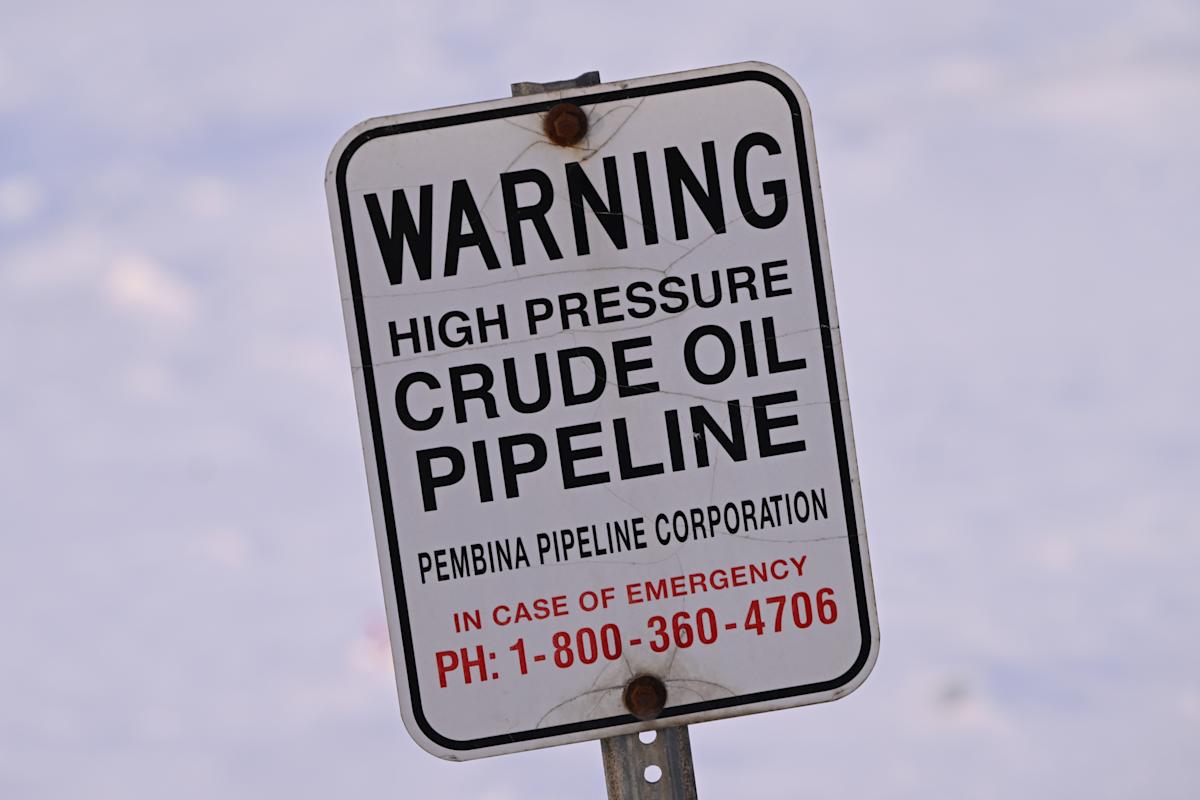
According to new analysis, Canada could lift its “struggling” gross domestic product by $31.4 billion per year over the next decade by boosting oil export infrastructure by about one-third, or 1.5 million barrels per day. The joint study by Studio.Energy and ATB Financial’s economics team published on Wednesday says this would translate to a 1.1 per cent increase in Canada’s real GDP, and create 112,000 jobs over 10 years.
The latest GDP reading from Statistics Canada shows the economy shrank at an annualized rate of 0.6 per cent in the final quarter of 2025. The national data agency says Canada’s GDP increased 1.7 per cent last year, the slowest pace of growth since 2020.
“GDP growth does not happen by aspiration alone; it will require export infrastructure, production growth and the confidence to build,” Peter Tertzakian, founder and CEO of Studio.Energy, stated in a news release accompanying the report.
“New energy infrastructure doesn’t yield just a marginal gain for Canada’s economy — it’s a structural shift that will pay ongoing export dividends,” added ATB chief economist Mark Parsons.
“Expanding our export capacity would fundamentally improve our national economic health and global standing at a time when Canada needs it most.”
The soaring price of oil, and how this will reverberate through Canada’s economy, was a major topic of discussion at Wednesday’s central bank rate announcement. The Bank of Canada held its policy rate in place for a third consecutive meeting, as volatile commodities muddied an already uncertain economic outlook.
Meanwhile, tanker traffic through the Strait of Hormuz, which links the Persian Gulf to Gulf of Oman and the Arabian Sea, remains at a standstill. The passageway is estimated to handle about a quarter of global oil supply, and is considered the world’s most important chokepoint for fossil fuel energy.
“It’s still too early to assess the impact of the war on growth in Canada. If higher oil prices are maintained, this will boost incomes from our energy exports,” Macklem told reporters in Ottawa on Wednesday. “At the same time, higher oil prices squeeze consumers, leaving them with less income for everything else.”
From Keystone XL to Energy East and Northern Gateway, Canada has a long history of oil pipeline plans that failed to break ground. Trans Mountain, South Bow (SOBO.TO) (SOBO), and Enbridge (ENB.TO)(ENB) are currently evaluating oil pipeline expansion projects.
Prime Minister Mark Carney has pledged to streamline the approval process for new energy infrastructure. The federal government’s Major Projects Office was established last August. Its “one project, one review” mandate aims to shrink approval time to a maximum of two years.
On Wednesday, TC Energy (TRP.TO)(TRP) CEO François Poirier urged Ottawa to pick up the pace. The Calgary-based company’s natural gas distribution network spans Canada, the U.S., and Mexico.
“We’re competing for international customers to deliver them LNG. We want to diversify beyond the U.S.,” Poirier said in an interview with Bloomberg News.
“We don’t get to pick the timelines.”
Jeff Lagerquist is a senior reporter at Yahoo Finance Canada. Follow him on X @jefflagerquist.