
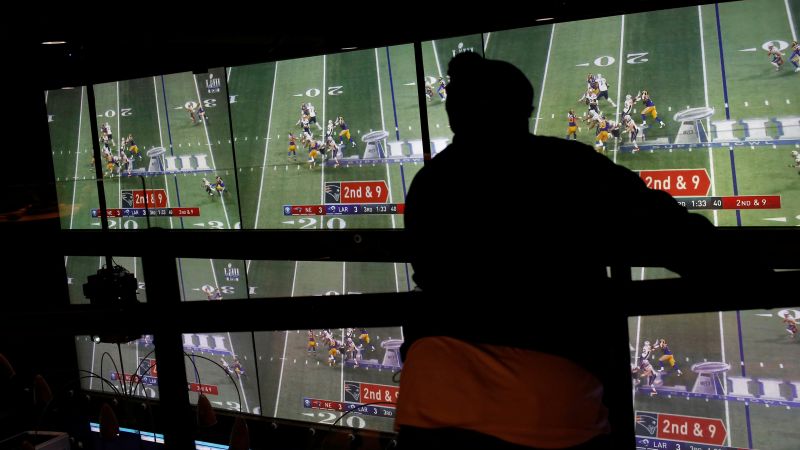
More than $3 billion will be wagered on March Madness this year. Around $30 billion was bet on the last NFL season. All evidence of an explosion in sports gambling across this country.
Some of the leagues you love are making a lot of money from the data that makes some of the most popular bets possible: those live, in-game, micro-bets like the yardage of the next drive, the speed of the next pitch, or who will score the next bucket.
These are among the most lucrative bets for the sportsbooks, and, say critics, also potentially the most addictive because dopamine hits are available maybe every minute, rather than just once a game. In some sports you can bet on every single play.
The NFL takes its involvement with gambling further than some other organizations. The most bet-on sports league in the United States licenses its data, like many other leagues, to sportsbooks through a company called Genius Sports. But the NFL doesn’t just take cash payments, but equity in exchange for that data. So, the NFL is amassing an ownership stake in Genius itself, which not only charges flat fees in its deals with the sportsbooks, but also in some cases takes a cut of the profits as well. So, more lost bets can equal higher payouts to Genius and therefore a boost for its investors. The NFL wouldn’t tell CNN the size of its stake in Genius, but the latest SEC filing shows it’s at least 6%.
This new venture and revenue stream is a dramatic about-face for NFL commissioner Roger Goodell, who back in 2012 argued strongly against allowing betting on sports. The NFL and others sued to stop it. But in December last year, Goodell was an honored guest at the Genius Sports investor day. There the company’s executives hailed new tech called BetVision as “the world’s first interactive in-play betting experience.” Sports fans can watch a game and bet by touching a player live in action on their screen, the demo showed.
This near-constant opportunity to bet raises a red flag for addiction experts.
“We do know that if you’re gambling on sports with higher frequency, there’s going to be a much higher likelihood that you have a gambling disorder,” said Dr. Timothy Fong, co-director of the UCLA Gambling Studies Program. “Gambling disorder is an addictive disorder. We classify in the same chapter that we do with all the other addictions: tobacco, alcohol, cannabis, opioids, cocaine, and stimulants,” he added.
Matt Fleckenstein, chief product and technology officer at Genius, said on investor day of the company’s tech: “The end result is an immersive, intelligent, interactive tool to convert traditional fans into high-engagement, in-play bettors.” Such frequent live bettors are, added Fleckenstein, “significantly more profitable for Genius and for our sportsbook partners.”
Harry Levant, a gambling addiction therapist and advocate for tighter regulation, highlighted the other side of that equation.
“Most profitable because people lose the most,” he told CNN. “The NFL, let’s be clear, has invested in a company whose stated mission is to convert their fans into live in-game bettors … They want to take fans, not only get them to gamble, but convert them.”
Levant added, “I’m in favor of the legalization of sports gambling, but that’s not what this is. This is AI technology taking a known addictive product, delivering it at light speed in ways that couldn’t be done without the leagues being complicit partners.”
The NFL declined an interview for this story, but emailed a written statement that reads in part, “This partnership allows us to monitor betting patterns, identify suspicious activity and take action to safeguard the integrity of the game … We work with experts and community partners to address and mitigate gambling risks through education, prevention and support initiatives.” And on the revenue: “The NFL does not receive money on individual wagers. From our standpoint, our commercial partnerships are primarily focused on game integrity and consumer protection.”
CNN reached out to Genius Sports multiple times and eventually got this reply: “Appreciate the outreach. Let me check with NFL.”
At that Genius investor day, Goodell was enthusiastic. “We’re investors,” he said while being interviewed on stage by Steven Bornstein, a former senior executive at the NFL who is now president of Genius Sports, North America. “And just extended with you recently,” added Goodell. “From our standpoint, I think that speaks louder than anything I could tell you right now.”
Asked by Bornstein whether he was happy with the first five years of the relationship between Genius and the NFL, Goodell replied, “Yes, we are very happy.”
Also at the event, which was not covered outside niche business websites, Genius’s chief commercial officer, Jack Davison, said: “Our goal is simple. We build products that help sportsbooks increase handle, improve margins and engage and retain players.” Handle is the amount of money bet. Davison predicts the US betting market will nearly double over the next five years.
That’s another way to frame the NFL’s investment, according to Levant, the critic.
“They own a huge piece of the company whose business model is to get people to lose more quickly,” he said. “And they openly say that’s what we’re trying to do.”
Sports gambling has only been legal in much of the United States since a Supreme Court decision in 2018 cleared the way for states to set their own rules. Since then, 39 states and the District of Columbia have legalized online sports betting and are now enjoying the tax revenue that it brings.
Back in 2012 when the NFL was fighting that legal battle against gambling on games, Goodell was deposed under oath. Asked about threats to the integrity of the game of football he said, “Gambling would be number one on my list.”
He argued that fans could lose faith in the game if they feared gamblers might influence outcomes to make good on their wagers.
And in a written declaration to a district court, Goodell wrote that legalized gambling “would also greatly increase the likelihood that the allegiance of certain fans will be turned from teams, players, and high-level athletic competition, toward an interest first and foremost in winning a bet.”
He spelled out the league’s view in his deposition: “If you’re a 49ers fan, we want you rooting for the 49ers to win, not win by a certain number of points … not to lose but I win my bet. We want you rooting for that team to win.”
An NFL spokesperson, in an email to CNN, explained the shift from then to now: “With betting legal in 39 states and D.C., and technology making it more accessible, engagement became necessary. Partnering with regulated operators provides visibility into betting markets, enabling the NFL to monitor for suspicious activity and better protect the game, players and fans.”
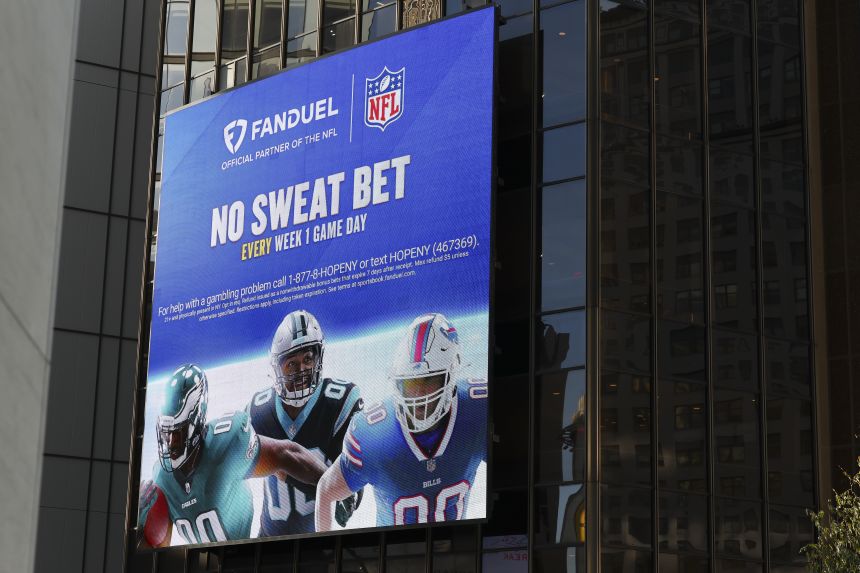
The NFL says it has taken a “thoughtful, long-term approach” and it was three years after the Supreme Court’s decision, that the NFL inked that deal with Genius, a company that now has that stated aim to “convert traditional fans into high-engagement, in-play bettors.” Davison, the Genius executive who spoke on investor day, explained that in just one year due to their innovative technology, “in the NFL specifically, we’ve seen a 38% increase in plays per device and a 22% increase in minutes per device.”
He said that in-play betting currently accounts for about 30% of all money wagered on the NFL.
“Mature markets sit at 60 to 70%,” he said. “Indicating there is still significant growth ahead of us.”
The NFL’s investment in Genius Sports grows or shrinks, in part, on gambling profits well beyond the gridiron. Genius Sports, which is also in the business of enhancing the sports viewing experience, boasts data deals with over 400 sports leagues and federations worldwide, including the NBA. And more than 650 sportsbooks. On some of those deals, according to presentations made on investor day, Genius takes not just a flat fee but a cut of gambling profits.
Genius has also developed technology that increases the amount of time during a game that bets are available, which potentially increases the sportsbooks’ profits. In England, where the company is headquartered, Genius boasts that its technology now facilitates gambling during 97% of Premier League soccer games and increased the margin for one sportsbook by an impressive 23%.
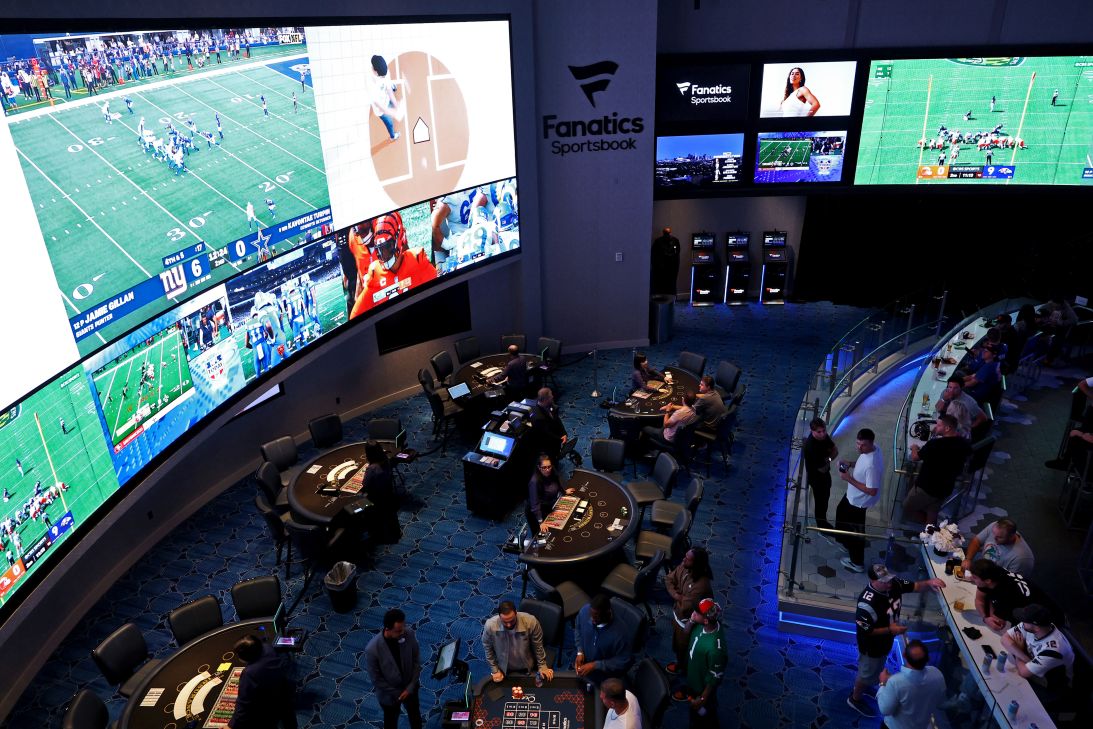
“These are not marginal gains,” Davison explained to investors that day in December. “These are structural improvements to the economics of in-play trading, and another way we’re empowering our sportsbook partners to maximize their revenue.”
“Revenue. That’s what the gambling industry calls it,” Levant told CNN. “You will not hear me use that word because what we’re talking about are losses … How much the public loses.”
Shane Kraus, director of the Behavioral Addiction Lab at UNLV, echoed Fong’s and Levant’s concerns over the addictive potential of micro-bets.
“The greater access you have to something, the greater the chance that you’ll have disordered or addictive behaviors,” he explained. “There’s inherent risk in gambling, but there’s much lower risk in certain things and much higher risk in other things. The goal is going to be eliminating, I think, some of the very high-risk things … Like live betting and parlays.”
Levant says micro-bets are especially problematic. “It’s about trying to get people and families to lose money more quickly,” he said.
He was, for many years, a problem casino gambler. He said he was convicted and disbarred from practicing law after stealing nearly $2 million from his clients to fuel his habit. He was sentenced to prison time but given instant parole. Levant says he made himself a promise to do whatever he could to prevent other people from falling into the same addiction trap that he did.
He trained as a therapist and now advocates for more safeguards in the gambling industry.
“This is not what the American people asked for,” he says. “We liked our sports before it became the equivalent of a non-stop slot machine.”