
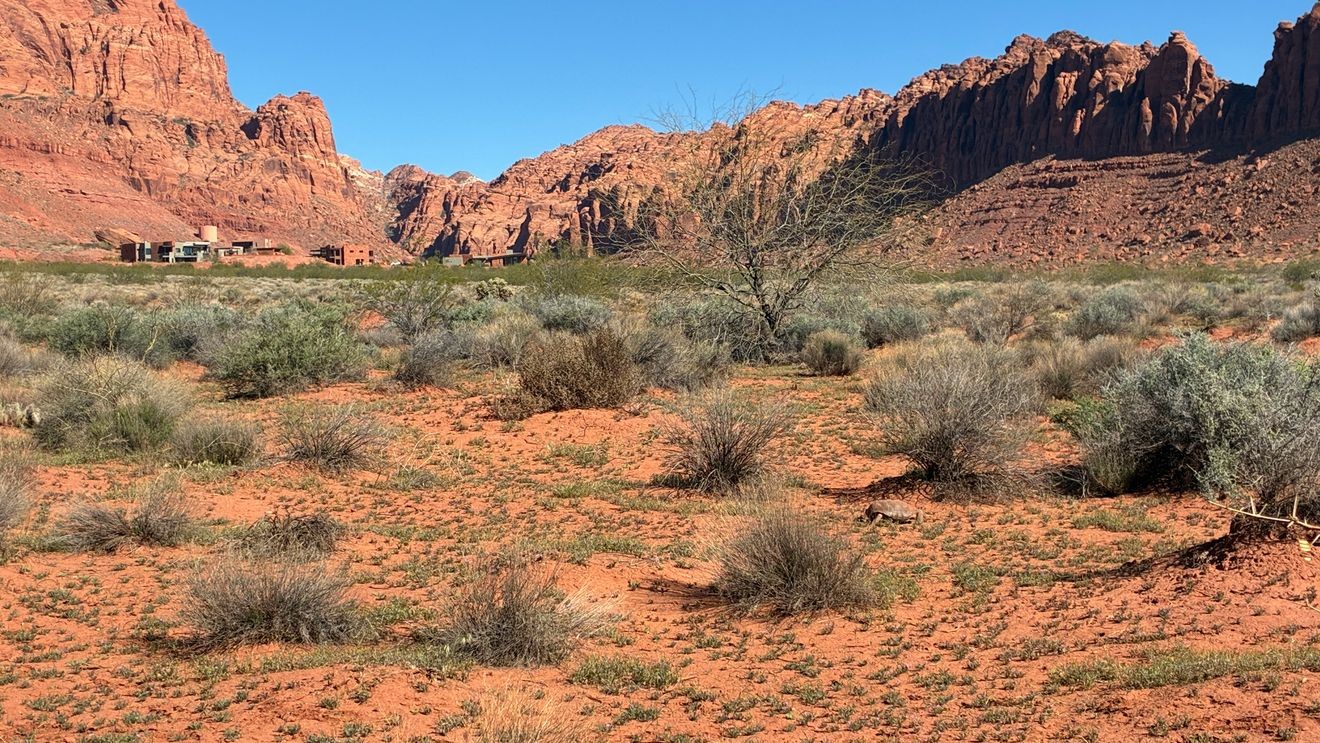
IVINS, Utah (KUTV) — There has been a spike in visitors at Snow Canyon State Park as beloved Mojave Desert tortoises make their way out in the 90-degree heat.
“Lots of people will come to our park and their main mission is to see a Mojave Desert tortoise,” Snow Canyon State Park naturalist Cheyenne Winchester said.
The desert tortoises were spotted along Toe and Berm trails. Ivins resident Paula Garver spotted one and said it never gets old seeing wildlife.
MORE | Utah State Parks
“This is a lot earlier this year, and some of them that I’ve seen are still covered with the sand, so it looks like they’re just digging out from where they hibernated all winter,” Garver said.
According to Snow Canyon State Park, the tortoises spent 85% of their life underground in burrows, but are coming out now for food.
“Temperatures between 75 degrees and 90 degrees is the best time, and the tortoises are herbivores, so they’re going to be eating plants and they love the spring wildflowers.”
The tortoises are only found in the Mojave Desert, and Snow Canyon is the northernmost area where they live. There are about 4,000 in Washington County, a number that’s going down due to habitat and resource loss.
“The Mojave Desert tortoises are keystone species in the environment here, and so if the Mojave Desert tortoise goes, it’s going to affect a lot of other systems in the desert,” Winchester said.
Winchester said resources could run out quicker this year due to the dry heat.
“When we have less water like we’ve had for the past couple years, there’s less wildflowers for them and less water for them to drink, and so they’re not able to sustain the numbers that they currently have.”
While more visitors coming in will contribute through park entry fees to protecting their habitat, Winchester said they are hard to monitor, often going off-trail to take photos or leaving pets off-leash.
“Our tortoises, they do live underground in burrows, and if you start walking off in the bushes, you can collapse those burrows, and tortoises are only good at digging one way, so they can dig in, but they can’t dig out,” Winchester said. “So, if they get stuck in a collapsed burrow, they won’t be able to make it out.”
The Mojave Desert tortoise is federally protected, so it is illegal to touch them. Even so, some visitors take them home.
“Tortoises, they really like their home, so if you were to move it to a different location or take it home with you, the tortoise is going to try to find its way back home, and so it can exhaust itself trying to get home,” Winchester said.
Winchester said pets may also scare the tortoise, causing them to urinate, losing the essential water supply they hold for the year. Tortoises do need your help if moving them out of the roadway.
“You’re going to do the tortoise waddle where you pick them up from the sides, and then you keep them really close to the ground, and you’re going to waddle across the road in the same direction that they were moving,” Winchester said.
Garver and other residents say that with more construction coming to the area, they think it’s more important than ever to protect the tortoises within the park.
“They’ve been here a long time, and it’s their home,” Garver said.
If you are hoping to spot a tortoise, the park recommends trying out Padre Canyon, Toe Trail, and Berm Trail in the morning. They range in size from a dollar coin to a volleyball.
The warm weather is also bringing out lizards and snakes, so the park said to keep your hands and feet where you can see them and avoid any narrow holes in the ground.
The park added that it is important for hikers to stay hydrated in the heat. They recommended hikers pack one liter of water per person per hour of activity. The park is open from 6 a.m. to 10 p.m.
_____