
Two leading U.S. defense firms have pulled off what they’re calling a first-of-its-kind demonstration of fully autonomous electronic warfare. The test showed unmanned systems detecting and countering electromagnetic threats in real time, no human in the loop required.
The March 11 announcement marks a concrete step toward the Pentagon’s long-stated goal of coordinated, AI-driven command and control over multiple unmanned platforms. As adversaries invest heavily in radar, jamming, and communications disruption, the pressure to automate responses at machine speed has never been more acute.
Electronic warfare has historically demanded constant human attention, analysts monitoring signal environments, operators making split-second decisions. The L3Harris-Shield AI integration suggests that model may be changing faster than many expected.
Fusing a Real-Time Picture of the Electromagnetic Spectrum
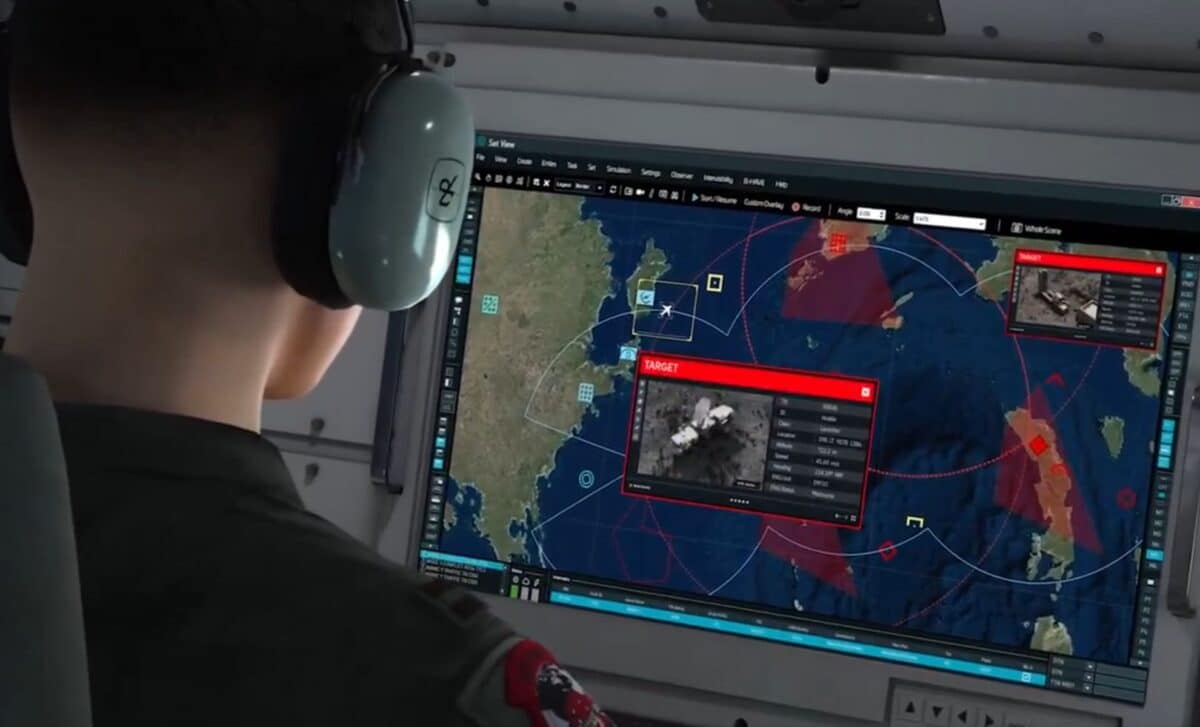
At the heart of the demonstration was L3Harris’ Distributed Spectrum Collaboration and Operations platform, known as DiSCO™, working in tandem with Shield AI’s Hivemind mission-autonomy software. According to L3Harris, DiSCO gathered and fused threat intelligence from multiple unmanned aircraft systems simultaneously, generating what the companies describe as a common operating picture of the electromagnetic spectrum.
That fused intelligence picture was then handed off to Hivemind-powered UAS, which used it to autonomously identify safe operating zones and execute tactical maneuvers, all without human direction. The test also incorporated L3Harris’ Green Wolf electronic warfare ground vehicle, which contributed electronic attack and detection capabilities, alongside a software-defined radio payload providing electronic support and a Shield AI UAS communications relay platform.
The simulation environment was hardware-in-the-loop, meaning actual hardware interacted with the software under conditions designed to replicate real-world operational scenarios, a more rigorous testing standard than pure software modeling.
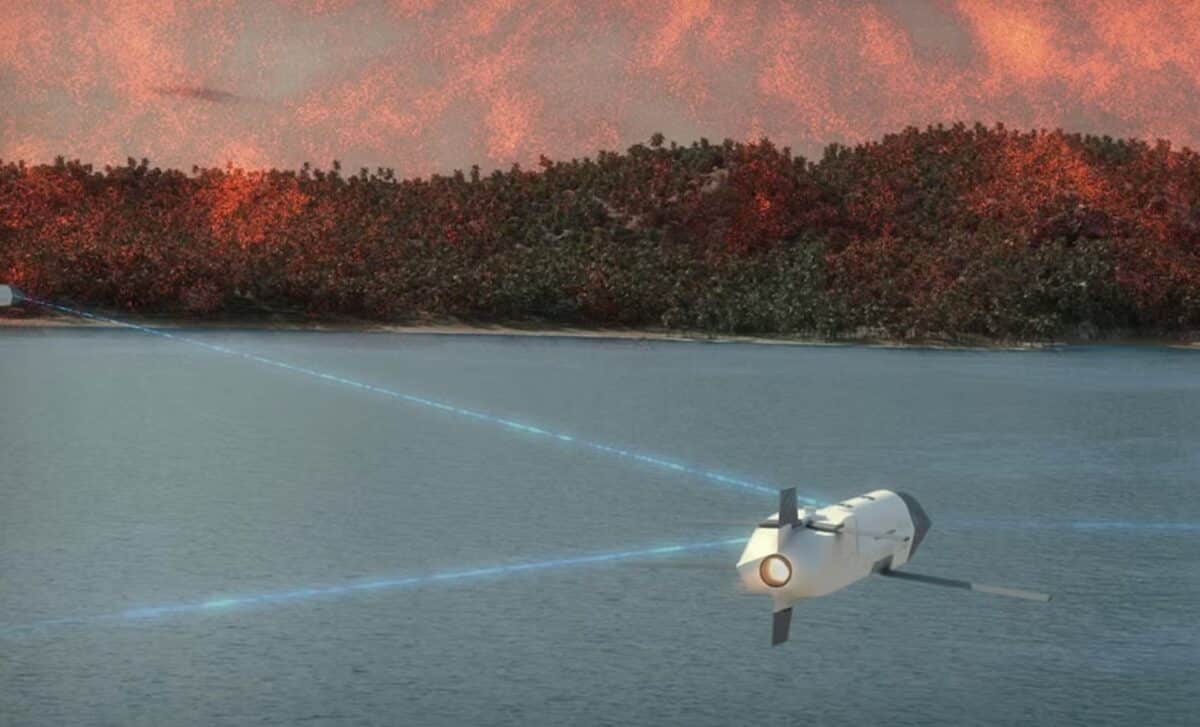 AI Fuses Drone Intel, Commands EW Tactics with No Human Required ©L3Harris
Why Machine Speed Changes the Calculus
The core argument behind autonomous electronic warfare isn’t just efficiency, it’s reaction time. As Shield AI Vice President of Hivemind Solutions Christian Gutierrez put it, “Electronic warfare moves at machine speed, and operational advantage depends on autonomy.”
Human operators, however skilled, cannot process and respond to electromagnetic signals as quickly as AI-driven systems. In a contested spectrum environment, where adversaries are actively jamming, spoofing, and exploiting communications, milliseconds of delay can mean mission failure or platform loss. The DiSCO-Hivemind integration addresses that gap by keeping analysis and response entirely within the machine loop.
According to L3Harris President of Spectrum Superiority Lauren Barnes, the demonstration directly addressed standing Pentagon requirements: “By integrating autonomous decision-making with advanced battle management technology, we’re answering the Pentagon’s urgent call for coordinated command and control of multiple unmanned systems.”
Live Flight Testing on the Horizon
The hardware-in-the-loop simulation was explicitly designed as a stepping stone. Both L3Harris and Shield AI have announced plans to conduct live flight testing later in 2026, using actual radio frequency emitters, physical platforms, and operational payloads for coordinated electronic warfare missions.
That transition from simulation to live airspace will be the real stress test. Real-world radio frequency environments are inherently noisier, more unpredictable, and harder to model than even the most sophisticated lab replication. Whether Hivemind’s autonomy and DiSCO’s battle management hold up under those conditions will determine how quickly the technology moves toward fielding.
According to reporting by Interesting Engineering, the broader implications extend across multi-domain operations, coordinated autonomous EW could protect friendly communications networks, suppress adversary radar, and complicate enemy air defenses, all while keeping human operators out of direct harm’s way. Neither company disclosed program funding or existing government contracts tied to the effort.