
Biggest Animals Ever to Walk the Earth: Blue Whale© Rich Carey/Shutterstock.com
Quick Take
A recent blue whale sighting off the coast of New England has surprised researchers.
Scientists think the whales may have appeared in the unlikely location due to ocean conditions creating a temporary abundance of krill.
These sightings are significant because they reveal new information about blue whale movements and may indicate a productive marine ecosystem.
Blue whales are the largest mammals in the world, and they spend much of their lives roaming the deep ocean, where they feed on vast amounts of krill. Blue whales usually inhabit the open sea and are rarely seen along the coastline, unlike other whale species that regularly appear near the shore. However, recent sightings off the coast of New England have caught scientists’ attention as they’re not commonly observed in these waters. So, what might be bringing the massive mammals to East coast shores? Keep reading to discover more!
About Blue Whales
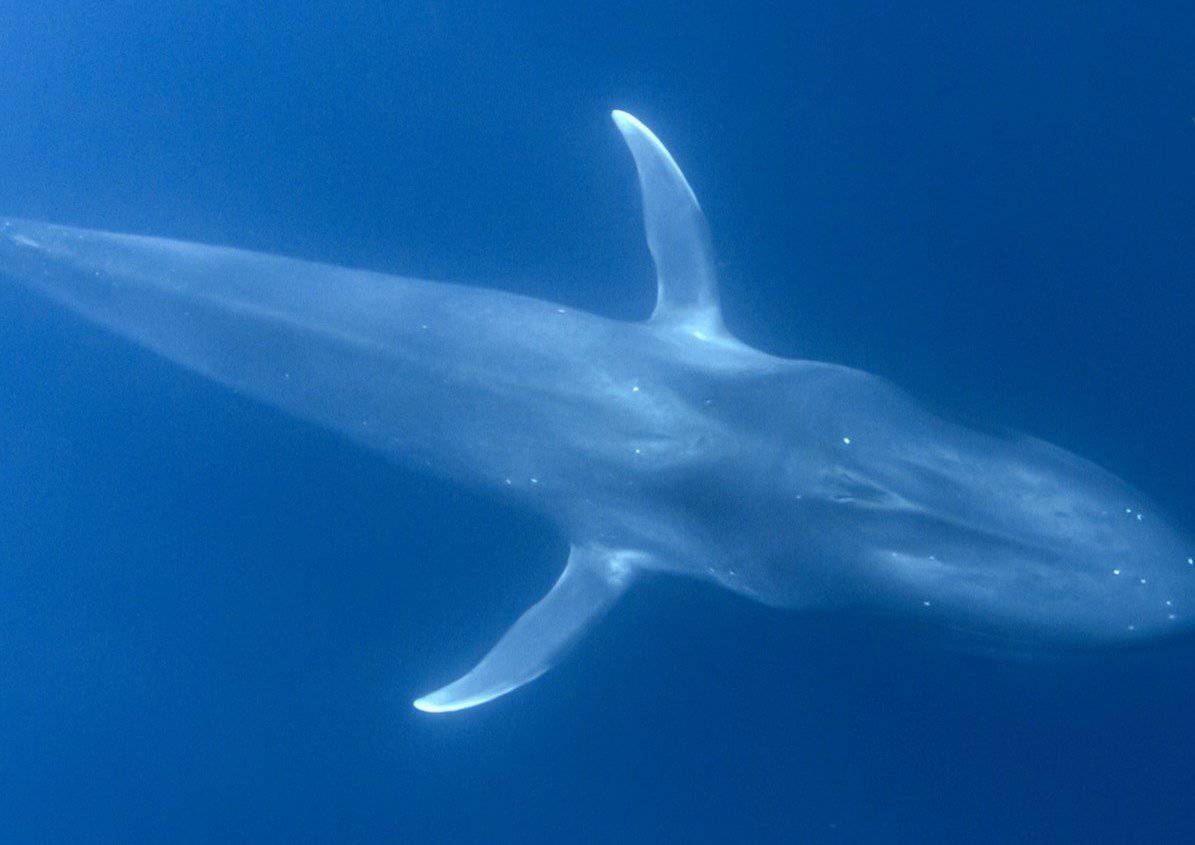
As the largest living mammals in the world, blue whales can reach up to 100 feet long. However, despite their immense size, they actually feed on some of the smallest organisms in the ocean – tiny crustaceans called krill. To accommodate their huge size, blue whales eat several tons of krill per day. These whales belong to a group known as baleen whales, which means that they are filter feeders. Instead of typical teeth, they have comb-like plates in their mouth which are made of baleen. When feeding, blue whales swim through dense clouds of krill and take in large mouthfuls of water and prey. They then push the water back out through the baleen plates, while trapping the krill inside so they can be swallowed.
Blue whales are also an endangered species. Commercial whaling depleted their numbers in the nineteenth and twentieth centuries. Though international protections are now in place, ship strikes are currently a leading cause of injury and death to blue whales. Additionally, it is predicted that the population and availability of their main food will decline due to global warming. This will likely have a negative effect on the whales.
Where Do Blue Whales Live?
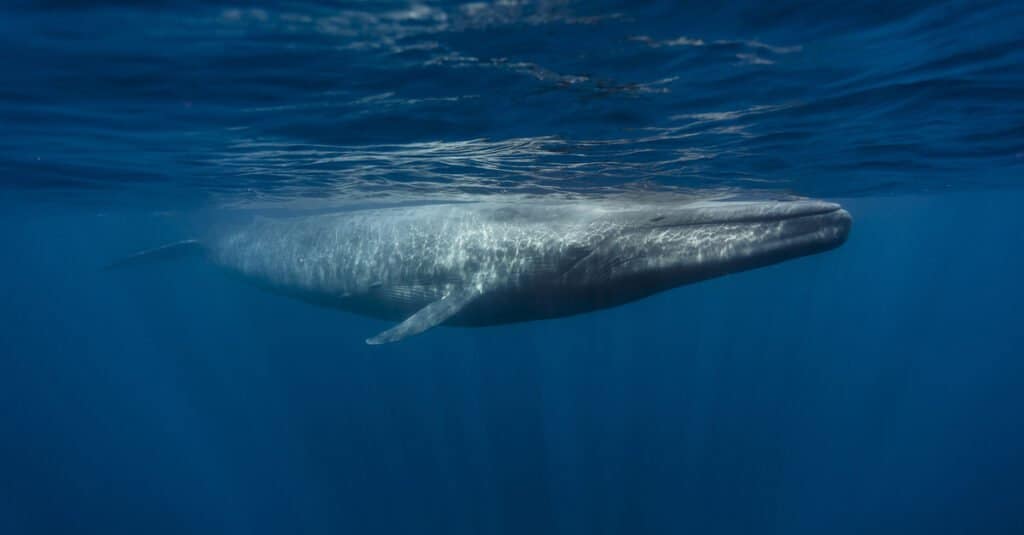
Blue whales inhabit every major ocean around the world except the Arctic Ocean. They typically inhabit the deep waters of the open sea, far from land, and follow seasonal migration patterns as they head for areas where nutrient-rich waters support large numbers of krill. Blue whales typically spend their summers near the poles before migrating closer to the equator during the winter.
Blue whales spend much of their lives in deep offshore waters.
©Rich Carey/Shutterstock.com
(Rich Carey/Shutterstock.com)
There are four recognized subspecies of blue whales: northern blue whale, northern Indian Ocean blue whale, Antarctic blue whale, and pygmy blue whale. These subspecies are often divided into several regional populations. However, they mostly all follow the same general migration pattern, moving between rich feeding grounds and warmer winter waters.
In the North Atlantic, blue whales tend to spend their summers around the Gulf of St. Lawrence, whereas in the North Pacific, they tend to spend their summers feeding in the waters off California. The central and western Pacific population summers around the Kamchatka Peninsula and winters in the waters around Hawaii. Other populations can be found in the waters around Antarctica, the Indian Ocean, and Australia.
Unusual Sightings Off New England
Unlike many other species of whales, blue whales are rarely seen outside of their traditional feeding grounds. Their movements are also not as well documented due to their habit of spending much of their lives in the deep, offshore waters. However, scientists have recently observed several blue whales off the coast of New England – something that is quite surprising given their typical movements. The first sighting was made on February 27 close to the Northeast Canyons and Seamounts Marine National Monument. Two more whales were then spotted near Martha’s Vineyard on February 28. The whales were observed by researchers from the New England Aquarium as they conducted a routine aerial survey.
Scientists consider even a single sighting outside of their typical feeding grounds in the Gulf of St. Lawrence to be unusual. However, two sightings within such a short period of time is even more unusual. Aside from these recent visits, blue whales had only ever been spotted in the area once in 2020 near the Seamounts Monument and once in 2023 near the coast of Maine.
Why Are They Appearing Off New England’s Coast?
Blue whales swimming off the New England coast is both surprising and informative. Although scientists aren’t entirely certain of the reasoning behind this unusual movement, they think that the most likely explanation revolves around food.
It is likely that the New England sighting was because the whales were following the krill clouds.
©Andrew Sutton/Shutterstock.com
(Andrew Sutton/Shutterstock.com)
Blue whales tend to follow the dense krill clouds. However, the distribution of these tiny organisms can change depending on the ocean conditions. Changes in currents, water temperature, and nutrient levels can cause krill to be more abundant than usual in certain locations. This creates temporary feeding opportunities for blue whales in places where they aren’t usually seen. When this happens, the whales may gather briefly in those areas to take advantage of the available food.
The waters around the Northeast Canyons and Seamounts Marine National Monument are particularly rich. Deep underwater canyons and seamounts within the area can help draw nutrients from deeper waters. This creates a rich and biodiverse feeding ground, which can support high numbers of krill, in turn attracting large marine animals, such as blue whales.
The sighting of blue whales in these locations is particularly significant for a few reasons. For one, if they are using the area as a feeding ground – even temporarily – then it is a good indication that the area is a productive ecosystem which is able to support several different species. However, their appearance also provides vital information about the massive whales, which are relatively unstudied compared to other species.
The post New England’s Rare Visitors: Why Blue Whales Are Appearing Off the East Coast appeared first on A-Z Animals.