

Social Security’s $2.5 trillion trust fund is invested in special-issue government bonds as required by law; the real crisis is demographic—fewer workers supporting more retirees as baby boomers retire, with the combined trust fund projected to deplete in 2034 and leave incoming revenue covering only 81% of scheduled benefits.
The program faces structural pressure from three revenue streams: payroll taxes shrinking as unemployment rises and wage growth slows, income taxes on benefits tied to modest thresholds, and interest income from bonds now yielding around 4.2% on Treasury holdings.
Have You read The New Report Shaking Up Retirement Plans? Americans are answering three questions and many are realizing they can retire earlier than expected.
Social Security is not going broke because politicians raided the piggy bank. The trust fund’s $2.5 trillion in reserves is properly invested in special-issue government bonds, exactly as the law requires. The real problem is slower and harder to fix: the math of an aging country is quietly grinding the program toward a cliff.
 J.J. Gouin / Shutterstock.com · J.J. Gouin / Shutterstock.com
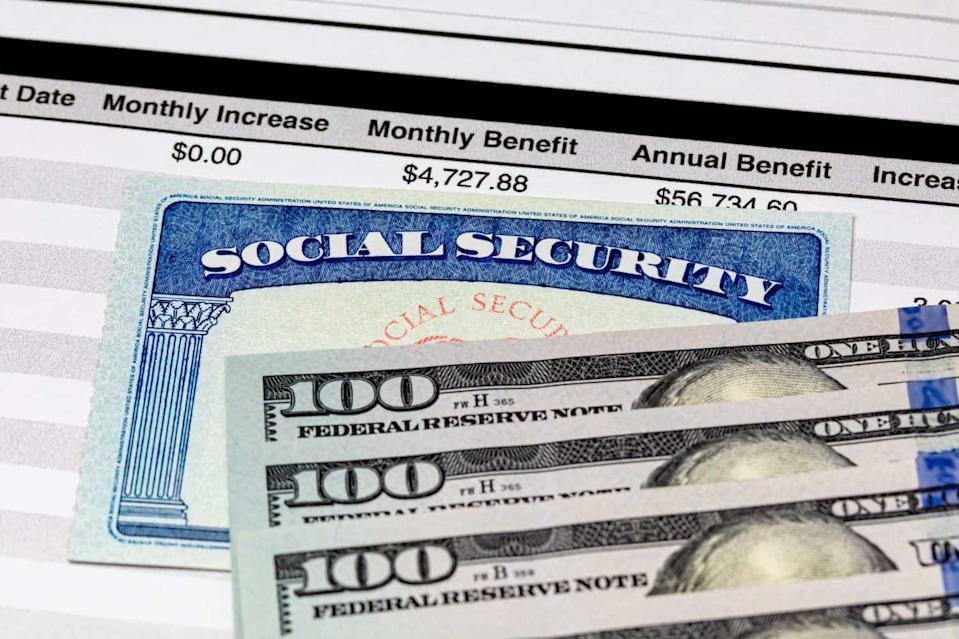
A Social Security card is shown alongside US dollar bills and a benefit statement, highlighting retirement planning and financial considerations.
Social Security draws from three sources. The largest is the payroll tax, split equally between workers and employers on wages up to a set annual cap — $184,500 in 2026 in 2026. This tax is the backbone of the program, but its reach is limited: high earners stop contributing once their wages cross the threshold, which is why lifting the cap is a perennial reform proposal.
Have You read The New Report Shaking Up Retirement Plans? Americans are answering three questions and many are realizing they can retire earlier than expected.
A smaller but growing share of revenue comes from income taxes on benefits, which kick in once a retiree’s total income crosses modest thresholds. The third source is interest earned on the trust fund’s bond holdings, which tracks closely with prevailing Treasury yields near the 10-year Treasury yield near 4.2%.
All three are under stress, and the pressures are reinforcing each other. Unemployment has drifted up to 4.4%, meaning fewer workers are contributing payroll taxes right now, while Real GDP growth slowed to just 0.7% annualized in the most recent quarter — both of which shrink the payroll tax base at exactly the wrong time. Meanwhile, baby boomers are retiring in waves with no sign of slowing. The combined effect is a structural mismatch between contributors and beneficiaries that the 2025 Trustees Report projects the combined trust fund depletes in 2034, leaving incoming revenue to cover only 81% of scheduled benefits.
Raise the payroll tax rate. Increasing the rate from 6.2% would generate immediate revenue. Workers and employers share the cost equally. The downside is that lower-wage workers feel it most, since payroll taxes take a larger share of their income than investment income does.
Lift or eliminate the wage cap. A worker earning $184,500 and one earning $1 million pay the same dollar amount in Social Security taxes. Removing the cap would generate substantial new revenue. Wages and salaries have grown steadily to $13.2 trillion annually, and high earners have captured a disproportionate share of income growth, meaning more income now sits above the cap than in prior decades. The tradeoff is that higher earners would also earn higher benefit credits, partially offsetting the gain.
Raise the full retirement age. The full retirement age is already 67 for anyone born in 1960 or later. Pushing it to 68 or 69 effectively reduces lifetime benefits for everyone. It hits physically demanding workers hardest.
Means-test benefits. Reducing benefits for higher-income retirees runs into a structural problem: Social Security was designed as a universal program. Turning it into a welfare program could erode political support and reduce the incentive for higher earners to participate.
Adjust the benefit formula. The formula converting earnings history into a monthly benefit could grow more slowly for middle and higher earners, preserving full benefits for lower-income retirees while trimming long-term costs. It is the most surgical option, but the hardest to explain to voters.
No single fix closes the gap. A durable solution almost certainly combines a modest revenue increase with some slowing of benefit growth. Every year without action means a larger adjustment later, falling on workers and retirees who had less time to plan.
The timing of when individuals claim benefits, along with their income sources and health circumstances, can significantly affect lifetime benefit totals. Any legislative changes would need to account for these variables.
You may think retirement is about picking the best stocks or ETFs and saving as much as possible, but you’d be wrong. After the release of a new retirement income report, wealthy Americans are rethinking their plans and realizing that even modest portfolios can be serious cash machines.
Many are even learning they can retire earlier than expected.
If you’re thinking about retiring or know someone who is, take 5 minutes to learn more here.