
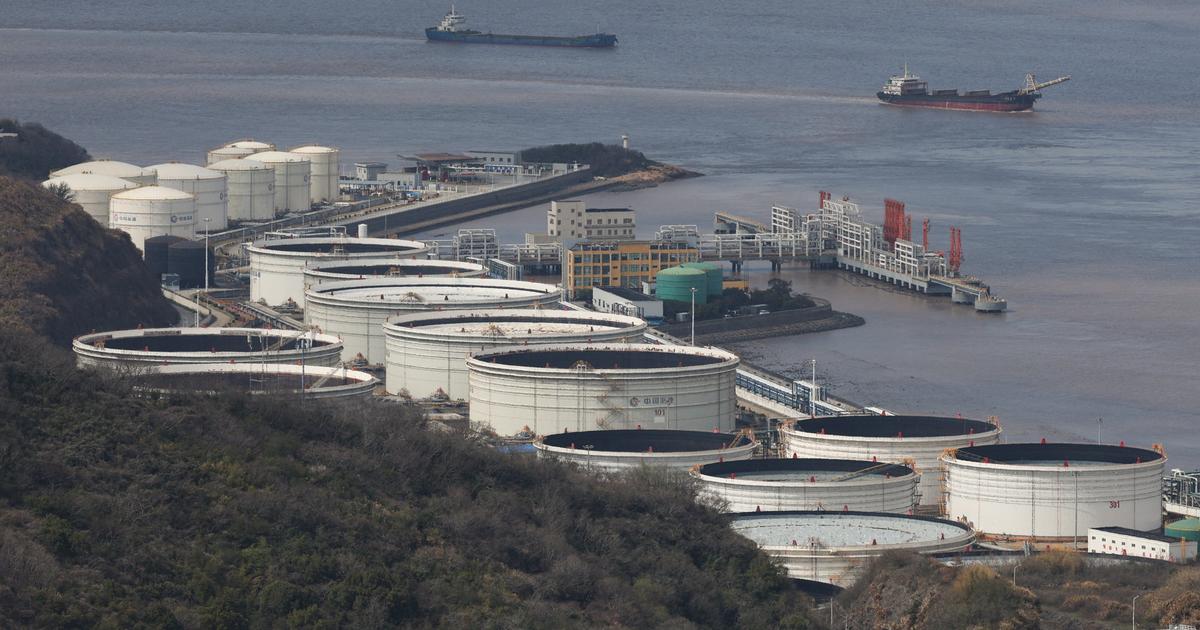
China is vulnerable to a prolonged closure of the Strait of Hormuz — despite its leaders’ insistence to the contrary — because of the knock-on effects on its export markets, a leading analyst argued.
China is the world’s largest importer of oil and gas, with about half its crude oil imports, and roughly 30% of its natural gas imports coming from Persian Gulf suppliers who must ship through the Strait of Hormuz. And yet, at least so far, Beijing seems to be taking Iran’s closure of the strait in stride.
At the China Development Forum in Beijing this week, Chinese leaders denounced the US and Israel for attacking Iran, a country with which China has forged strong diplomatic ties and inked a wide-ranging economic cooperation pact in 2021. But they dismissed concerns that a prolonged closure of the strait might pose a threat to the world’s second-largest economy.
Alicia García-Herrero, a Hong Kong-based analyst who serves as chief economist for Asia Pacific and Middle East at the French investment bank Natixis, concurred that China’s economy is resilient to energy shocks in the short-term — because of its ample strategic and commercial energy reserves and Iran’s willingness to allow ships carrying discounted oil to China safe passage through the strait.
But she warned that if the conflict drags on for months instead of weeks, China’s economy will be uniquely vulnerable because of its dependence on exports, particularly to Southeast Asia and Europe. The two regions, she estimated, absorb 15% and 13% of China’s exports respectively, have scant energy reserves, and would be devastated by a protracted spike in oil prices.