
Denver Water drove home the serious nature of the 2026 drought Wednesday with a unanimous vote for two-day-a-week watering restrictions and warnings that the agency for 1.5 million Front Range customers is developing new enforcement plans and outdoor watering surcharges.
Denver Water customers can water this summer season on only two of seven days, with houses ending in even numbers taking Sunday and Thursday, and those ending in odd numbers taking Wednesday and Saturday. The state’s largest water agency also begged customers to not turn on their lawn systems at all until mid or late May, instead watering trees and shrubs by hand and holding off irrigation as long as possible in order to preserve reservoirs.
Denver officials are targeting a 20% cut in water use this season. In addition to the city of Denver, Denver Water also serves customers in all or portions of Lakewood, Littleton, Centennial, Wheat Ridge and other suburban communities.
Repeatedly warning of “unprecedented” snowpack and drought conditions, Denver Water staff told its board of commissioners Wednesday that if they didn’t pass at least Stage 1 restrictions, the extensive reservoir storage system would be down to 57% of capacity by 2027. Denver’s reservoirs in the Colorado River and South Platte River basins are currently at 80% of capacity, down from the normal level this time of year of about 85%.
Surcharge pricing will be announced later in the season, with Denver saying necessary indoor water use for bathing, cooking and cleaning will stay at the same price. Tier surcharges will be added for use that is clearly for outdoor watering.
Apartments and commercial properties will water only on Tuesdays and Fridays.
As all other Front Range water agencies are saying, Denver reminded customers that once irrigation starts, they should time their use for the coolest parts of the day between 6 p.m. and 10 a.m. Leaking systems that pool water on concrete must be repaired within 10 days.
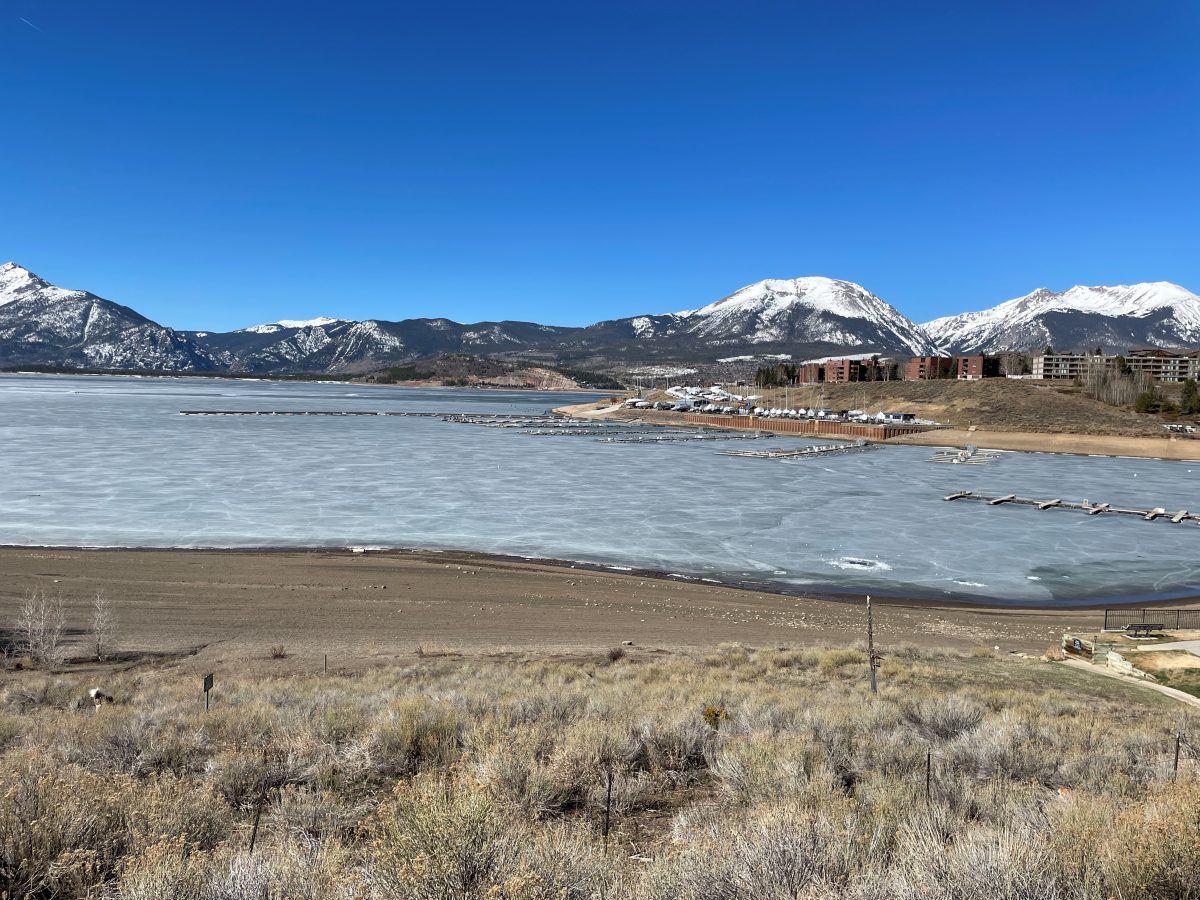 Denver Water’s primary Lake Dillon reservoir is in rough shape as the heart of runoff season begins, and the agency for 1.5 million Front Range customers has voted on Stage 1 watering restrictions to preserve its reservoir storage. (Denver Water photo)
The Colorado River Basin snowpack is 55% of normal for this date, the worst on record, Denver Water said, and the South Platte basin is 42% of normal, also the worst in the records. Temperatures on the Front Range on Wednesday were expected to hit 90 degrees under a record-setting heat dome that is shredding what’s left of the snowpack in many areas.
To put things in perspective, a Denver Water conservation expert said the slopes Denver receives water from are 7 to 8 feet of snow behind what’s needed. It’s the first Stage 1 drought declaration for Denver since 2013, and the fifth since 2000, with the others coming in 2002, 2003 and 2004. Other agencies are also passing water restrictions for the summer season.
Type of Story: News
Based on facts, either observed and verified directly by the reporter, or reported and verified from knowledgeable sources.