
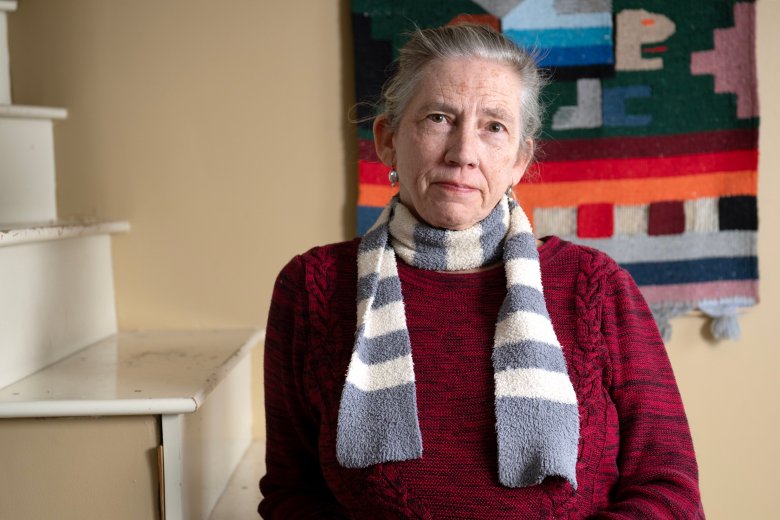
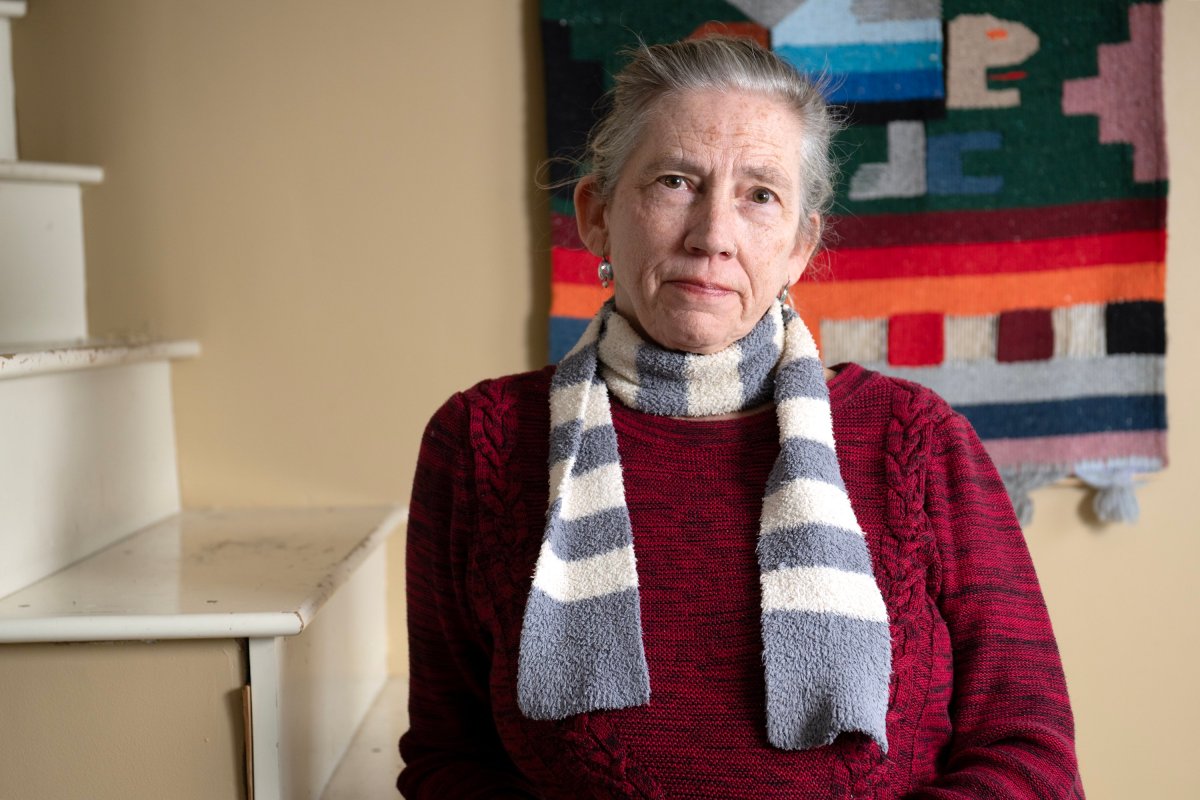
 Kennebunk resident Rachel Phipps, now less than a year out from qualifying for Medicare, gave up her Affordable Care Act plan.
(Daryn Slover/Staff Photographer)
Rachel Phipps is one of thousands of Maine residents who faced a financially devastating choice for 2026: Pay higher health insurance premiums or go uninsured.
The 64-year-old Kennebunk resident chose the latter.
Phipps, now less than a year out from qualifying for Medicare, gave up her Affordable Care Act plan because she estimated it would have cost nearly $50,000.
“It’s not really a choice,” Phipps said. “I was forced into this.”
Maine’s health insurance marketplace saw a 9.5% decline in ACA enrollment this year, including about 3,500 people who canceled their plans because they could no longer afford them. The drop comes after Congress did not extend the Enhanced Premium Tax Credits, which expired Dec. 31. A bipartisan effort by lawmakers, including both of Maine’s senators, to keep the subsidies fell apart in January.
U.S. Sen. Angus King, I-Maine, said in a recent interview that he’s “extremely disappointed” the compromise plan failed.
“People are going to see gigantic insurance premium increases,” he said. “Some will go without insurance, and that’s a recipe for disaster for a family if a serious health event were to occur.”
 Sen. Angus King, I-Maine, speaks to volunteers at his Portland campaign office in October 2024. (Brianna Soukup/Staff Photographer)
Of the thousands in Maine who canceled their ACA health coverage, officials said it’s unclear how many switched to employer-based plans, qualified for Medicaid or Medicare or, like Phipps, decided to risk going without insurance.
Phipps, sitting in the dining room of her colonial-style home in downtown Kennebunk, ticked off a list of health appointments she has already canceled or delayed in the first three months of the year because they were too costly — a mammogram, an X-ray, appointments to monitor her skin after having pre-cancerous spots removed last year.
She said she also turned down a vaccine for RSV, or respiratory syncytial virus.
“I had my sleeve rolled up and the pharmacist had the vaccine drawn,” said Phipps, who works part time at a preschool in Biddeford. “He said, ‘I see you’re uninsured, so that will be $379.’ I said ‘No thanks,’ rolled my sleeve back down and left.”
Phipps said her experience of going uninsured spurred her to run for a Maine House seat in Kennebunk. She’s facing Lisa Pratt in the Democratic primary on June 9, according to state elections filings.
Phipps said her husband, a self-employed woodworker, is also going without insurance this year. Because of their household income, they don’t qualify for other existing ACA tax credits.
She said it will be a nervous several months until she can get Medicare in February.
“I wake up in the middle of the night and have these massive anxiety attacks,” Phipps said. “I’m worried all the time.”
COMPROMISE EFFORTS STALL
The Enhanced Premium Tax Credits were reforms made to the ACA approved during the Biden administration, first under the COVID-19 relief law and then extended through 2025 under the Inflation Reduction Act. Another set of tax credits, the Advanced Premium Tax Credits, were part of the original law that started in 2014 and do not expire.
The enhanced credits were the only tax subsidies available for households earning more than 400% of the poverty level and they capped premium costs to 8.5% of household income.
Extending the credits was a major issue that spurred last fall’s government shutdown. Congress discussed extending the subsidies, and the House passed an extension that the Senate declined to take up.
Along with King, U.S. Sen. Susan Collins, R-Maine, was involved in the effort to reach a compromise to extend less generous versions of the subsidies and increase access to health savings accounts. King said Republican leadership requiring that any ACA tax credit extension be paired with greater Hyde amendment restrictions, which bar the use of federal funds to pay for abortions, stalled the negotiations.
The ACA complies with the Hyde amendment, but also permits states to require abortion coverage in its plans. Maine is one of several states that does, according to KFF, a health policy think tank. Republicans wanted to place further restrictions on abortion in ACA plans, which Democrats rejected, according to national news reports.
In January, President Donald Trump suggested Republicans be “flexible” on the Hyde amendment.
“Trump was criticized for that, and then he dropped it,” said Ronald Schmidt, a political science professor at the University of Southern Maine. “There were a lot of people who would have liked to sign on to a compromise, including a lot of Republicans, but at the end of the day there was no one who could forge that compromise.”
 Rep. Chellie Pingree, D-1st District, attends a roundtable discussion on Nov. 24, 2025 at Greater Portland Health in South Portland. (Derek Davis/Staff Photographer)
Purchase this image
U.S. Rep. Chellie Pingree, D-1st District, said in an interview that “there’s no sign of Congress taking this up” again after earlier talks failed.
“This is going to put a lot of people in a terrible position,” Pingree said.
‘MORE THAN OUR MORTGAGE’
ACA enrollment in Maine is down from 64,678 in 2025 to 58,523 this year, according to the state’s health insurance marketplace. Preliminary federal data shows it’s down about 1 million nationally, with an estimated 23 million enrollees.
Hilary Schneider, director of Maine’s Office of the Health Insurance Marketplace, said the expiration of the enhanced tax credits will cause ripple effects. Some people, she said, will deplete their savings and retirement accounts to pay insurance premiums, others will choose high-deductible plans and some will go uninsured.
The average premium increase in the Maine ACA marketplace for 2026 was projected to be 77%, according to the state.
“We will see a higher uninsured rate, which will make all of our insurance costs go up,” Schneider said. “We have a fragile, rural health care system and that’s going to be taxed further.”
For Phipps and her husband, their insurance premium was $325 per month when they were receiving ACA subsidies. Losing the credits and a bump in their income, which she said is projected to be $110,000, would have caused their monthly premium to go up to nearly $2,900.
Combined with a $15,000 deductible, their health care would have cost more than $49,000 this year, Phipps said.
“That’s insane,” she said. “That’s more than our mortgage and nearly half of our income.”
Phipps said she retired from her full-time job in 2025 to care for her mother, went on Social Security and now has a part-time job. She and her husband also rent out the small home in Kennebunk where her mother, who died last year, had lived.
She said she will turn 65 and qualify for Medicare before her husband, who is 62, and at that point they will pay one expensive premium to avoid going without insurance again.
“This is all preventive care, to keep me healthy,” Phipps said. “People shouldn’t have to go through this.”