
The NHL is a harsh, results-focused business.
What a player did in the past doesn’t matter; it’s all about how they’re performing right now. Contracts also play a massive role in setting expectations for players in a cap world.
Earlier this year, we highlighted some positive surprises by analyzing the league’s most improved players. Now, here are the NHL’s 10 biggest disappointments this season, in no particular order. Note that we won’t be repeating players who appeared on last year’s biggest disappointments list, so no Tristan Jarry and Elias Pettersson, among others.
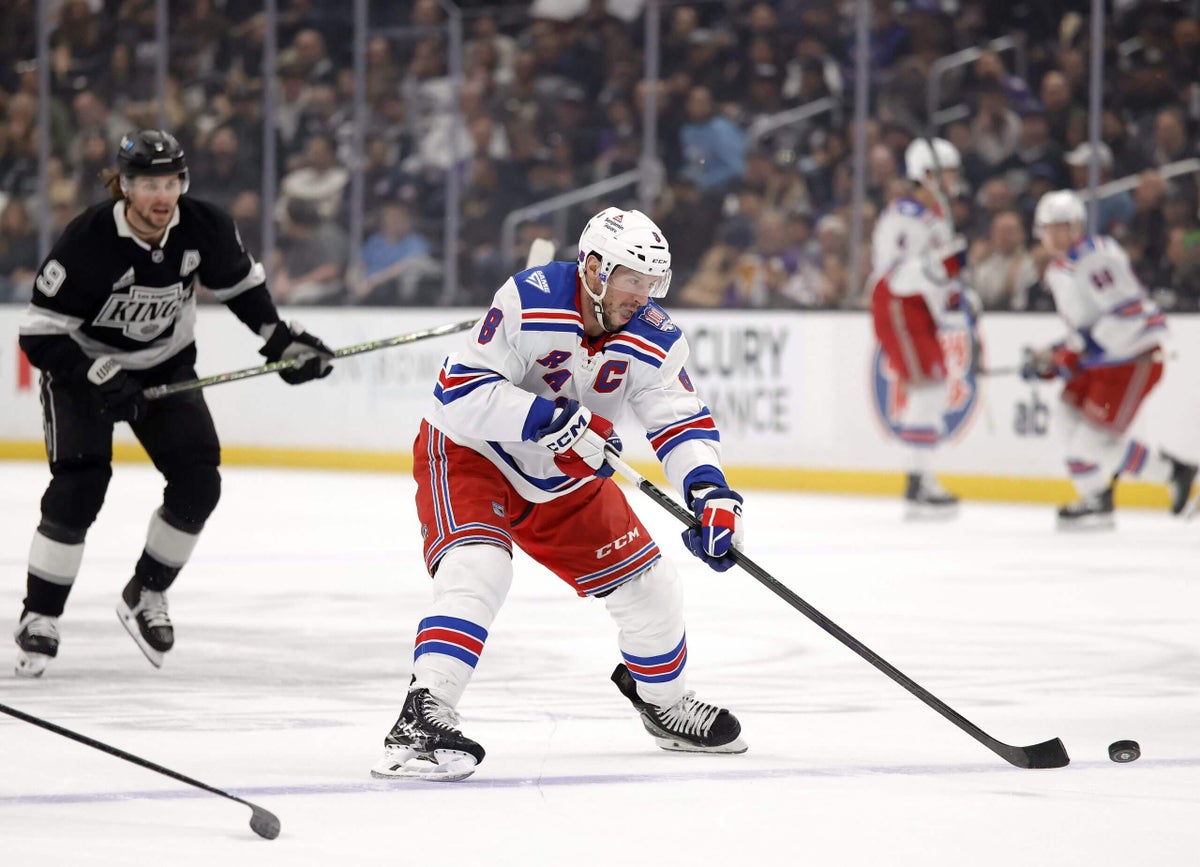
J.T. Miller, New York Rangers
Last year, the Rangers made a controversial, high-risk swing on J.T. Miller to extend their competitive window. New York was already outside of a wild-card spot at the time and had an aging, expensive core, but GM Chris Drury believed Miller would revitalize the top-six attack as their new No. 1 center.
Miller averaged 89 points per 82 games between 2021 and 2025, but there was a significant risk that his best days were behind him — he was well into his 30s and in the middle of a down year in Vancouver, where he looked more like a declining point producer with defensive issues rather than an elite player to build around. The Rangers also slapped the “C” on Miller’s jersey ahead of this season, which was a strange decision to say the least.
I covered Miller closely for six years in Vancouver, and while I have a ton of respect for his game and understand the value of having a fiery, throwback locker room personality, it seemed reckless for New York to give the captaincy to a polarizing personality who had such an ugly feud with co-star Elias Pettersson that it necessitated a trade.
Miller’s second tour of duty in Manhattan has been rocky. The 33-year-old has scored 42 points in 58 games (59 points per 82 games pace) in a year where he’s been laboring through injuries. Miller’s skating has looked sluggish, and the inconsistency of his aggressive, physical play is a clear sign that he isn’t right physically.
To make matters worse, Miller has been on the ice for 3.18 goals against per 60 at five-on-five, which is by far the worst rate among all Rangers forwards. He isn’t driving play with any level of authority. His motor and urgency to move his feet without the puck are inconsistent, which has frustrated Rangers fans. He’s looked visibly defeated and out of answers in multiple post-game media scrums that have gone viral, as New York has plummeted to the worst record in the Eastern Conference.
Miller has four years left after this season at an $8 million cap hit. However, I’d argue Drury deserves more blame than Miller does, because the signs were evident at the time of the trade that this move was likely to age poorly.
Trent Frederic, Edmonton Oilers
With Evan Bouchard due for a new contract, the Oilers entered last summer with limited cap flexibility. They were forced to trade Evander Kane and Viktor Arvidsson as salary cap dumps. With the free-agency departures of Corey Perry and Connor Brown, two of Edmonton’s key contributors in the playoffs, and the Oilers essentially lost four middle-six forwards.
Edmonton turned around and invested $7.45 million of its cap room on signing Andrew Mangiapane and extending Trent Frederic. Yikes. The Mangiapane bet at least seemed like a decent fit at the time, but the Frederic contract — an eight-year deal at $3.85 million AAV — was a needlessly risky gamble from the moment it was signed.
Frederic was a non-factor during the playoffs last year, scoring just one goal in 22 games, while averaging only 11:24 per game. He was clearly hampered by a high-ankle sprain, though, so the hope was he’d be healthier and more impactful this season. That bounce-back hasn’t happened — Frederic has scored just six points in 67 games, and the Oilers have been outscored 29-14 with him on the ice at five-on-five.
Frederic has performed noticeably better since the Olympic break; he’s been more energetic, physical and disruptive. Perhaps this is a Connor Brown-like situation in which a player takes longer than expected to get back up to speed after a serious injury but eventually rediscovers his top form. Ultimately, though, Frederic is still playing a limited role — he’s been under 10 minutes of ice time in six of his last eight games — and the opportunity cost of his contract, which has another seven years left after this season, looms large.
Linus Ullmark, Ottawa Senators
If Ottawa’s goaltending lived up to expectations, we’d be talking about the Senators as a bona fide Stanley Cup contender. Instead, they’re having to fight tooth and nail just to qualify for the playoffs.
Ottawa is dominant at controlling puck possession and driving play. Their 55.9 percent expected goal share at five-on-five ranks second-best in the NHL behind the Colorado Avalanche. The Senators have found a new gear offensively — they’re scoring five-on-five goals at the fifth-highest rate in the NHL — and they’ve been a top-end defensive team since Travis Green took over as head coach last year.
NHL’s Best Defensive Teams 5v5
Rank
Team
5v5 Expected Goals Against Per 60
1
2.16
2
2.23
3
2.29
4
2.32
5
2.34
The Senators have been held back by unreliable goaltending: Ottawa’s goalies have combined for a league-worst minus-29.8 goals saved above expected. This is especially frustrating because every available analytic metric indicates the team defends very well in front of their goalies; it’s not like the Oilers, where part of their goaltending woes stems from their careless defensive play.
Linus Ullmark wears the brunt of that burden. The 32-year-old’s $8.25 million cap hit pays him to be an elite netminder, yet his save percentage has dropped from .910 last year to an underwhelming .887. Ullmark has played far steadier since coming back from the Olympic break, which coincides with the club’s charge back into a playoff spot. That definitely provides some reason for optimism; all will be forgiven if Ullmark heats up down the stretch and, critically, can overcome his past playoff struggles, where he has an .885 save percentage in 16 career postseason games.
Jonathan Drouin, New York Islanders/St. Louis Blues
When the Islanders signed Jonathan Drouin to a two-year, $4 million AAV contract in the summer, they were betting that he could produce away from Nathan MacKinnon. I’m sure they didn’t expect him to maintain the borderline first-line-caliber rate he was scoring at in Colorado — he scored 93 points in 122 games, a 63 points per 82 games rate, across two seasons in Denver — but New York was hoping he could add legitimate punch to its middle-six offense.
It never happened.
Drouin mustered just three goals in 55 games with the Islanders despite averaging over 17 minutes per game. He even got a fair bit of opportunity alongside Mathew Barzal (277 five-on-five minutes together), so you can’t say he didn’t get a chance to play with the team’s top-tier forwards. Drouin scored just 0.86 points per 60 at five-on-five, which ranks 363rd among 390 forwards who’ve played at least 400 minutes this season.
Beneath the surface, Drouin’s microstats show he was doing very little to drive play or create chances.

Viz courtesy Hockeystats.com
The Isles cut bait on him ahead of the deadline, sending him to the Blues as a cap dump as part of the Brayden Schenn trade.
Morgan Rielly, Toronto Maple Leafs
It’d be foolish to blame just one player for the Leafs’ downfall. Toronto has problems in the front office, behind the bench and all over the lineup. With that said, Morgan Rielly’s deteriorating play — and the four years he has left after this season at a $7.5 million cap hit — is a major concern for a slow, aging blue line that lacks quality puck movers.
Rielly has always been inconsistent defensively, and those warts without the puck are becoming more pronounced. He’s been on the ice for 3.62 goals against per 60 at five-on-five, which is the second-worst rate among all NHL defensemen this season (minimum 500 minutes). Rielly’s defensive numbers in limiting shots and scoring chances are almost equally concerning.
Historically, part of the Leafs’ issue is that they haven’t had a true No. 1 defender to play ahead of Rielly in the lineup. However, this year, Toronto has actually been intentional about not putting too much on Rielly’s plate.
Rielly’s defensive matchups have been softened, as he’s only spent 28.8 percent of his minutes against elite competition, which ranks fifth among Leafs blueliners. He leads all NHL defensemen in offensive zone starts at five-on-five, and he’s had 133 fewer defensive zone starts than teammate Jake McCabe. In other words, Rielly’s defensive struggles this season look even worse because his matchups and assignments haven’t actually been that difficult.
Which Leafs D Get Hardest Matchups?
Rank
Player
TOI% Against Elite Competition
1
42.2%
2
35.1%
3
33.8%
4
31.4%
5
27.6%
6
27.1%
Matchup data courtesy PuckIQ
Watching Rielly play over the years, his gap control and rush defense have always been suspect. He’s become less agile in recent years, which has exacerbated the issue; his numbers for denying possession entries rank near the bottom of the NHL (6th percentile) according to the All Three Zones tracking project. Rielly’s in-zone defending has also been an issue at times, as he’s prone to mistakes with his reads and a lack of awareness.
The Leafs’ ability to control puck possession has cratered under Craig Berube. Hopefully, Toronto can become a better possession team with a new coach next year, which would play to Rielly’s strengths and perhaps fuel a bounce-back.
Quinton Byfield, Los Angeles Kings
Byfield looked like he was on the cusp of stardom at the end of last year.
The 2020 No. 2 pick scored 31 points in the final 32 games of the season. He was evolving into a game-breaker, and his line with Kevin Fiala seemed unstoppable — the duo earned a dominant 59 percent of scoring chances and 63 percent of goals in nearly 500 five-on-five minutes together. With Byfield’s line roaring, a buzzing power-play and a new Adrian Kempe-Andrei Kuzmenko-Anze Kopitar line also clicking, the Kings were the sixth-highest scoring team in the NHL from Feb. 1 until the end of last season. Led by Byfield’s breakout, the Kings finally appeared to have a dangerous offense to go along with their stifling defensive play.
None of that second-half success has carried over to this season. The Kings have been limited to scoring two or fewer goals in regulation a staggering 38 times this season. They’re one of the league’s worst offensive teams, and there’s a good chance that weakness could cost them a playoff spot.
L.A. is generally deficient in elite talent — these offensive woes can’t just be pinned on one player — but if Byfield had built on last year’s strong finish, this would probably be a much different situation. Instead, Byfield has not only failed to break out, he’s on pace for only 48 points, which is a step back compared to the 55-point range he’s been in the past two seasons. To make matters worse, Byfield’s defensive impact has also slipped; he’s allowing five-on-five scoring chances and goals against at the worst rate of his career, leading to a minus-nine goal differential during his five-on-five shifts.
The stagnation in Byfield’s game is especially frustrating because he has such a rare combination of jumbo size and elite speed, and has teased high-end skill/creativity in the past, but all the Kings have gotten this year are inconsistent flashes. He’s only 23, so there is still time for him to put everything together and reach a higher offensive level, but the clock is ticking.
Jake Walman, Edmonton Oilers
I was a fan of the Oilers’ decision to acquire Jake Walman from the Sharks last season.
Walman has long been a gifted skater and puck-mover, and when closely watching Edmonton’s 2024 playoff run, it was clear the second pair kept getting hemmed in defensively because Darnell Nurse and Cody Ceci couldn’t break the puck out against heavy forechecking teams. Walman’s speed and puck transportation skill legitimately moved the needle for the Oilers last year — he drove a 57 percent share of five-on-five shots and 54 percent of goals in the postseason, chipped in with critical secondary offense (10 points in 22 games), and averaged over 20 minutes per night. Walman’s excellent top-four impact was critical to Edmonton’s deep playoff run despite Mattias Ekholm’s injury.
Unfortunately, he’s been a shadow of that player this season.
The 30-year-old has had a nightmare campaign defensively. He’s been on the ice for a league-worst 3.71 goals against per 60 at five-on-five. The Oilers have earned only 42.8 percent of scoring chances with Walman on the ice, the worst among all Oilers defenders (note as well how dramatic the drop-off is from Ekholm/Evan Bouchard to the next Edmonton defenseman).
Which Oilers D are driving play?
Nurse deservedly gets a lot of flak in the market for his defensive play, but I’ve seen just as many brutal breakdowns from Walman this season, whether it be bad net-front defense, lack of positional awareness, or ill-timed pinches. This porous net-front defensive effort is why it’s felt like Edmonton’s goalies have been left out to dry at times.
In fairness to Walman, there are a couple of critical factors that provide context for his underwhelming play. First, he’s been asked to play his off side a lot; hopefully, with the acquisition of right-shot Connor Murphy, Walman can play his natural left side more consistently. Secondly, he missed time due to an injury earlier this season and appears to be far from 100 percent healthy.
I’m still a big believer in Walman’s talent, but the Oilers need way steadier, more consistent two-way play from him.
Adin Hill, Vegas Golden Knights
Cracks are beginning to show that the Golden Knights aren’t as threatening as expected. For starters, they’ve won only 32 of their 72 games, a mediocre .444 win percentage. Vegas also has a dreadful 9-19-9 record against teams in playoff position this season.
Here’s a fascinating question, though: How many of the team’s issues trace back to a goaltending problem? It’s certainly not the Golden Knights’ only flaw — their offense has dried up considerably — but their netminding has been every bit as bad as that of teams like Edmonton and Ottawa, yet it hasn’t gotten nearly as much media coverage. Vegas owns a league-worst .885 save percentage at five-on-five.
Adin Hill has an ugly .868 save percentage through 23 games, which is the third-worst mark among all goaltenders this season. He’s been plagued by injuries, which are increasingly a concern for him; he only played 35 games in the 2023-24 season as well. Hill is only in year one of a hefty six-year contract at a $6.25 million cap hit.
Similar to Ottawa, the Golden Knights’ goaltending woes are especially frustrating because they have a stingy, goalie-friendly defensive environment. Vegas is the NHL’s leader at limiting five-on-five shots against and owns the second-best expected goals against per 60 rate.
Frank Vatrano, Anaheim Ducks
Frank Vatrano capitalized on having a bigger role during some of Anaheim’s lean rebuilding years, averaging 27 goals per season from 2022 to 2025. A year ago, that earned him a three-year, $18 million extension that carries a $4.57 million cap hit due to deferred salary.
However, with Anaheim’s recent infusion of high-end forward talent — Beckett Sennecke, Cutter Gauthier and Leo Carlsson have all broken out, and Chris Kreider and Mikael Granlund are new middle-six arrivals as well — Vatrano has plunged down the depth chart.
Vatrano’s reduced opportunity isn’t entirely surprising, as he was never a prolific play-driver and isn’t as valuable as the team’s current top-six forwards. But still, nobody could have predicted how severe the decline in his production would be. He’s slumped to just four goals and four assists in 44 games this season. He’s racked up just 72 shots on goal, which is a far cry from the 234 he registered last season.
The 32-year-old’s average ice time has collapsed from 17:33 last year to 11:59, and he’s gone from averaging 2:38 on the power play last year to just 47 seconds per game this season. It’d probably be in the best interests of both sides to explore a move for him in the summer, though his contract may not be easy to move.
GSAx data courtesy of HockeyStats.com