
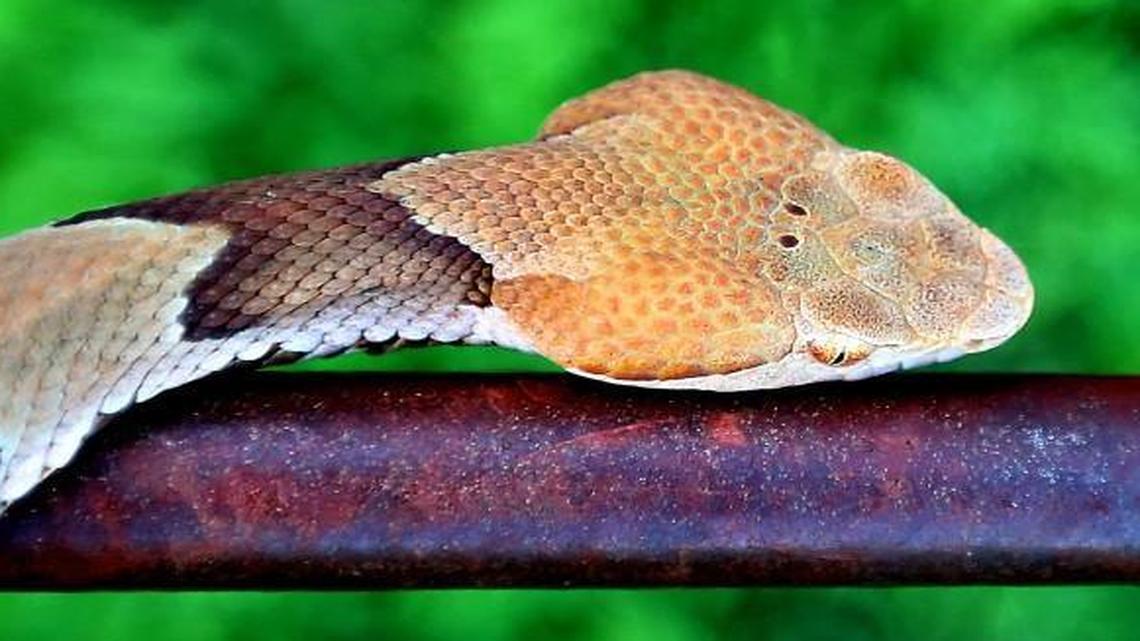
When it comes to venomous snakes in North Carolina, copperheads are king.
The slithering creatures, which can pack a painful bite, are the venomous snakes you’re most likely to encounter in the state.
Copperheads are found throughout North Carolina and are known for having hourglass-shaped markings on their bodies. The species live closer to humans compared to many other snakes, and encounters can have serious consequences, The News & Observer previously reported.
But with North Carolina under a drought, could that impact how many copperheads we see and wher we see them? We asked several experts, and here’s what they had to say.
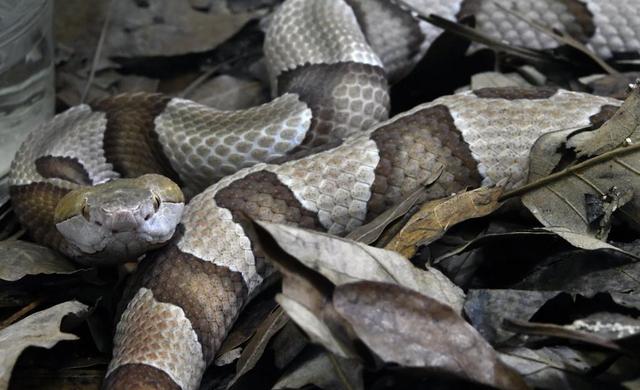 A copperhead watches visitors from its habitat at the N.C. Museum of Natural Sciences in Raleigh, N.C. Tuesday, May 2, 2017. Chuck Liddy cliddy@newsobserver.com How could the drought impact copperheads?
Copperheads tend to move around more when temperatures go up. So, we wanted to know if North Carolina’s lack of rain could impact the number of copperhead sightings this spring.
There’s not a clear answer, said Falyn Owens, wildlife extension biologist with the N.C. Wildlife Resources Commission.
“On the one hand, droughts can lead to water sources drying up, meaning that all sorts of wildlife — including copperheads and other snakes — may have to travel further during their day-to-day movements to visit reliable water sources” to drink from, Owens told The N&O in a Friday, March 27 email. “On the other hand, copperheads have the ability to hunker down and wait for more ideal conditions.”
Does that mean it’s more likely you’ll encounter a copperhead this year? That’s also complicated.
“In terms of whether people may see more or fewer copperheads out and about during dry weather, I don’t think we can say either way,” Owens said. “It may very well depend on the snake and the particular conditions of its immediate surroundings. The key is knowing that whenever it’s warm out (over about 60°F), copperheads and other snakes are likely to be active.”
Another perspective about the drought comes from Talena Chavis, owner and operator of the Raleigh-area business NC Snake Catcher. In Chavis’ experience, “copperheads and water do not really go together.”
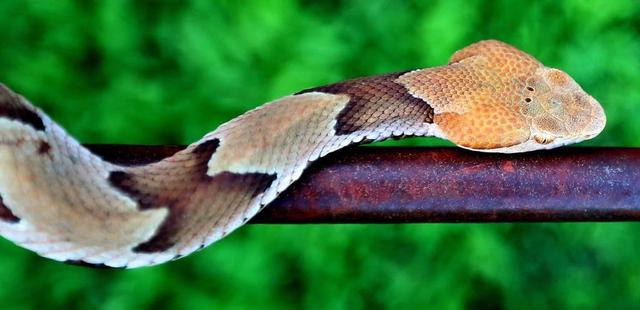 The most common venomous snake in North Carolina is the copperhead, Agkistrodon contortrix, which is found in all 100 counties. Janet Blackmon Morgan jblackmon@thesunnews.com
“Sometimes there’s a belief system that copperheads are near water,” Chavis told The N&O in a Thursday, March 26, phone interview. “And what is almost always occurring — not always, but the majority of the time — people are seeing a Northern water snake, which has the same pattern, but upside down.”
NC Snake Catcher has already received two calls about copperheads, the earliest ever in a snake season. Those calls — combined with copperheads not liking water — make Chavis think there won’t be any major impacts on the snakes’ activity this year.
One point that’s clear is copperheads usually become more active when it gets warmer. For this reason, people are urged to put on gloves for yard work and look before reaching under piles of brush. And if you see a copperhead, it’s best to leave the area, according to the wildlife commission and past reporting from The N&O.
Drought conditions in NC
All of North Carolina is in a drought, with much of the state at moderate or severe levels.
But the situation is more serious in the Charlotte and Rocky Mount areas, which are experiencing extreme drought, according to maps from the National Oceanic and Atmospheric Administration and the University of Nebraska-Lincoln.
“If you think back to January, we had, of course, the two winter storms, which gave us some moisture for our lakes and our streams and in the ground,” Barrett Smith, hydrologist with the National Weather Service in Raleigh, told The N&O in a Thursday, March 26 phone interview. “And then we’ve had a series of rain events even since then, through the middle of March. None of them have been significant to help us out in really alleviating the drought.”
In the Triangle, the forecast calls for showers and thunderstorms starting late Friday, March 27. Less than 1 inch of rain is predicted overnight, but Smith said that won’t be enough to fill reservoirs and bring rivers closer to normal levels.
“We’re going to need a big weather system that gives us 2 or 3 inches of rainfall to really help,” Smith said.
Ask the North Carolina Service Journalism Team
Questions about life in North Carolina? Or have a tip or story idea you’d like to share? The service journalism teams at The News & Observer and The Charlotte Observer want to hear from you.
You can submit your question by filling out this form.
Related Stories from Raleigh News & Observer
The News & Observer
Simone Jasper is a service journalism reporter at The News & Observer in Raleigh, North Carolina.