
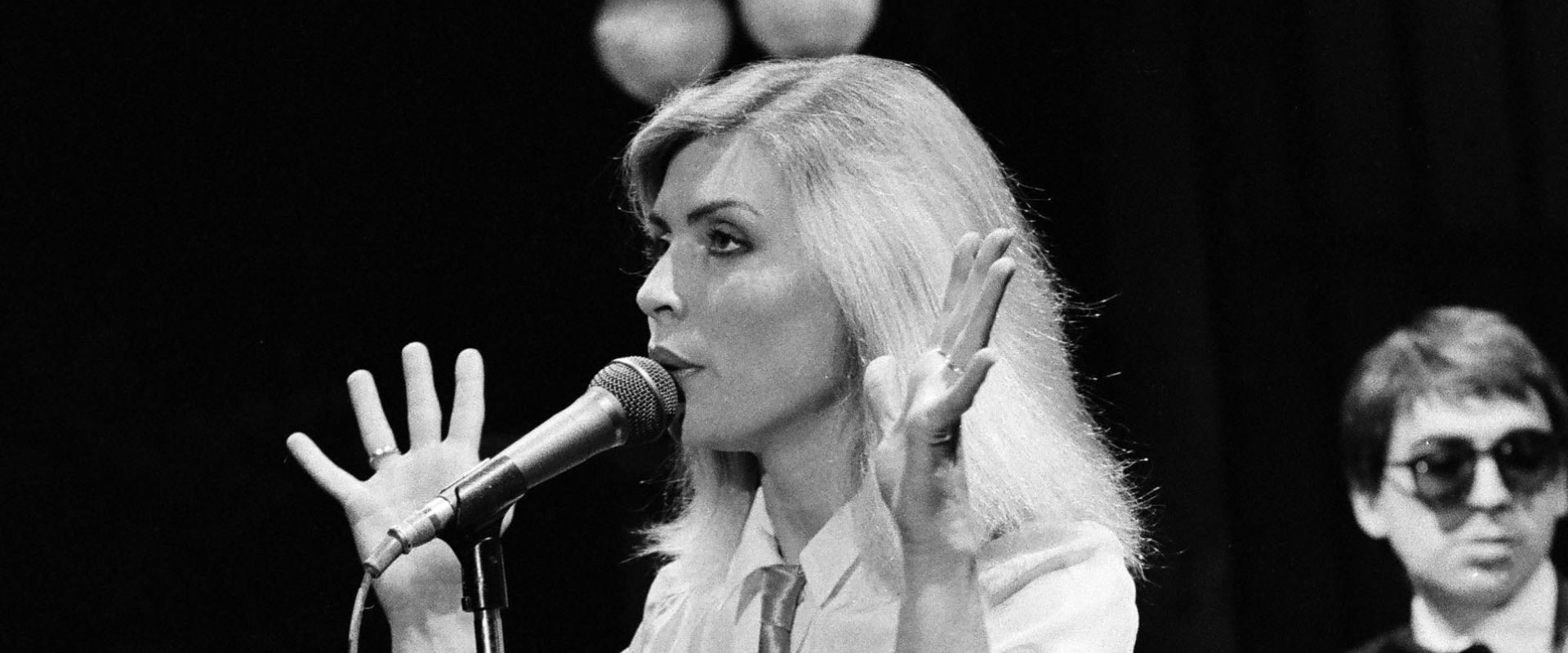
In 1974, vocalist Debbie Harry and guitarist Chris Stein formed the new wave band Blondie in New York City. Initially enjoying success on the U.S. underground music scene, Blondie broke into the mainstream in 1978 with their third studio album, Parallel Lines. The next two years brought a string of four No. 1 hits, each one practically unrecognizable from the last. On this day (March 28) in 1981, Debbie Harry & Co. launched a two-week run atop the Hot 100 with “Rapture”. Melding new wave, disco, and hip-hop, “Rapture” also stood out for its use of rap vocals—the first-ever U.S. No. 1 hit to do so.
Blondie Paid Homage to These Hip-Hop Legends in “Rapture”
While Blondie certainly did not invent rap music, as some assert, the group was among the first to shine a spotlight on it. “Rapture” was a surreal marriage of rap and new wave, with some sci-fi imagery sprinkled in for good measure.
One night in 1978, Debbie Harry and Chris Stein joined their friend Fred Brathwaite—better known as Brooklyn hip-hop pioneer Fab 5 Freddy—at a rap event in the Bronx. Impressed by the artists’ energy and flow, they attended a few more such events before deciding to combine what they’d heard with the booming disco subgenre.
Trying her hand at rapping, Harry name-checked both Brathwaite (Fab 5 Freddy told me, ‘Everybody’s fly) and another New York hip-hop fixture, Grandmaster Flash (Flash is fast, Flash is cool).
“I can’t honestly say that ‘Rapture’ is a real rap,” Harry, now 80, said in 2019. “But it’s more of an homage to it… There were quite a few things that were recorded by then, but never in the charts. And so we sort of broke the ice, which I’m very proud of.”
Blondie released “Rapture” as the second single from their fifth studio album Autoamerican. It followed “The Tide Is High”, also a No. 1 hit.
“When we gave the album to the record company, they basically said they didn’t hear any hits,” drummer Clem Burke later recalled. “And that was their quote: ‘We don’t hear a single’”. It had two number ones! And both were very innovative as well.”
Featured image by Al Levine/NBC/NBCU Photo Bank