
March 28, 2026
By Nehal Malik
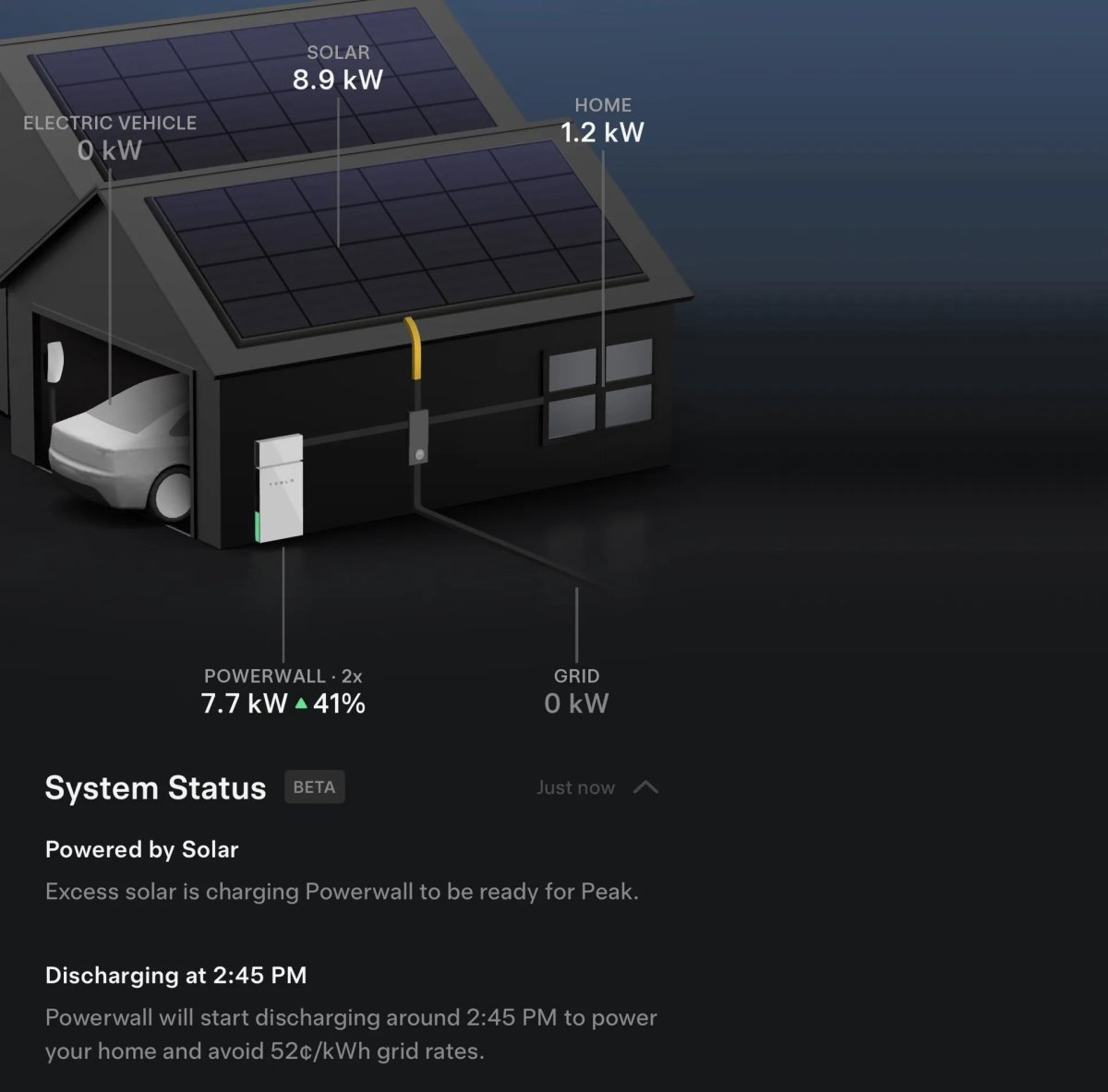
Tesla is making it easier than ever to understand exactly how your home is using energy. A new “System Status” feature is currently rolling out to the Tesla app, providing Powerwall owners with AI-powered insights into why their battery is charging or discharging at any given moment.
According to Alex Guichet (@AlexGuichet), a mobile app engineer and designer at Tesla, the update is all about transparency. “You’ll see exactly what your Powerwall is doing for your home and why,” Guichet said on X. The feature even includes forecasted times for when the battery will switch states, such as discharging at 2:45 PM to avoid high peak-utility rates.
The “Autopilot” for Your Home
The Tesla app has always been a robust hub for monitoring real-time power flow, solar production, and vehicle charging. However, the logic behind the battery’s behavior — especially in Time-Based Control mode — could sometimes feel like a “black box” to users.
This new status view changes that. Guichet compared the experience to one of Tesla’s most famous features, noting, “While we were building it, I found myself saying that System Status is like watching the Autopilot visualization for your home.” By swiping down on the Home Screen, users can now see a Beta status card that explains current system priorities, like storing excess solar to prepare for expensive peak hours.
Because the insights are AI-driven, Tesla has included thumbs-up and thumbs-down buttons for user feedback. Guichet acknowledged that “AI can make mistakes,” but emphasized that providing a clear look into the next few hours of energy usage was a top priority based on user feedback.
Growing the Tesla Energy Ecosystem
This software improvement comes at a busy time for the Tesla Energy division. The company is currently rolling out Powerwall 3 for residential energy storage, which features a more integrated design and higher power output than its predecessor. Tesla is also working on backward compatibility to let Powerwall 3 work alongside older Powerwall 2 units.
Globally, the momentum is building. Tesla recently landed a major distribution deal in Australia and just launched the Powerwall 3P specifically for Europe’s three-phase electrical grids. Whether you are using the battery to go completely off-grid or just to charge your Tesla vehicle from excess solar, having a clear “why” behind every kilowatt-hour makes the system feel much more intelligent.
The new status feature is a server-side update, meaning you won’t necessarily need a new app version from the App Store. It is a phased rollout, so if you don’t see the Beta status card yet, it should appear on your home screen soon.
Subscribe to our newsletter to stay up to date on the latest Tesla news, upcoming features and software updates.
March 28, 2026
By Karan Singh
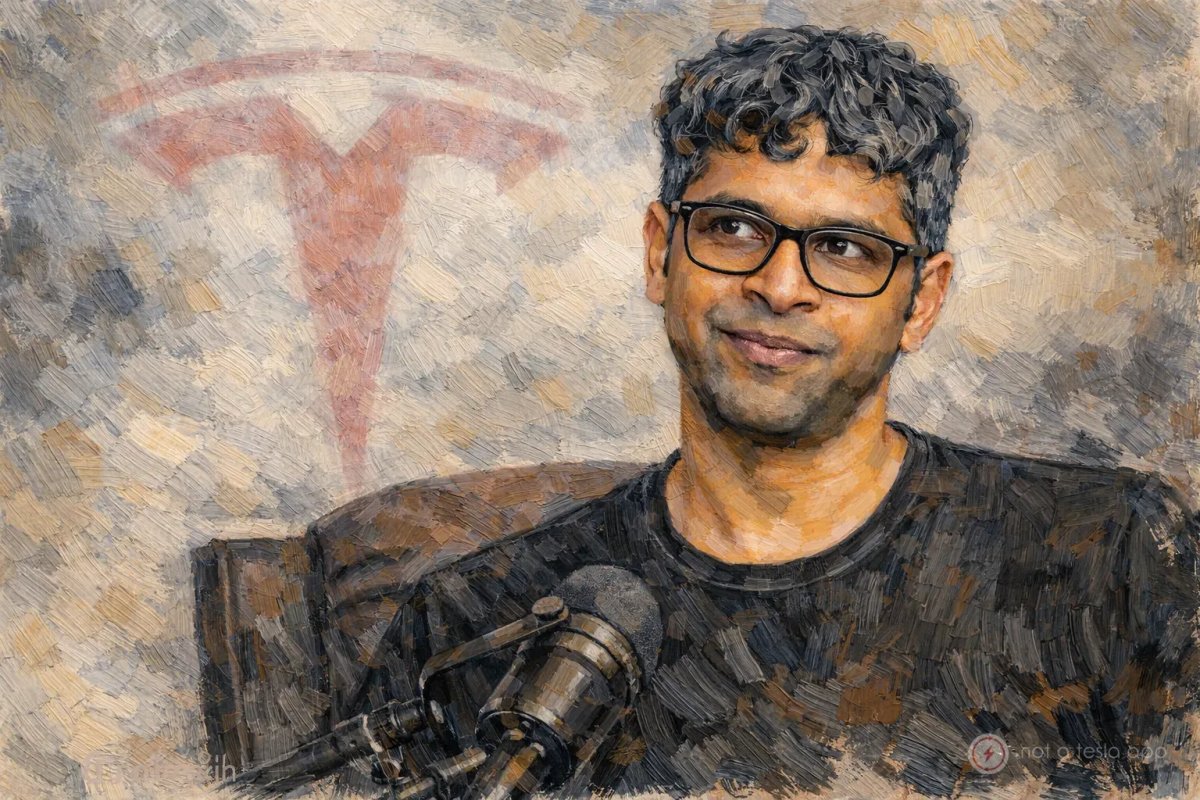
Ashok Elluswamy, Tesla’s VP of AI and leader at Macrohard, is leading one of the most ambitious artificial intelligence projects in history.
While Franz von Holzhausen crafted the beautiful hardware that captured the world’s imagination, Ashok is the one teaching that hardware to see, think, and reason. From the first iteration of Autopilot to the end-to-end neural networks introduced in FSD V12, his work is defining the future of autonomous vehicles and robotics.
A Foundation in Robotics
Ashok’s journey began not in Silicon Valley, but in India, where he earned his bachelor’s degree in Electronics and Communication Engineering from the Visvesvaraya National Institute of Technology.
His passion for making machines interact with the real world led him to the United States and to one of the world’s premier robotics institutions: Carnegie Mellon University. There, he earned a Master’s degree from the Robotics Institute, immersing himself in the complex challenges of computer vision and machine learning.
His early career saw him tackling the building blocks of autonomy within the legacy auto industry. He worked at WABCO Vehicle Control Systems and later at Volkswagen’s Electronics Research Lab, developing computer vision systems and driver assistance features. He was already working on the problem of vehicle autonomy, but within the slow-moving, incremental world of traditional automakers, which included minor yearly updates.
Answering the Call
In 2014, Ashok made a pivotal decision. He left behind the established world of legacy auto to join a company that had just started to find its footing. He responded to a now-famous post on X from Elon Musk, who was looking to build a hardcore team to create the world’s first true autopilot system for consumer vehicles.
Engineers interested in working on autonomous driving, pls email autopilot@teslamotors.com. Team will report directly to me.
— Elon Musk (@elonmusk) September 18, 2013
Ashok was the very first engineer hired for Tesla’s Autopilot team and remains at the heart of the team today.
The task he found himself faced with was monumental. Unlike his previous roles, this wasn’t about simply developing a single, isolated feature that would go out for the next model year. Instead, he was building a world-class software team tasked with developing an autonomous driving system from near zero, under a CEO with an extraordinarily ambitious vision for full self-driving.
Teaching the Fleet to See
The first fruit of that herculean labor was the original Autopilot, which stunned the world by bringing features like Autosteer and Traffic-Aware Cruise Control to a production vehicle. But this was just the beginning. The team’s greatest challenge and biggest breakthrough was the transition to Tesla Vision.
In a highly controversial move, Ashok’s team led the charge to remove radar from Tesla’s sensor suite, arguing that a system relying on two different sensor inputs (vision and radar) was fundamentally flawed.
The only way to solve for general autonomy, they believed, was to solve for vision first, just as humans do. This first-principles approach was met with great skepticism, but it proved to be a critical step, forcing the team to build a more robust, camera-based system that could scale across millions of vehicles and countless environments and locales around the world. In the end, vision was the correct move as it’s immensely more trainable than something like LiDAR. You can easily train vision by feeding it millions of hours of humans driving, while the same isn’t the case for LiDAR or radar.
The End-to-End Revolution
Ashok’s tenure has culminated in perhaps the most significant architectural leap in FSD’s history: FSD V12. As a key presenter at Tesla’s AI Day events, he explained this shift to the world. Instead of hundreds of thousands of lines of C++ code telling the car how to handle specific situations, V12 is an “end-to-end” neural network.
It takes in video from the car’s cameras and outputs driving controls directly, learning how to drive by watching millions of hours of real-world video data.
This is the software equivalent of Franz’s Cybertruck – a complete break from convention, replacing a complex system of rules with a single, powerful, learning-based AI. It is the foundational technology that pins all of Tesla’s ambitions in relation to AI and autonomy, especially Robotaxi and Optimus.
Ashok Elluswamy’s portfolio at Tesla isn’t just a series of software updates; it’s the steady, methodical, and brilliant execution of a plan to solve one of the hardest challenges on the planet. He is the quiet architect building the mind of the machine.
March 28, 2026
By Nehal Malik
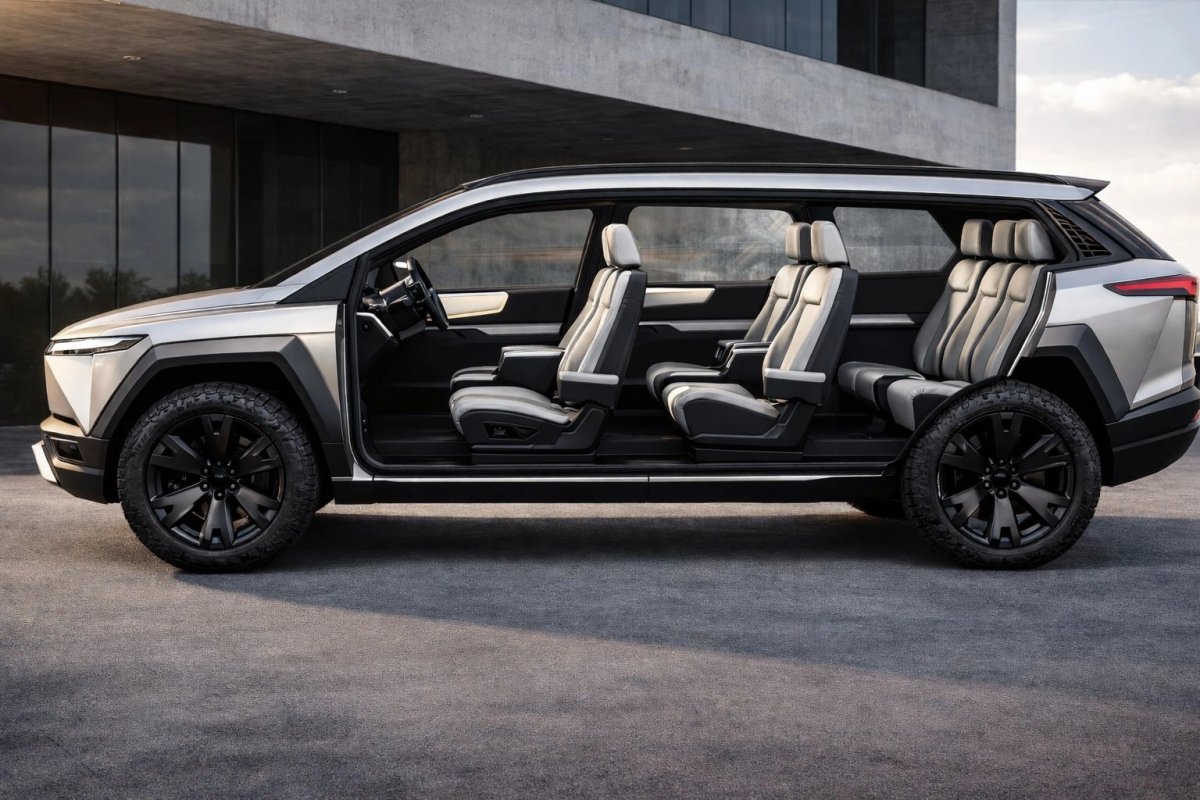
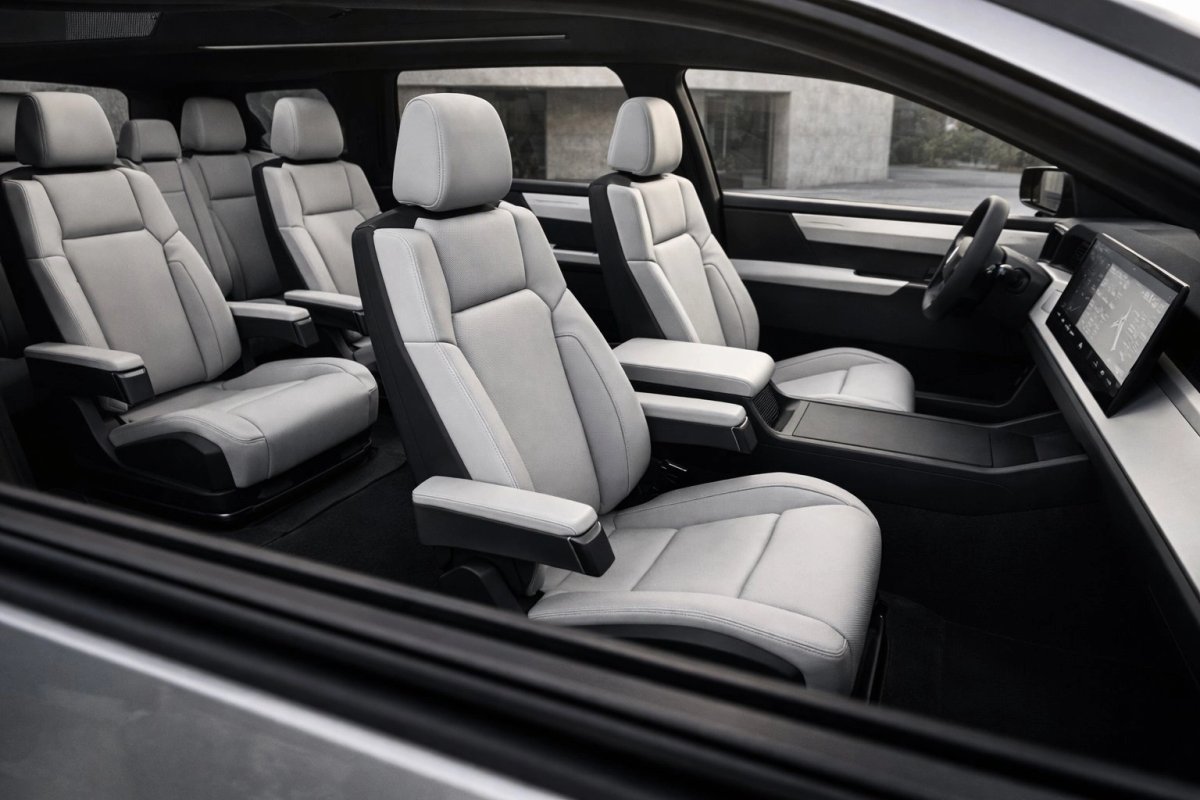
Elon Musk is leaning into the idea that Tesla’s next big vehicle won’t just move people — it might actually help grow families. Following his cryptic promise earlier this week that something “way cooler than a minivan” is coming, the CEO has dropped even more hints suggesting a radical, three-row SUV is officially on the drawing board.
The conversation on X took a scientific turn when users pointed Musk toward a study titled “Car Seats as Contraception.” The research suggests that because most standard cars can’t fit three child seats in the back, many families stop at two children. When a user noted that a true three-row Tesla could trigger a baby boom, Musk responded: “Well, I guess we should solve this.”
 A Door for Every Row?
One of the most intriguing hints came when a follower suggested that a three-row vehicle should have a dedicated pair of doors for each row, ensuring occupants don’t have to play a game of human Jenga to get to their seats. Musk replied with a simple, “Noted.”
While a six-door car sounds unlikely for mass production, it hints at a specialized entry system — perhaps a very large, minivan-like sliding door or a refined version of the Model X’s falcon wings. Fans have already begun creating concept videos and 3D renders of a “CyberSUV,” a vehicle that trades the Cybertruck’s open bed for a fully enclosed, three-row cabin while keeping the rugged, stainless-steel aesthetic.
Introducing Tesla model W pic.twitter.com/w0HD0Qko4j
— Jesse Richards (@iamjesserichard) March 26, 2026 Why the CyberSUV is the Likely Path
Tesla is currently winding down production of the Model S and Model X to make room for its robotics future. However, this leaves a massive gap in North America for a premium, large-scale family hauler. While the Model Y L is starting to make its way to international markets after being a China-exclusive offering for months, Musk has remained firm that it won’t arrive in the U.S. until late 2026, if ever.
The delay of the Model Y L makes a lot of sense if Tesla is planning a dedicated “CyberSUV” based on the Cybertruck platform. A vehicle built on this foundation would feature a 48-volt architecture, steer-by-wire, and enough width to fit three child seats in the second row comfortably — something the narrower Model Y struggles with. It would also leverage the existing Cybertruck assembly line at Giga Texas, which has plenty of headroom to support a new high-volume SUV alongside the truck.
The Ultimate “Business Dad” Hauler
Musk also recently reposted a post about “businessdads” needing three rows to fit their families, further signaling that Tesla is looking at the luxury SUV market currently dominated by the Cadillac Escalade IQ and the Rivian R1S. Tesla’s chief designer, Franz von Holzhausen, has previously told fans to “wait and see” about a potential CyberSUV, and with models of a larger SUV having been spotted in the background of recent Cybercab videos, the pieces are falling into place.
With the Cybercab robotaxi starting mass production next month, it looks like Tesla’s focus is shifting toward specialized vehicles. A stainless-steel, 7-seater “CyberSUV” that acts as a mobile fortress for large families would be a logical — and very “Musk” — next step.