
Jacob Bronsther is an associate professor of law at Michigan State University College of Law.
Every spring, professional basketball performs a small act of make-believe. Teams that have spent five months selling urgency, hustle and competitive intensity suddenly discover the quiet virtues of “development,” “rest” and experimental lineups. Starters sit. Rotations dissolve. Losing is rebranded as long-term planning.
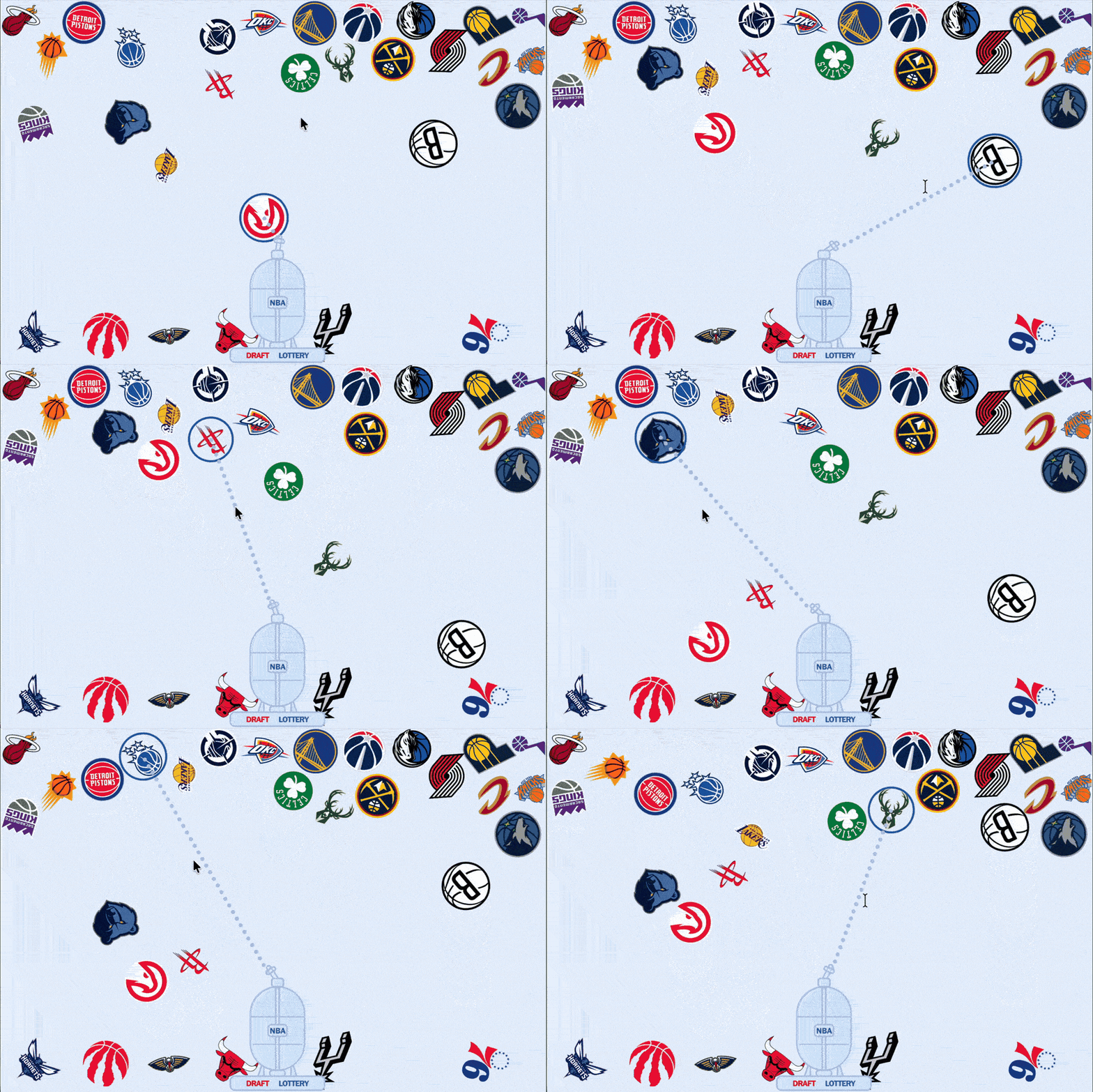
Everyone knows what is really happening. The NBA draft makes losing a smart business decision. Under the league’s rules, the 14 teams that miss the playoffs enter a lottery that determines the first four draft picks. The worse a team’s record, the better its odds of drafting the next LeBron James. The message is unmistakable: If you are not going to make the postseason, the safest way to improve your future is to be worse now or, in basketball parlance, to “tank.” The game has become, on many nights, embarrassing.
After years of half-hearted reforms — such as a play-in tournament that increases the number of teams contending for playoff spots — the NBA is taking the problem seriously. In February it fined the Utah Jazz $500,000 for benching its two best players in the fourth quarter of two games, citing “conduct detrimental to the league.” And it fined the Indiana Pacers $100,000 for keeping healthy players out entirely. NBA Commissioner Adam Silver has informed the league’s general managers that an anti-tanking rule change is coming next season. He’s convening a panel of basketball minds, including former Duke coach Mike Krzyzewski, to develop the new rule. However, none of the proposals reportedly under consideration — such as basing lottery odds on two-year records — are any good. NBA commentator Bill Simmons, who has mooted countless other ideas, concluded last month: “There is no answer.”
But there is.
First, eliminate the lottery. No televised suspense. No probabilistic theater. For non-playoff teams, draft order would be determined by two parts of the season. During the first two-thirds of the season, ending at the All-Star break, losses improve a team’s draft position. During the final third of the season, wins improve it. While others have floated the idea of rewarding late-season wins with better draft odds, this proposal replaces the lottery with a simple points system. Each team’s final draft position would reflect a combined score based on its losses in the first 55 games and its wins in the final 27.
The early season would still reward genuinely bad teams. The late season would reward teams that actually try to win.
Because it mirrors how the league already works, this structure addresses concerns that teams would tank during the first two-thirds of the season. For most of the year, nearly every team is sincerely competing. Coaches are coaching. Players are chasing playoff spots, contracts and reputations. Tanking, when it happens, is concentrated in the final third of the schedule. Moreover, any temptation to lose before the All-Star break would be tempered by the fact that wins will matter later in the season, and winning plays and habits cannot simply be switched on.
By anchoring most of the draft calculation to the part of the season when teams are still plausibly trying, the system continues to identify who truly struggled and ought to receive a higher draft pick in the name of competitive parity. But by flipping the incentive after the All-Star break, it removes the reward for orchestrated collapse. Once a team knows it is out of the playoff race, the rational strategy would no longer be to lose. It would be to win as many games as possible down the stretch to improve its draft position.
The side effect would be a dramatic improvement in the most lifeless stretch of the NBA calendar for much of the league. For fans of struggling teams, February, March and April often feel like extended preseason. With this system, the end of the season would suddenly matter for everyone. Imagine your team needing to win the last game to secure the first pick rather than the second. Last year, that would have meant the difference between Cooper Flagg (astonishing, franchise-altering) and Dylan Harper (promising).
Would all this hurt the legitimately awful teams that ought to benefit from higher draft picks? Not really. If a team is bad, it will post a poor record across the first 55 games and still receive a strong draft position under the primary component of the formula. Even a perfect late-season run can affect only one-third of the draft calculation. What teams would lose is the ability to improve their position by becoming strategically worse in the final few months.
That is not punishment. It is accountability.
Tanking is a predictable response to how the rules are written. The cleanest reform is not a further tweak to the lottery. It is a draft system that finally makes winning the only rational move — from opening night to the last game of the season.

About this story
Design and development by Yan Wu.