
A tantalizing hint in the Martian rocks
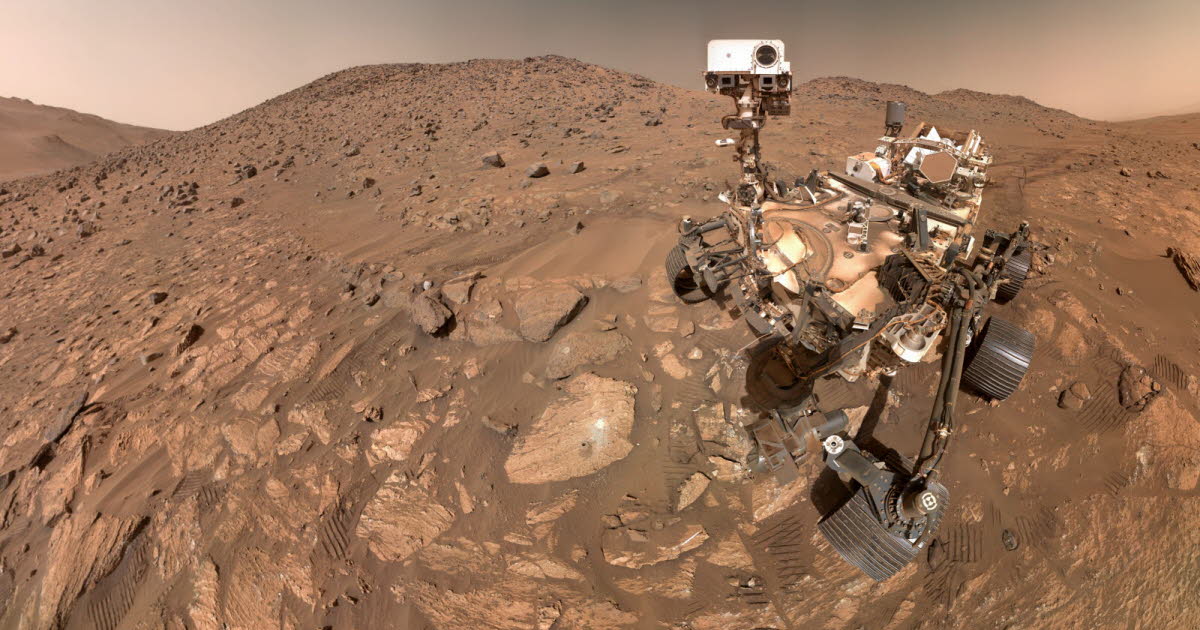
The Perseverance rover, exploring Mars since February 2021, has detected a potential biosignature in the Jezero Crater. Scientists spotted unusual, colored specks on a rock nicknamed “Cheyava Falls,” perched on the foothills of an ancient valley. This ancient valley once carried flowing water, making it a prime site to search for remnants of life. The discovery is scientifically provocative, yet it demands careful, methodical confirmation.
What Perseverance found at “Cheyava Falls”
Rover instruments identified two key minerals in the sampled rock: vivianite and greigite. On Earth, vivianite often forms in wet sediments, peatlands, and around decomposing organic matter. Greigite can be produced by certain bacteria, especially within sulfur-rich, low-oxygen environments. The co-occurrence of these two minerals in one Martian rock raises the possibility of a past microbial ecosystem.
Why scientists say “potential,” not “proof”
A biosignature is a pattern, substance, or structure that could be best explained by life, past or present. But Mars is a complex planet, where non-biological processes can mimic biology’s fingerprints. Vivianite and greigite can also arise through purely abiotic chemistry under the right conditions. That is why researchers are treating this as a “potential biosignature,” not a definitive detection of ancient life.
“Based on what we see so far, we don’t see another explanation,” said one NASA official, while stressing that further analysis is essential. That scientific caution reflects the community’s high bar for claims of life beyond Earth. Each candidate signal must survive layers of scrutiny, from instrument cross-checks to independent replication.
The case for bringing the samples home
To truly resolve the biological-versus-abiotic question, scientists need the rock in Earth’s advanced laboratories. A Mars Sample Return campaign—once envisioned for the early 2030s with the European Space Agency—has faced cost and schedule headwinds. NASA has since signaled that the original plan is no longer current, prompting new ideas and partners. Officials have floated ways to retrieve samples more quickly and at lower cost, with proposals from Rocket Lab and Lockheed Martin already in discussion.
Returning samples would unlock a full toolkit impossible to carry on a rover: high-resolution microscopy, isotopic analyses, organic chemistry profiling, and nanoscale imaging. Those tests can distinguish biology from geochemistry, revealing textures, molecular patterns, and isotopic “preferences” that microbes often imprint. The path is challenging, but the payoff could be historic.
Key steps to confirm a true biosignature:
Ultra-clean sample handling to rule out Earth contamination.
Stable isotope ratios (e.g., carbon, sulfur, iron) consistent with metabolism.
Microscopic microstructures resembling microbial mats or cell-like morphologies.
Mineral paragenesis showing biologically mediated formation sequences.
Molecular fingerprints of ancient organics preserved in protected niches.
Why Jezero Crater is still the right place
Jezero’s ancient river delta once delivered sediment, clays, and organic-friendly minerals into a standing lake. On Earth, deltas and lakebeds are prime archives for fossils and biosignatures. Fine-grained sediments can entomb delicate textures, shielding organics from radiation and oxidants. If Mars ever hosted a biosphere, Jezero’s layered deposits are a logical place to look for its quiet remains.
What makes this signal compelling
The combined presence of vivianite and greigite points to environments that were once wet, reducing, and rich in iron and sulfur—conditions hospitable to certain microbes. The colored specks, spatial patterns, and mineral associations add circumstantial weight. Yet science advances by disproving alternatives, not by wishful thinking. Only rigorous tests will tell if nature’s chemistry, not biology, wrote this Martian script.
The road ahead
Perseverance will continue to cache cores from scientifically promising rocks, building a returnable library from Jezero’s diverse terrains. Meanwhile, engineers and mission planners are refining architectures to bring selected tubes back to Earth. A streamlined strategy—smaller landers, smarter ascent vehicles, and efficient orbital rendezvous—could accelerate the timeline. If successful, the first Martian samples may arrive within a decade, turning “potential biosignatures” into a clear yes-or-no.
Finding life beyond Earth would be a profound milestone, reshaping biology, philosophy, and our sense of place. Even a decisive “no” would teach us how rare life’s spark might be, and what planetary conditions it truly needs. For now, Mars offers a measured whisper—compelling, tantalizing, and just loud enough to justify the next bold steps.