
Subscribe now for full access and no adverts
REVIEW BY JOE FLATMAN
The Stone Lands book launch was held on a sun-kissed midsummer’s evening on a farm near Avebury, followed by a guided walk led by the author to West Kennet long barrow. It was the perfect blend of place, person, and project, as well as a good summation of the book: simultaneously dazzling and grounded. At the launch, the author, Fiona Robertson, apologised for not being an archaeologist and yet having written a book on this topic: she need not have worried. She writes better than most archaeologists and is better-informed than many too. This might not be a conventional book on prehistory, and it might not be to everyone’s taste, but it is a very good book all the same, comfortably blending personal narrative with hard science. I gleaned plentiful insights from it about locations that I thought I knew well, and started jotting down notes on road-trips to those that I have yet to visit. I am confident that this book will engage and inspire a whole new generation of megalith enthusiasts, and that is to its credit: these sites were built, and added to, by communities down the ages; they are meant to be busy, complicated places where people gather for different reasons, not lonely hermitages.
Stone Lands is a blend of two distinct but interrelated narratives. The first is the author’s personal journey as she dealt with the cancer diagnosis and eventual death of her husband, and how visiting megalithic sites helped her come to terms with this life-shattering event; the second is her detailed exploration of the wider history and significance of these sites. Purist archaeological readers may struggle with the former, but I would urge everyone to persist: the subject matter is sensitively handled and draws out the enduring appeal of megalithic sites, which speak to the emotional lives of even the most hardened. It is impossible not to be moved by these structures and their settings, some of the most beautiful and beloved locations. And when it comes down to an accessible archaeological narrative on these sites, Fiona has really done her research and places them in an exemplary scientific context, with extensive references, dating, and other details. Thus, this book will appeal to both general readers and subject-specific ones alike: I would happily put Stone Lands on an introductory reading list for any university archaeology course to give students an accessible guide to major sites and finds; vice versa, I suspect this book will also become a staple on nature-writing courses. Few books manage such a cultural crossover.
Stone Lands ranges widely in time and space: it begins in Avebury and the complex series of sites and structures there; moves on to Rollright in Oxfordshire; flies up to the Isle of Mull in Scotland and then back down to Dartmoor; travels west to Preseli in Wales and back to Wiltshire on the trail of Stonehenge, and then returns west again to the Isles of Scilly; heads back north to the Isle of Lewis, the Lake District, and Orkney; goes once more to Cornwall; and finally ends up back in Oxfordshire among the folds and fields of the Vale of the White Horse at Uffington and Wayland’s Smithy. An enduring sadness of the book is that this is a dream itinerary of the very best of the UK’s megaliths made under the worst rather than the best of circumstances. Along the way Fiona shares much about these sites in what is an incredibly humane act, passing on knowledge born of grief and never once falling into maudlin commentary. I sincerely hope that she is pleased with this book: as an epitaph to a lost love, I cannot think of a better one, taking lessons learned so terribly and sharing them so generously. This book, like the stones it describes, deserves to endure.
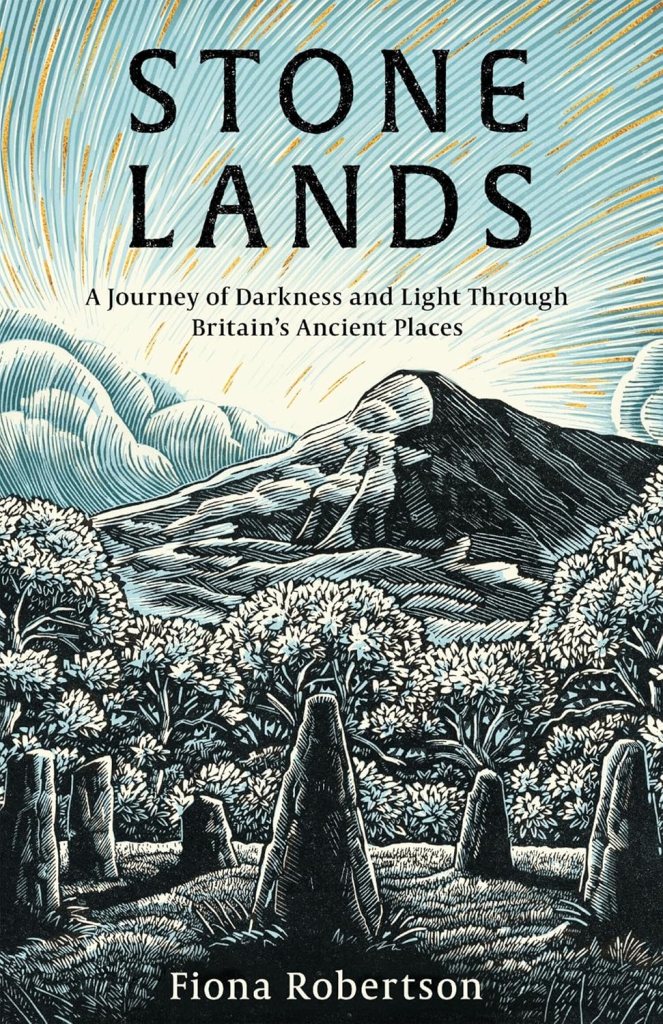
Stone Lands: a journey of darkness and light through Britain’s ancient places
Fiona Robertson
Little, Brown Book Group, £25
ISBN 978-1472149183