
A rare piebald deer, also known as a leucistic deer, was recently spotted in southern Maine.Retired Maine’s Total Coverage photojournalist Kevyn Fowler shared video of the deer.Piebaldism is a rare genetic condition that gives the deer small to large patches of white hair mixed in randomly with normal brown hair color. Some piebald deer have only a few outward signs of the condition, such as small patches of white hair. Others might be mostly white, like the one spotted by Fowler.The mutation causes random patches of skin to lack the specialized pigment cells that give deer hair its color. Even the skin beneath the white hair lacks color. This is different from albinism, where the animal has the pigment cells, but due to a missing gene these cells fail to produce color, so the entire animal is white. While albino deer have pink eyes due to the complete lack of pigment, piebald deer eyes are normal in color.Fowler said he also spotted a piebald deer in Eastport last fall.Some of the genes that cause these changes in coat color also control other physical traits, and some piebald deer are born with skeletal deformities from mild to severe. Deer born with milder symptoms of this rare condition often live normal lives. Others might be mostly white with noticeable problems like dwarfism or arched spines. Piebaldism is a recessive genetic trait and both parents must carry the recessive gene for there to be a chance that they will produce piebald fawns.“Piebaldism reportedly affects less than 1% of white-tailed deer populations, although this may vary regionally due to differing hunting restrictions on deer affected by the piebald trait,” said Melanie Kunkel and Dr. Nicole Nemeth in a report for the Southeast Cooperative Wildlife Disease Study. “In one population, prevalence reached nearly 2% following temporary hunting restrictions.”Across the whitetail’s range, around one in 1,000 deer are piebald, while an estimated one in 30,000 may be albino, and even fewer are melanistic.
MAINE —
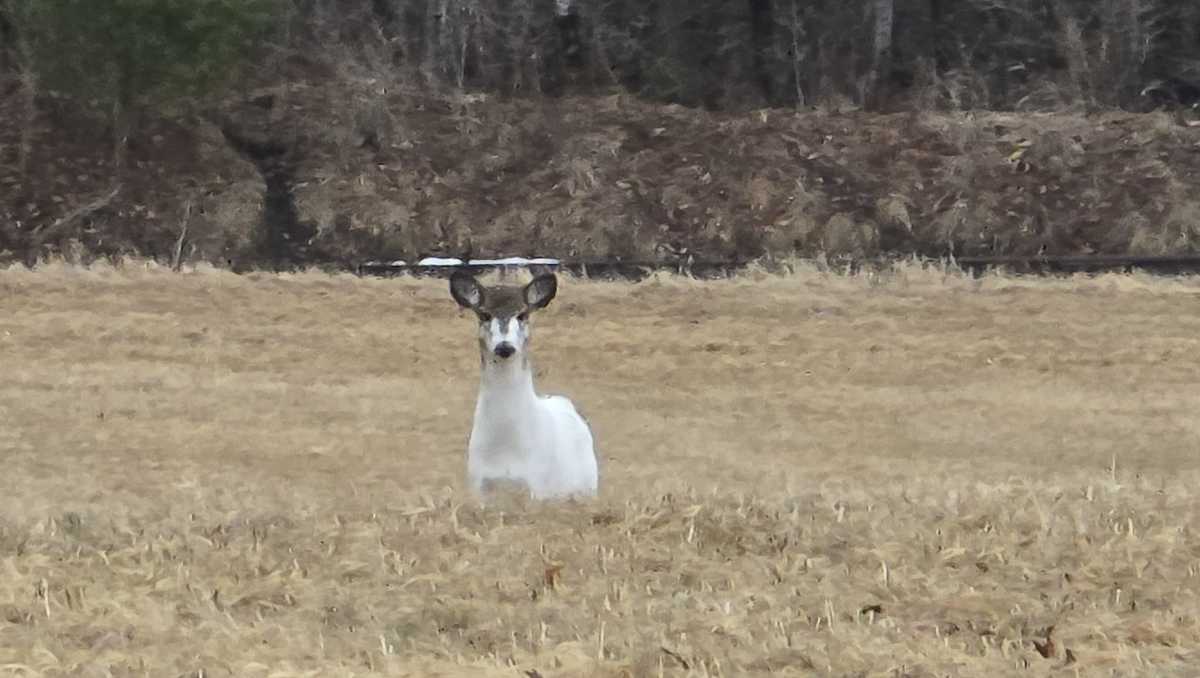
A rare piebald deer, also known as a leucistic deer, was recently spotted in southern Maine.
Retired Maine’s Total Coverage photojournalist Kevyn Fowler shared video of the deer.
Piebaldism is a rare genetic condition that gives the deer small to large patches of white hair mixed in randomly with normal brown hair color. Some piebald deer have only a few outward signs of the condition, such as small patches of white hair. Others might be mostly white, like the one spotted by Fowler.
The mutation causes random patches of skin to lack the specialized pigment cells that give deer hair its color. Even the skin beneath the white hair lacks color. This is different from albinism, where the animal has the pigment cells, but due to a missing gene these cells fail to produce color, so the entire animal is white. While albino deer have pink eyes due to the complete lack of pigment, piebald deer eyes are normal in color.
Fowler said he also spotted a piebald deer in Eastport last fall.
Some of the genes that cause these changes in coat color also control other physical traits, and some piebald deer are born with skeletal deformities from mild to severe. Deer born with milder symptoms of this rare condition often live normal lives. Others might be mostly white with noticeable problems like dwarfism or arched spines.
Piebaldism is a recessive genetic trait and both parents must carry the recessive gene for there to be a chance that they will produce piebald fawns.
“Piebaldism reportedly affects less than 1% of white-tailed deer populations, although this may vary regionally due to differing hunting restrictions on deer affected by the piebald trait,” said Melanie Kunkel and Dr. Nicole Nemeth in a report for the Southeast Cooperative Wildlife Disease Study. “In one population, prevalence reached nearly 2% following temporary hunting restrictions.”
Across the whitetail’s range, around one in 1,000 deer are piebald, while an estimated one in 30,000 may be albino, and even fewer are melanistic.