
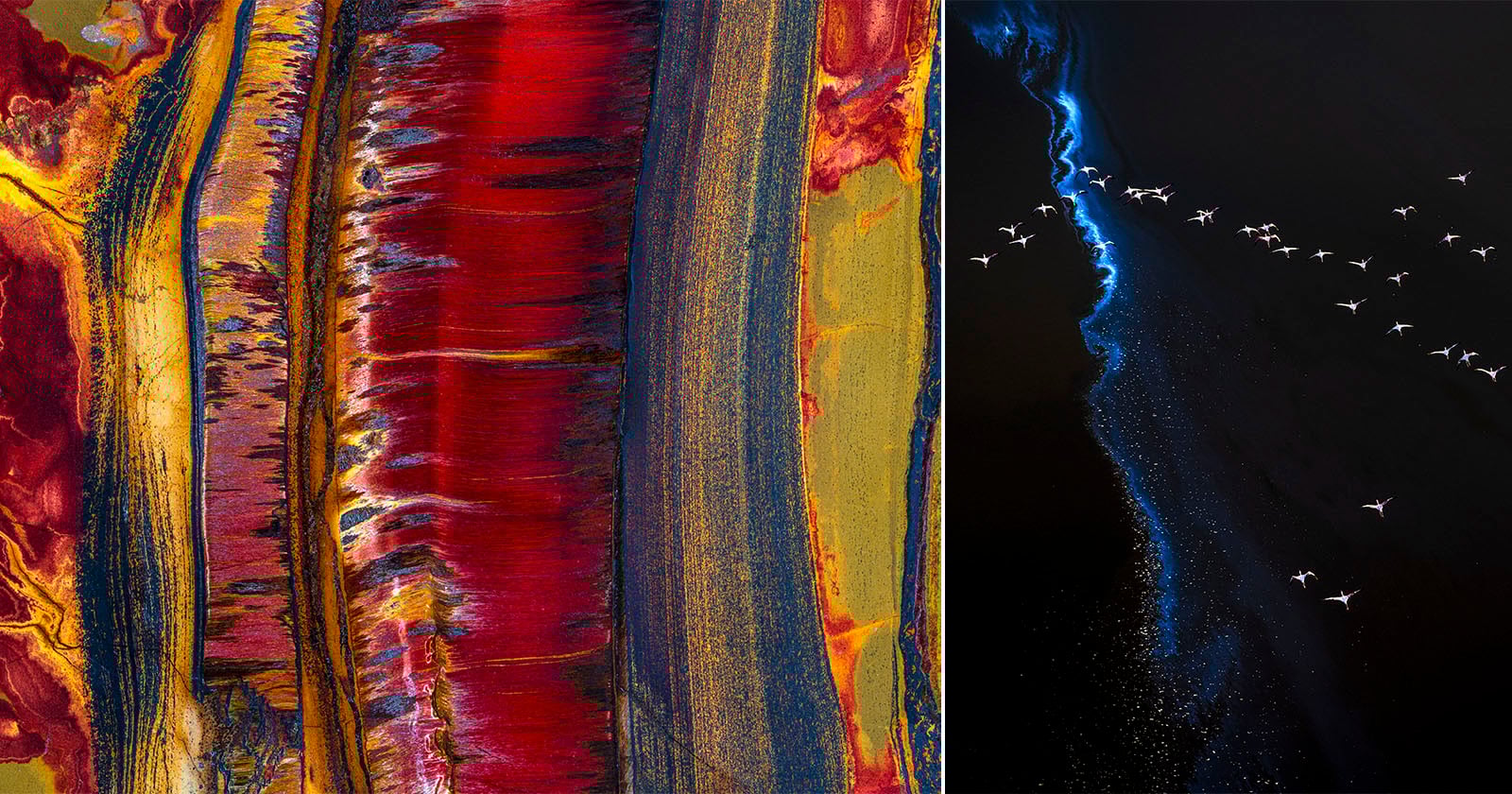
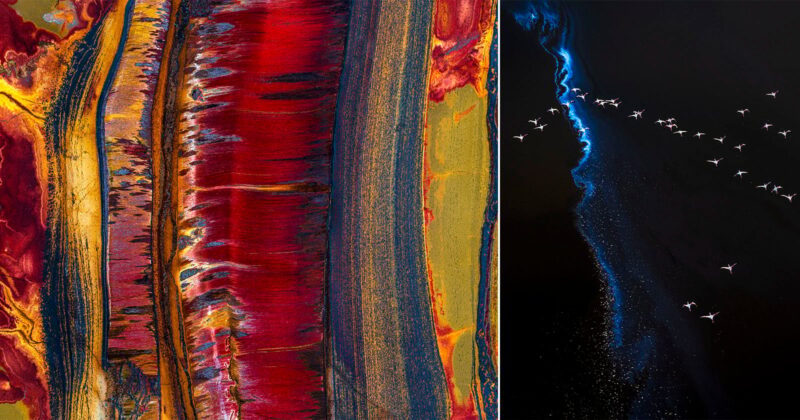
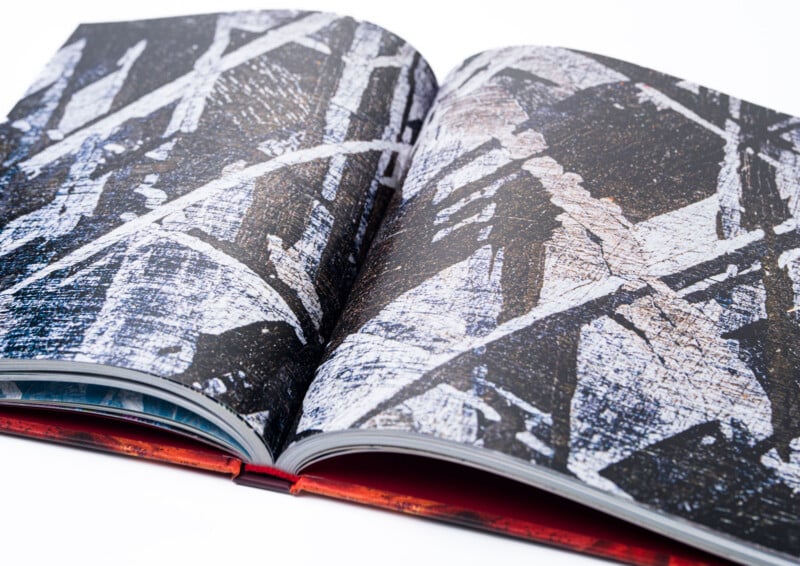
Photographer Jon McCormack’s new monograph, “Patterns: Art of the Natural World,” is a beautiful visual love letter to nature and all its intricate patterns, from microscopic and rarely-seen to vast and majestic.
PetaPixel sat down with McCormack to discuss “Patterns” and how it reflects his broader photographic journey, which started with a hand-me-down film camera in the rugged, rural Australian Outback and has taken him, the iPhone camera software lead at Apple, all across the world.
Jon McCormack’s Photographic Origins in the Outback
“I grew up on a farm in the Outback, Queensland in Australia,” McCormack tells PetaPixel. “Sheep and cattle property. We had no full-time electricity. We had a 32-volt generator that dad would run at night so that a little 12-inch black and white TV could be a thing.”
“This is also when I got my first camera, my hand-me-down camera, and it wasn’t even my dad’s hand-me-down camera. It was my grandfather’s, a Minolta 35mm Mark IV made in either 1949 or 1950,” McCormack continues.
“I still have it.”
This camera was manual “absolutely everything.” As McCormack describes it, it was a “go figure it out” camera, and that’s precisely what he did.
The closest place for the budding photographer to develop his film was two hours away, so he only got film developed every few months.
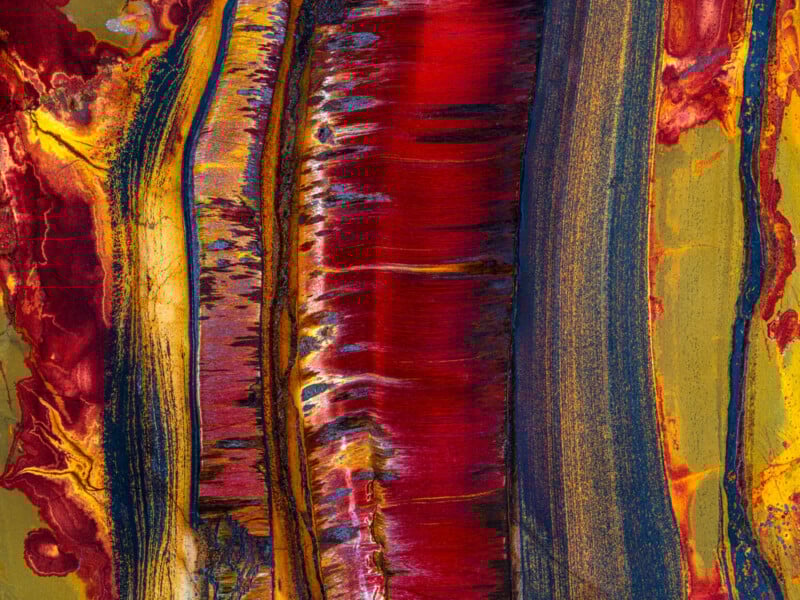 Macro Photograph, Australia, 2025 | ‘Tigerite from Australia’s Northern Territory is a stone shaped as much by time as by chemistry, and its extraordinary range of color comes from that slow, layered history. Formed when silica-rich fluids replaced ironstone within ancient sediments, tigerite preserves bands of fibrous quartz intertwined with iron oxides such as hematite and goethite. Golds and yellows emerge where iron oxidized slowly; deep reds and browns mark areas of higher iron concentration; blues and greys appear where silica dominates and light scatters through the stone’s fibrous structure. Over millions of years, pressure, heat, and groundwater reorganized these minerals into flowing, chatoyant patterns that seem to move as the stone is turned. The result is a natural record of Australia’s deep geological past — color not applied, but revealed.’
As is so often the case with talented artists, the limitations benefited McCormack. He says he became super diligent about keeping notes. He carefully considered and studied every shot on every roll of film, knowing it would be a long time before he ever saw the results.
“I’d have notebooks, these field notebooks where I’d sketch the main components of the scene, do a light meter reading, like an instant light meter reading, and then record my film, shutter speed, how I was thinking about the shot, etc.,” McCormack says. “So then when I finally got the film, got prints and negatives back, I could be like, ‘Oh, okay, so that’s what I was thinking and it did work, or ‘That’s what I was thinking and it totally didn’t work.’”
This arduous, challenging experience helped McCormack navigate the learning curve, learn the exposure triangle, and, perhaps most importantly, determine what sort of photographer he wanted to be and how he saw the world.
By the time he moved to the Bay Area in the 1990s, he had graduated to slide film — “pretty much exclusively Velvia” — and encountered the dynamic range challenges inherent to the medium. But again, the limitations were not a bug, but a feature.
“You’re a third of a stop off and that’s a meaningful amount [on Velvia],” McCormack says.
“This really educated me on the technical part of photography, and I don’t want to be this old guy who says everybody should have to go through that, but it helps,” the photographer laughs.
No matter how new generations of photographers get their feet wet and regardless of the gear they use, McCormack believes strongly that, although Malcolm Gladwell’s 10,000 hours idea is “a bit of a trope,” there is truth to the significant value of practice and time. Photographers must reach a certain level of technical competence so that part of the process becomes reflexive. Once that’s out of the way, the creativity and artistry can truly shine through.
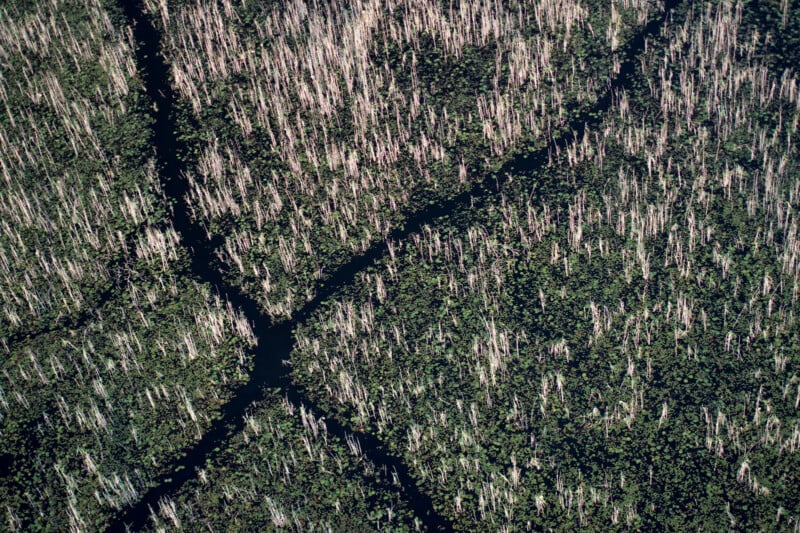 Aerial Photograph, Botswana, 2014 Interacting With the Scene
Another thing McCormack’s early days of rigorous field notes in rural Australia taught him was the power of pre-visualization.
“Mirrorless cameras today basically pre-visualize for you, and for me, my temptation is to not think enough about the image,” McCormack says. “It’s like I see something and I’m like, ‘Okay, good to go.’”
However, when he is at his “most creative and best,” the photographer has much longer interactions with a scene. If a scene strikes him, he reflects on what about the scene is compelling.
“It’s kind of just editing away and teasing apart to find the big thing or the small thing, the thing that is unique and interests me,” McCormack explains. “In the words of Georgia O’Keefe, to see takes time.”
A highly skilled veteran photographer, even McCormack still picks up new skills and learns new lessons. As devastating and horrible as the COVID pandemic was, it gave McCormack more time to explore and ultimately learn more about himself.
‘In the words of Georgia O’Keefe, to see takes time.’
“I started going down to this local beach pretty much every night as a way to get out of the house and because no other people were there,” he says. “I started photographing with no big idea in mind.”
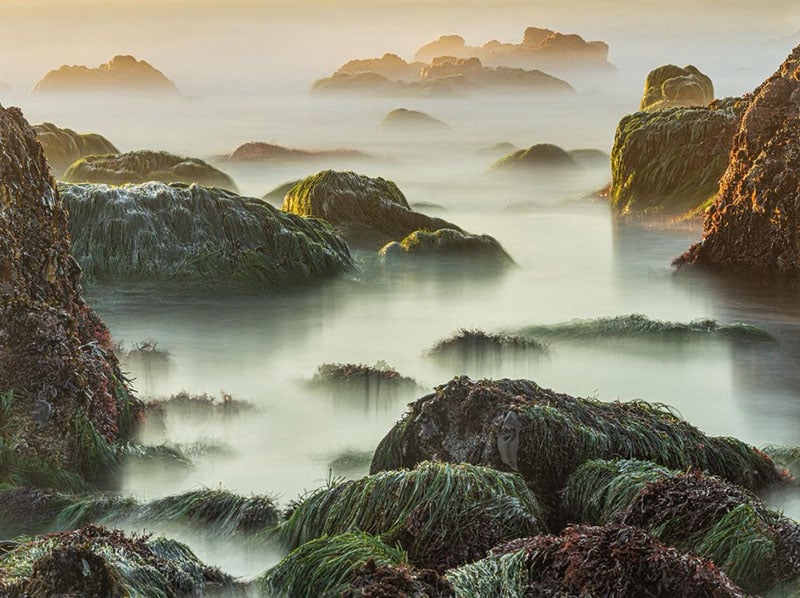 Landscape Photograph, California, 2020 | ‘In 2020, borders closed, plans dissolved, and the familiar rhythm of daily life slipped into uncertainty. Work stopped. Ideas stalled. Even the camera—usually an extension of my body—sat untouched, gathering dust. For a while, it felt as if photography itself had stopped breathing,’ McCormack says. ‘Eventually, out of boredom and a restless need to leave the house, I began walking a local beach each evening. Out of habit, or perhaps hope, I brought the camera along. After a few casual sunset frames, a question emerged: what would happen if I photographed just one place, again and again?’
At some point, McCormack grappled with a common problem among photographers who spend a lot of time in nature: “How many sunset photographs can you take and still be interested in taking sunset photos?”
“Not that many,” he learned.
So McCormack started to slow down, truly slow down. He kept going back to the same place and eventually felt zero pressure. He could experiment without fear that it wouldn’t work.
“This really slowed my photography down to the point that then, as the project went on, I’d find one composition because the compositions would change every day because they’re a combination of the light, atmosphere, tide height, time of day, time of year, angle of the Sun, et cetera.
“I would find one composition, and I would sort of set that composition up and just sit there with the cable release, just stand there watching the waves,” McCormack recalls. “What I would be looking for is a textural element in the wave or how a wave breaks over a rock. I would really just watch for those.
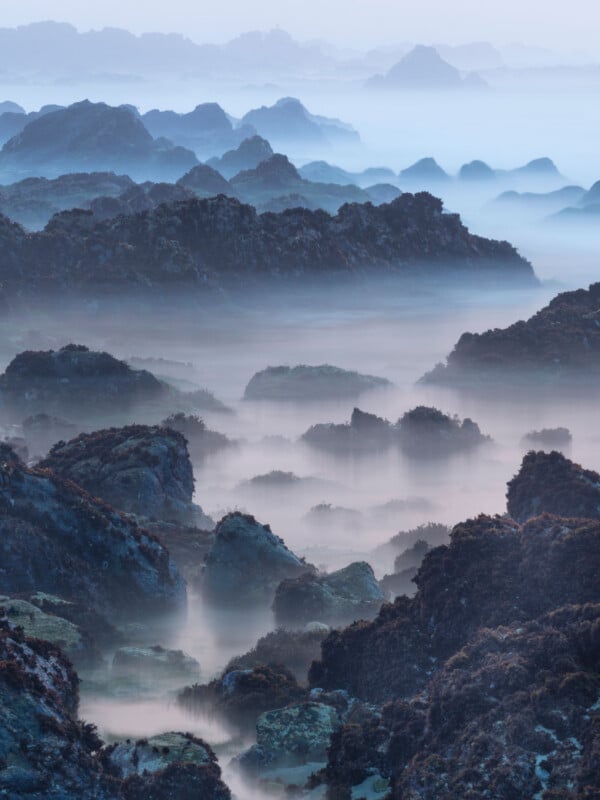 Landscape Photograph, California, 2020
“This actually felt, even though I was shooting on a conventional camera, it really did feel like going back to the film days because the thing that was most important is figuring out in advance what my specific taking, what my specific voice on this particular scene was.
McCormack offers an example. Suppose he and someone else both go to Yosemite for the very first time, camera in hand. Most people start with the classic, popular shots, the “Kodak signposts” as McCormack calls them.
“I think that’s important to do at some level, and do it as quickly as you possibly can to get that out of your system.”
With those typical shots out of the way, it is then about finding out what a place says “uniquely to me.”
“It’s going to say a different thing to me and a different thing to you,” McCormack says. “That’s one of the things that my view on photography is, a photograph is just a visualization of your point of view. A photo is basically like, ‘Here is how I see the world and I’m showing it to you.’”
‘… a photograph is just a visualization of your point of view.’ A Pattern Photographer
McCormack learned, although he admits it took him a long time to figure it out, that he’s a “pattern photographer.” Some people are landscape shooters, others are wildlife photographers, and some are even broadly “nature photographers.”
“I’m a pattern photographer. I look for patterns at all levels. The moment I said that out loud to myself, I’m like, ‘Well, of course I am.’” McCormack says.
‘I’m a pattern photographer. I look for patterns at all levels.’
“What else did I ever think I was going to be?”
McCormack believes part of why his visual system and artistic spirit work this way is because he’s colorblind. McCormack cannot distinguish between some of the absolutely stunning colors featured throughout “Patterns” and the rest of his portfolio.
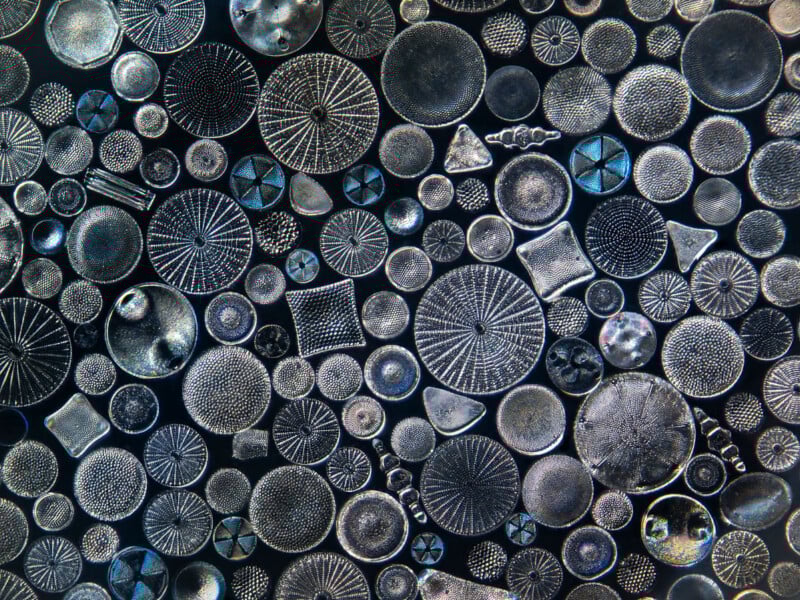 Microscope Photograph, 2024
“Color isn’t necessarily my first language,” he says.
With red-green colorblindness, the photographer says that “whole trope of red flowers on a green tree” is “dead to me.”
With the realization that he was a pattern photographer, so much of how McCormack has always seen the world made sense in a new way.
“It showed up in the way I would compose, and the way I would edit,” he says.
Even when McCormack thought of himself as a more traditional landscape photographer, he still operated differently from many of his peers.
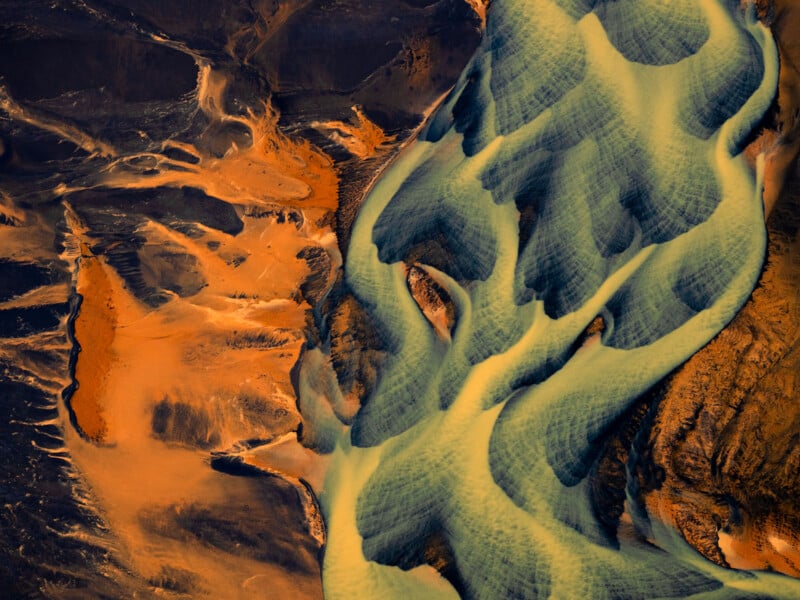 Aerial Photograph, Iceland, 2025
“A 200mm [lens] was one of my go-to things. Everybody else woul dbe rocking out with a 14mm, the big weird dome Nikon thing. I’ve got a 100-400mm and I’m good to go.”
“That’s just how I see the world, looking for things in isolation, looking for things that made a landscape uniquely interesting to me,” McCormack says.
 Landscape Photograph, Svalbard, 2023
The Right Tool for the Job
There is a truly staggering range of subjects and techniques on display throughout the many pages of “Patterns,” ranging from close-up photos of patterns on wild zebras in Africa to microscopic images of diatoms, from mountain ranges in the Arctic to seagrass in the Pacific. But what unites all the shots, no matter how different they are at first glance, is their celebration of structure and pattern.
McCormack used a wide range of photographic gear to capture the images in “Patterns,” including microscopes, mirrorless and medium-format cameras, and even the iPhone he helps build daily. But for McCormack, despite still having his very first camera, the gear remains a tool.
 Landscape Photograph, Iceland, 2023
“There are either seven or eight different cameras involved in the making of this book,” he says, and picking the right one came down to which camera would solve the artistic and technical challenge he faced.
“It’s basically like, ‘Here’s the thing I want to do, and now what’s the simplest thing to do it with?’”
“I’m not really a gear guy.”
‘Nature Is Utterly Remarkable’
When asked about the diversity in “Patterns,” McCormack says he really just wanted to show how special and precious Earth is.
He also wanted to surprise people. Many of McCormack’s photos notably lack a sense of scale or an obvious visual reference point. People must really study the photos to understand what they are looking at, whether it’s something tiny or something huge. It could be something they’ve seen before, or maybe something they didn’t know existed. In all cases, the photos are not only beautiful but also inspirational. It is a love letter to nature, and McCormack wants the reader to feel compelled to get out there.
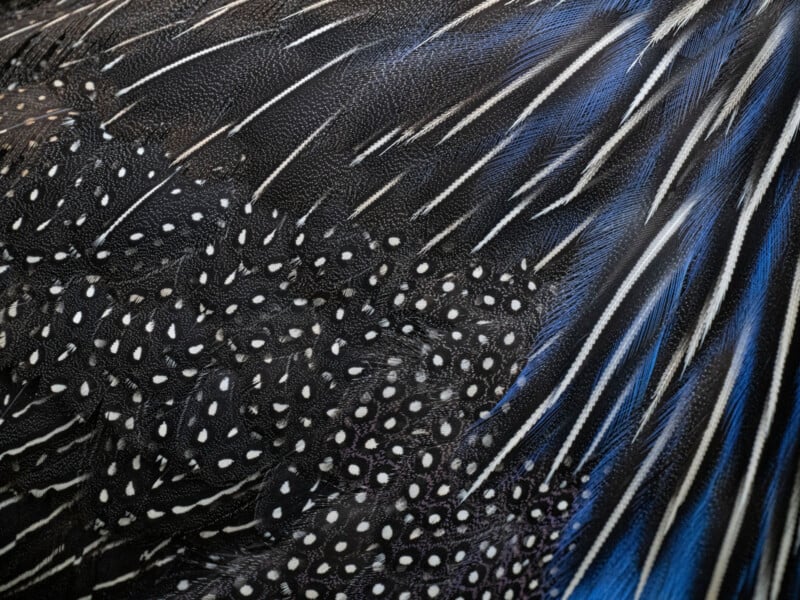 Wildlife Photograph, Kenya, 2024
“We only get one shot at this thing,” he says of Earth. It’s important to McCormack, a longtime conservationist and supporter of environmental initiatives, that people see his work and feel love for nature. The proceeds from “Patterns” are going to the excellent organization, Vital Impacts, a non-profit founded by photographers Ami Vitale and Eileen Mignoni in 2021 to advance global conservation efforts through visual storytelling.
McCormack met Vitale in the Himalayas in 2008, and they have been good friends ever since.
“We see the world in the same way. We’re both irrational optimists and committed to living that out.”
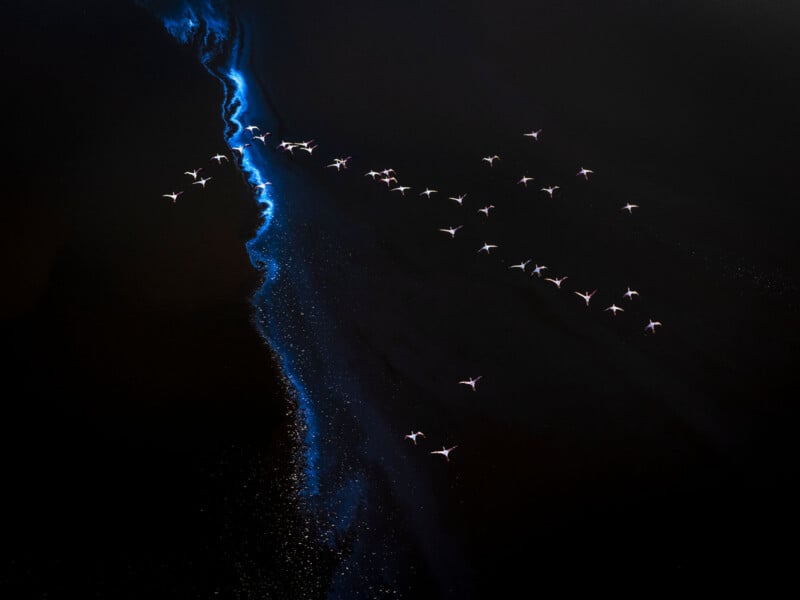 Aerial Photograph, Kenya, 2024
For McCormack, there is no alternative. Solving nature’s biggest crises requires actually doing something, and for McCormack, that means celebrating what makes nature special and worth caring about. This sense of optimism is ever-present throughout McCormack’s newest book. Like all the best photographers, his passion for the work jumps off the page.
“My goal here is for people to look at our planet like a Fabergé egg,” McCormack says. “It is unique, one of them in existence. It’s fragile, it’s intricate, it’s beautiful. It’s something to be protected and taken care of, and it’s something you can fall in love with.”
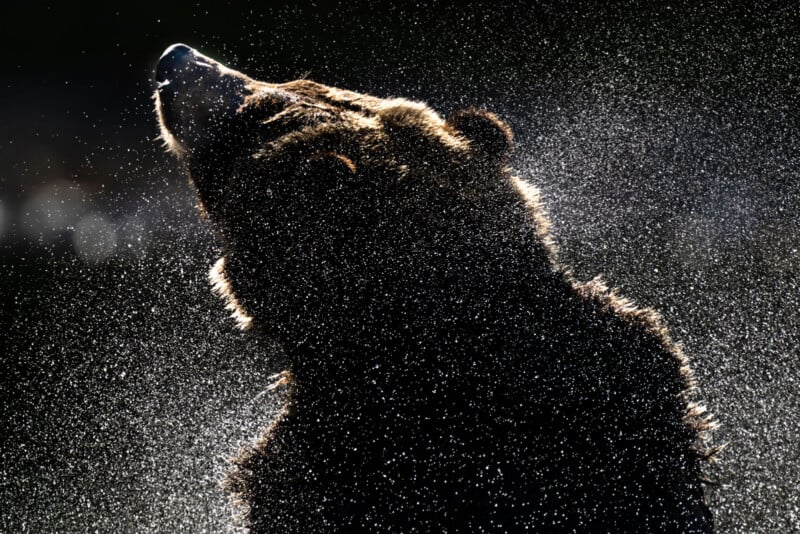 Wildlife Photograph, Canada, 2022 | ‘Each fall, grizzly bears gather along the Chilcotin River as the salmon return, drawn by a seasonal abundance that has sustained life here for millennia. As the water fills with flashing silver and red, the bears take up their positions along gravel bars and riffles, moving with a patience born of instinct and experience. They wade into the current, scanning and listening, then strike with sudden precision, lifting powerful bodies against the flow. The river becomes a corridor of energy — salmon feeding bears, bears feeding forests, nutrients carried far beyond the banks by paw and tooth. In this brief window, the Chilcotin is transformed into a living artery, and the bears its most visible expression of the ancient rhythm between river, ocean, and land.’
“The beginning of wonder becomes the beginning of care,” he says.
“Patterns” makes it very clear that McCormack loves and cares deeply about nature. And part of what makes the book special is that he loves it and sees it in a way unique to him and his experience. No two people experience nature in exactly the same way. No way is better or worse than another. Reading McCormack’s book not only shares his unique perspective splendidly, but it will undoubtedly make others want to experience nature for themselves and maybe even capture it themselves.
‘The beginning of wonder becomes the beginning of care.’
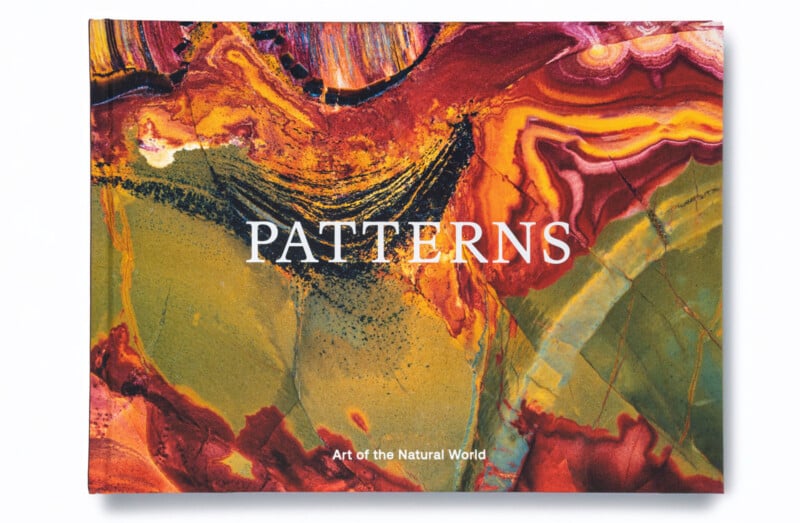
“Patterns,” published by Damiani Books, is available for purchase now for $50 and will release on Earth Day, April 26, 2026. A special copy with a signed limited edition print is available through Vital Impacts for $99.
Image credits: Photographs by Jon McCormack