
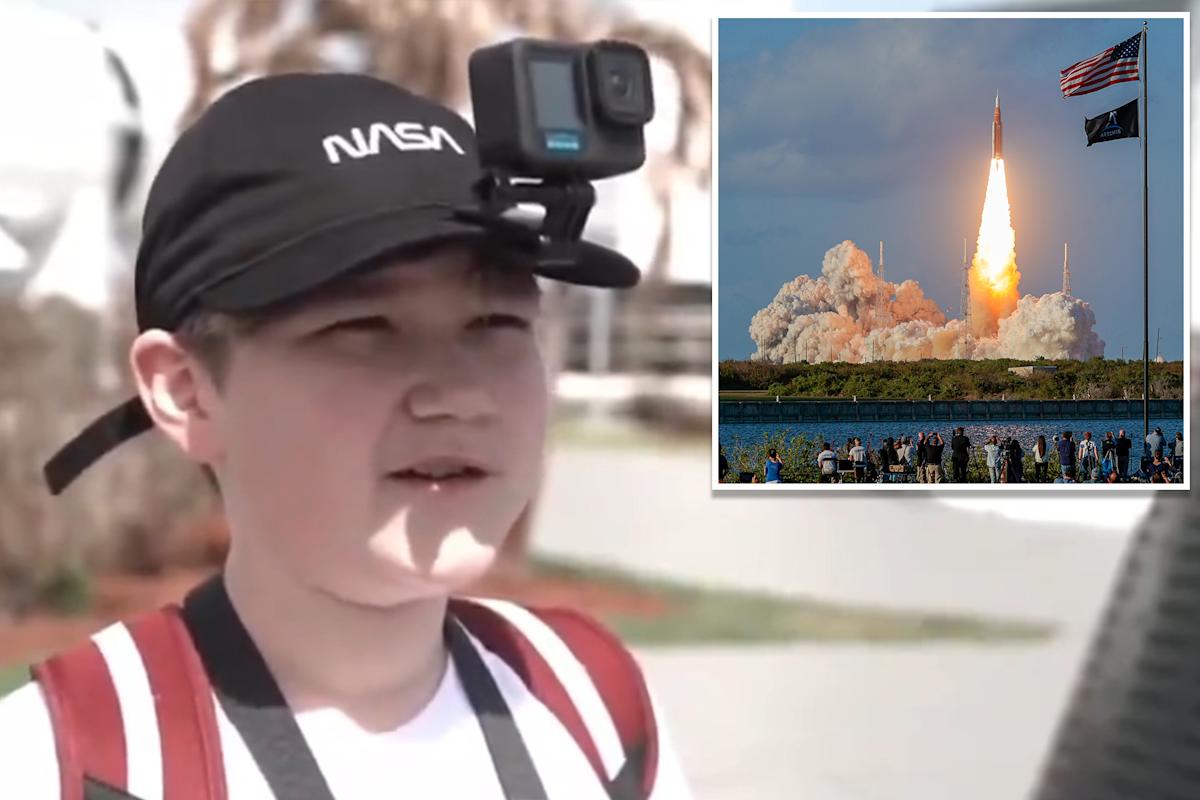
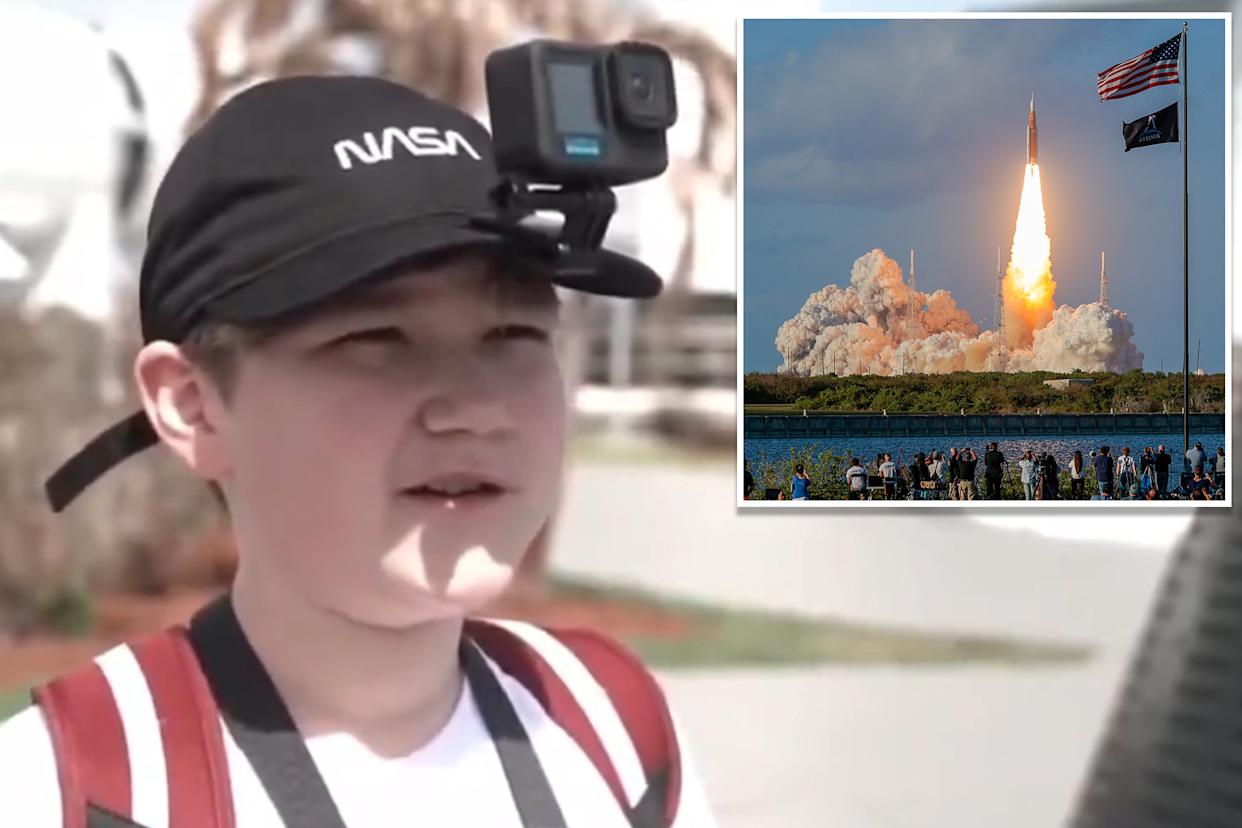
A young space fanatic could hardly contain his excitement when asked why he trekked all the way to Florida to watch the first human-crewed moon expedition in his lifetime.
Follow The Post’s live updates on the launch of NASA’s Artemis II mission to the moon
The boy waited patiently at NASA’s Kennedy Space Center in Titusville, Florida, for the highly anticipated Artemis II launch. He strapped a GoPro camera onto his NASA cap in hopes of enshrining the moment forever.
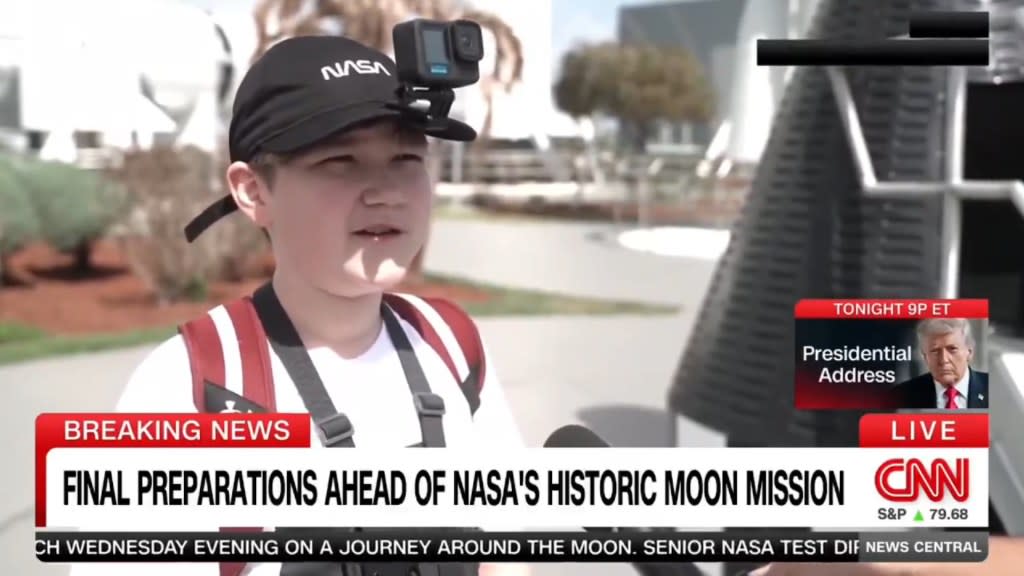
A young space fanatic could hardly contain his excitement when asked why he trekked all the way to Florida to watch the first human-crewed moon expedition in his lifetime. CNN
When a CNN reporter approached him and asked why he wanted to be “apart of history,” he had a simple, but apt, reason.
“We’re going back to the frickin’ moon, that’s why!” he exclaimed.
The shuttle successfully launched just after 6:30 p.m. on Wednesday for its 10-day mission to the moon.
The four-person crew, including one Canadian and three Americans, will cover upwards of 685,000 miles while they soar around the moon and Earth.
The initial trek to the moon will take about four days.
The takeoff itself was relatively smooth, save for a few minor issues engineers had to address.
One error with the temperature in one of the two Launch Abort Systems was patched just 19 minutes before the launch window opened around 6:30 p.m.
All systems were “Go” moments later. Artemis II reached orbit a short nine minutes after launch.
Follow the latest on NASA’s Artemis launch: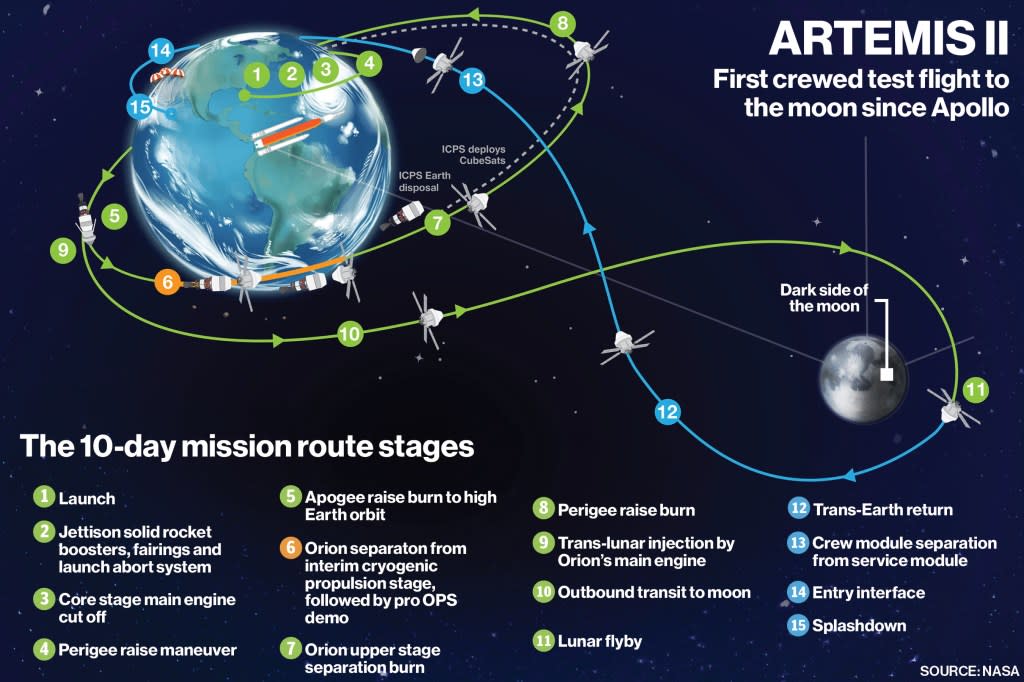
The Artemis II’s 10-day journey. Donald Pearsall / NY Post Design/ NASA
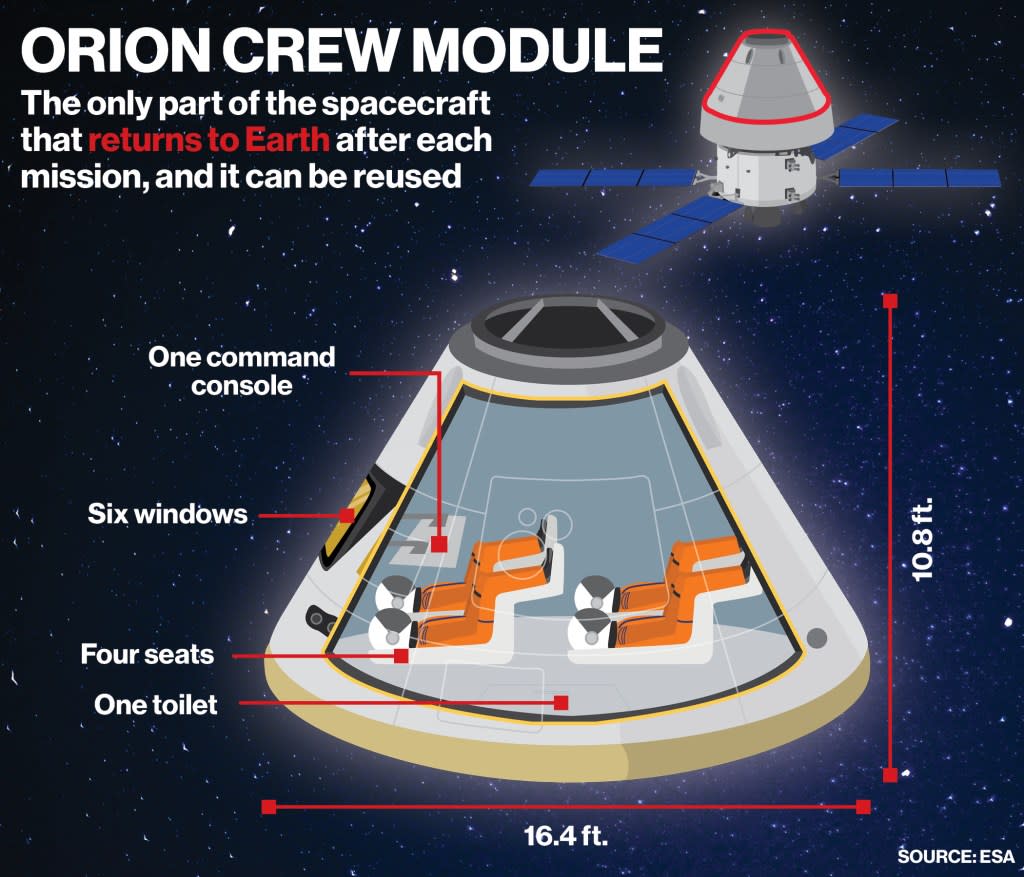
The Orion capsule being used in the Artemis II mission. Donald Pearsall / NY Post Design / ESA
NASA’s Mission Control in Houston will monitor the flight around-the-clock for the next 10 days.
The first Artemis program rocket, Artemis I, went on the same orbit in 2022 without a human crew on board.
Artemis II is the first human-crewed mission of its kind since Apollo 17 in 1972.
NASA’s Apollo program sent 24 total astronauts to the moon between 1968 and 1972.