
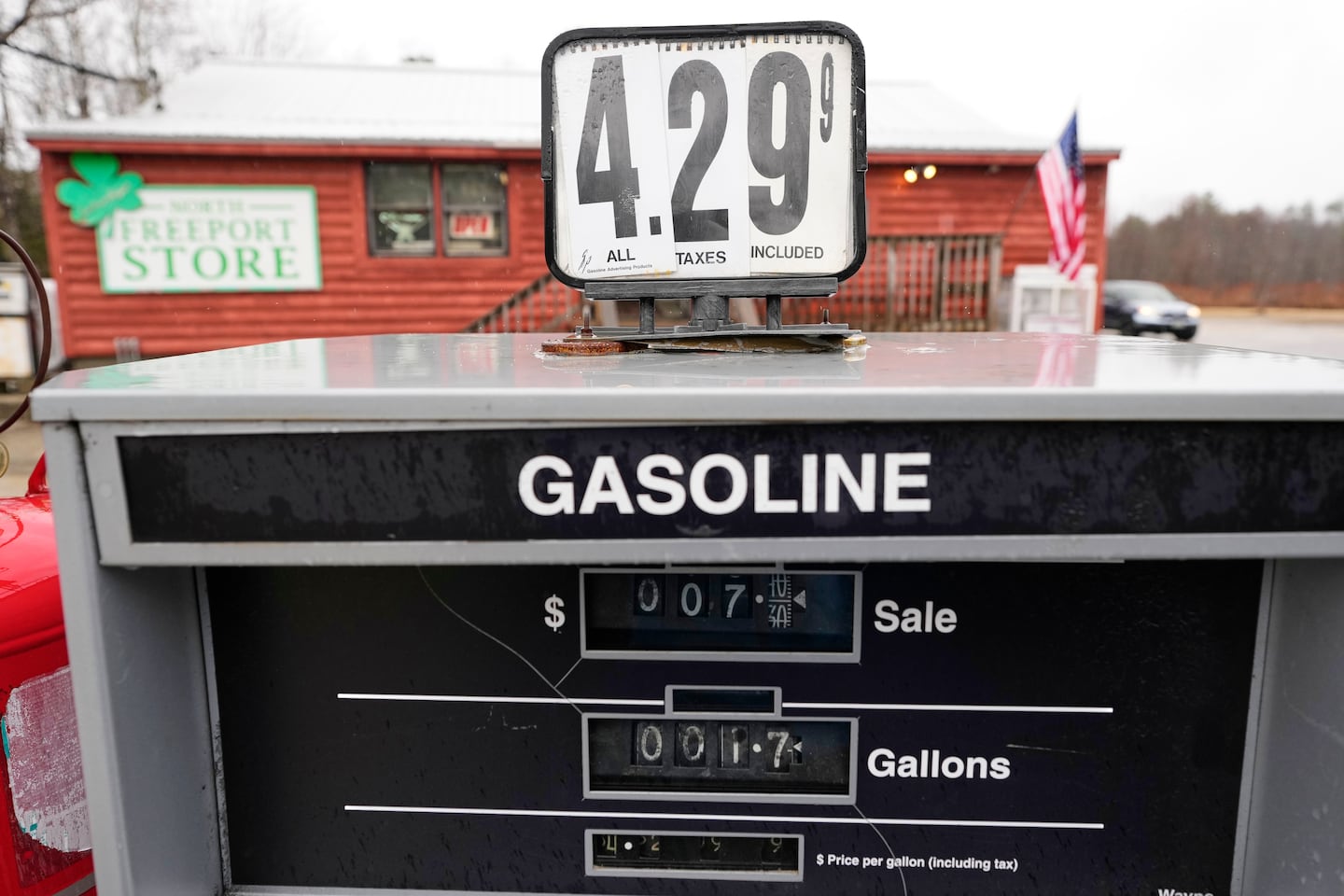
The reaction: Oil prices surged after Trump started speaking, with Brent crude climbing to nearly $110 a barrel after briefly falling to about $99 Wednesday on optimism that he would soon strike a deal with Iran.
Stock prices tumbled overnight in Asia and Europe, and opened sharply lower when trading began Thursday in New York. Stocks later rebounded and ended with a slight gain.
Why it matters: Speaking directly to the American people, Trump made what may have been his best case yet for joining Israel in attacking Iran, though he exaggerated the immediate threat to the US from the regime’s missiles and nuclear capabilities.
He urged patience, noting that the airstrikes had been underway for just 32 days compared with past US wars that lasted years.
“This is a true investment in your children and your grandchildren’s future,” he said.
But the financial world is focused more narrowly on the threat to the economy.
The longer the war goes on, the greater the cost to American consumers and businesses from higher oil prices.
What they are saying: Compared with prewar oil prices, consumers will need to spend an additional $150 billion to buy the same goods and services over the next year, according to a report by Moody’s Analytics. That’s more than what they will receive in the tax cuts from the One Big Beautiful Bill Act in 2026.
“So instead of the OBBBA being a source of fiscal stimulus, supporting stronger growth, it increasingly appears that it will only help cushion the financial blow,” the report said.
On Thursday afternoon, Brent crude, the global oil benchmark, was up about 50 percent in the futures market since fighting began on Feb. 28. Brent’s price in the physical market — also known as the spot price — topped $140 a barrel for the first time since 2008.
The price will rise even more if Iran is able to damage additional production facilities in the Persian Gulf.
The primary concern is inflation, which is running above optimal levels and would likely get worse if energy costs remained high for a sustained period. That would force consumers to pull back spending on other goods and services, squeezing businesses and possibly triggering layoffs and a recession.
What’s next: Trump said the US would continue to pound military and government targets in Iran.
“We are going to hit them extremely hard over the next two to three weeks,” Trump said. “We’re going to bring them back to the Stone Ages, where they belong.”
While holding out hope for a negotiated settlement, he also vowed to attack civilian infrastructure.
“If there is no deal, we are going to hit each and every one of their electric generating plants very hard and probably simultaneously,” he said. “We have not hit their oil, even though that’s the easiest target of all, because it would not give them even a small chance of survival or rebuilding. But we could hit it and it would be gone.”
Trump sidestepped the question of reopening the Strait of Hormuz, through which a fifth of the world’s oil and a similar share of natural gas is transported. When measured by the percentage of global supply disrupted, the war has created the worst energy crisis ever.
The president instead downplayed the importance of the strait, pointing out that the US doesn’t import a lot of oil from the Middle East. That’s true — the US is a net exporter of crude. But prices are set in the global market, and Americans will continue to pay more for gas and diesel as long as shipments to other countries through the strait are blocked by Iran.
Thursday’s spike in Brent moderated after Iran’s state-run news agency reported that the government was working on a plan with Oman to monitor traffic through the strait, indicating that it may resume allowing tankers affiliated with the US and its allies to travel through the waterway. In late afternoon trading, Brent was up 7.5 percent to about $109 a barrel.
Final thought: At one point in his address the president drifted into wishful thinking.
“When this conflict is over, the strait will open up naturally,” he said. “It’ll just open up naturally.”
It was reminiscent of his comments early in the COVID crisis, when he said, “You know it — you know it is going away, and it will go away. And we’re going to have a great victory.”
We know how that worked out.
Trump hoped his speech would buy him some time to find a graceful way to end the war before the economic damage really bites.
As far as investors are concerned, the promised two or three weeks is an eternity.
Larry Edelman can be reached at larry.edelman@globe.com.