
The Jetsons made it all look so idyllic: flying cars, interstellar living and, best of all, robot assistants to handle the chores while humans go about their lives.
The beloved cartoon was set in 2062 and yet, only 36 years removed from that marker, Americans are more concerned about robots and artificial intelligence taking their jobs.
A Quinnipiac University Poll released on March 30 showed that almost three quarters of both white- and blue-collar workers believe AI will reduce job opportunities for humans going forward (1). And 30% of all employed Americans worry that AI will render their jobs obsolete altogether.
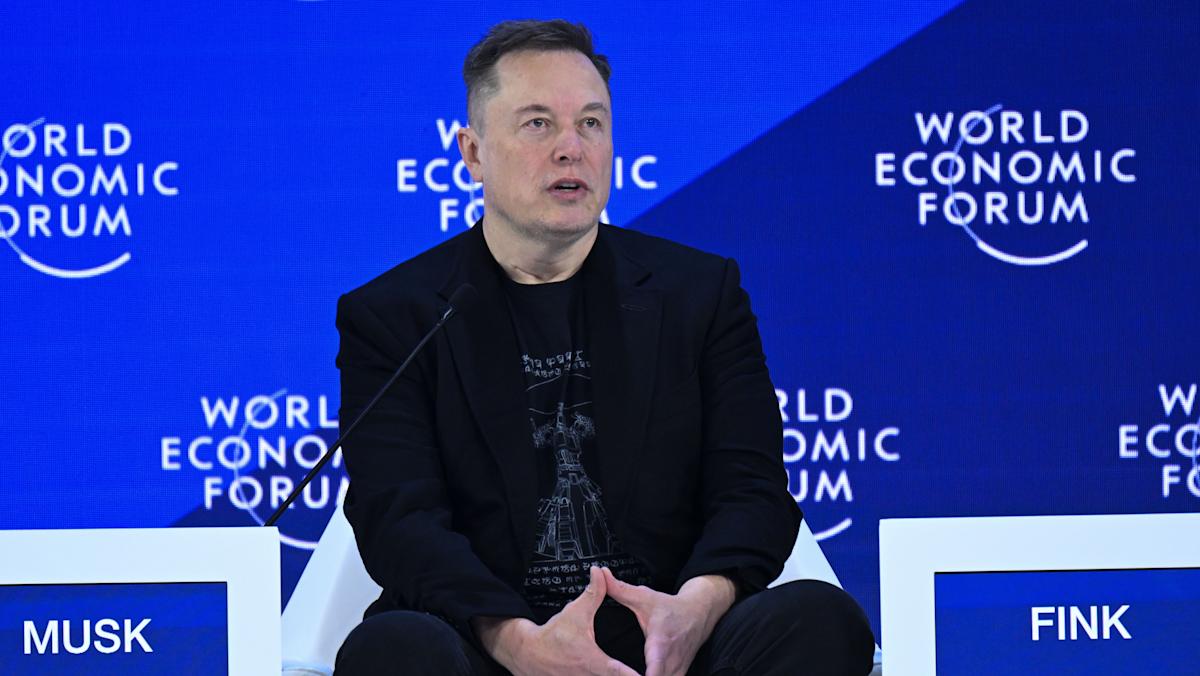
Tesla CEO Elon Musk, meanwhile, believes that robots — specifically, his new AI-powered Tesla Optimus humanoid robot — could, in fact, replace an entire profession: surgeons.
In an interview with engineer and XPRIZE Foundation founder Peter Diamandis on his Moonshots podcast in January (2), Musk boasted that, within three years, at scale, “there will probably be more Optimus robots that are great surgeons than there are all surgeons on Earth,” echoing a declaration he made last April (3). He added that, “Everyone will have access to medical care that is better than what the president receives right now.”
When pressed on whether people should simply avoid going to med school altogether, he agreed, calling it “pointless.”
The U.S. is projected to reach a shortfall of nearly 200,000 doctors by 2037 (4) — a result of everything from a growing and aging domestic population, to limited time and space to train new doctors, to the “physician retirement cliff” that could take more than one in five older doctors out of the workforce in the near future (5).
The medical robotics market, meanwhile, is already set to top $57 billion globally over the next six years, according to Johns Hopkins University (6), in part due to “an increasing demand for minimally invasive procedures.”
To that end, robots already serve a wide variety of physician needs, from assisting with precision and visibility during surgical procedures to treating tumors with radiation. But allowing the robot to do all the work itself is another thing entirely.
Story Continues
For example, reporting from this past February notes that Optimus’ current functionality includes walking across varied terrain, lifting objects and sorting them by colour and recognizing environments (7) — incredible advancements in robot technology but not remotely close to what’s required for a surgeon.
Read More: 5 essential money moves to make once you’ve saved $50,000
New York University’s Grossman School of Medicine Bioethicist Arthur Caplan told The Independent that, while robot doctors are on the horizon, Musk’s assertion that they’ll soon replace surgeons “is not credible” because of the “many years” it would take just to ensure they were as capable as a human to handle complex medical procedures (8). “We still can’t get robot drivers to navigate city streets with taxis or delivery trucks safely,” said Caplan. “Surgery is just as hard.”
And Dr. Martin Pham, associate professor of neurosurgery at the University of California San Diego (9), noted to Forbes that while “robotics streamlines the delivery of operative care” safely and efficiently, “it can never replace surgical judgment.”
Americans at large seem to share this skepticism when it comes to trusting technology with their medical issues. Never mind surgery — the Quinnipiac University Poll found that only 3% of Americans would be comfortable relying solely on AI to simply read their medical scans, while 81% prefer a combination of human and AI input (1).
As for the U.S. physician shortage, there may be hope on the horizon. The Association of American Medical Colleges reported in December 2025 that medical school enrollment for the 2025-2026 academic year topped 100,000 students, with the number of applicants rising 5.3% — the largest non-pandemic era gain in a decade (10).
Others, like the Mid-Atlantic Permanente Medical Group, boasted of increased hiring due to a focus on recruiting, offering new career pathways for doctors and using AI to help alleviate their daily tasks, among other strategies (11).
As well, at least 17 states have enacted laws to create options for select foreign-trained doctors to bypass residency requirements in the U.S. and begin practicing medicine faster (12). And a 2025 study focussed on the physician shortage recommended addressing compensation equity and a reduction of administrative burden to boost physician numbers going forward (13).
“Increasing the supply and scope of practice of non-physician providers, nurse practitioners and physician assistants,” the study added, could also help temper the impact of doctor shortages.
Join 250,000+ readers and get Moneywise’s best stories and exclusive interviews first — clear insights curated and delivered weekly. Subscribe now.
We rely only on vetted sources and credible third-party reporting. For details, see our editorial ethics and guidelines.
Quinnipiac University (1); Peter H. Diamandis/YouTube (2); Elon Musk/X (3); PubMed (4, 13); AMN Healthcare (5); Johns Hopkins University (6); Built In (7); The Independent (8); Forbes (9); The Association of American Medical Colleges (10); American Medical Association (11, 12).
This article provides information only and should not be construed as advice. It is provided without warranty of any kind.