
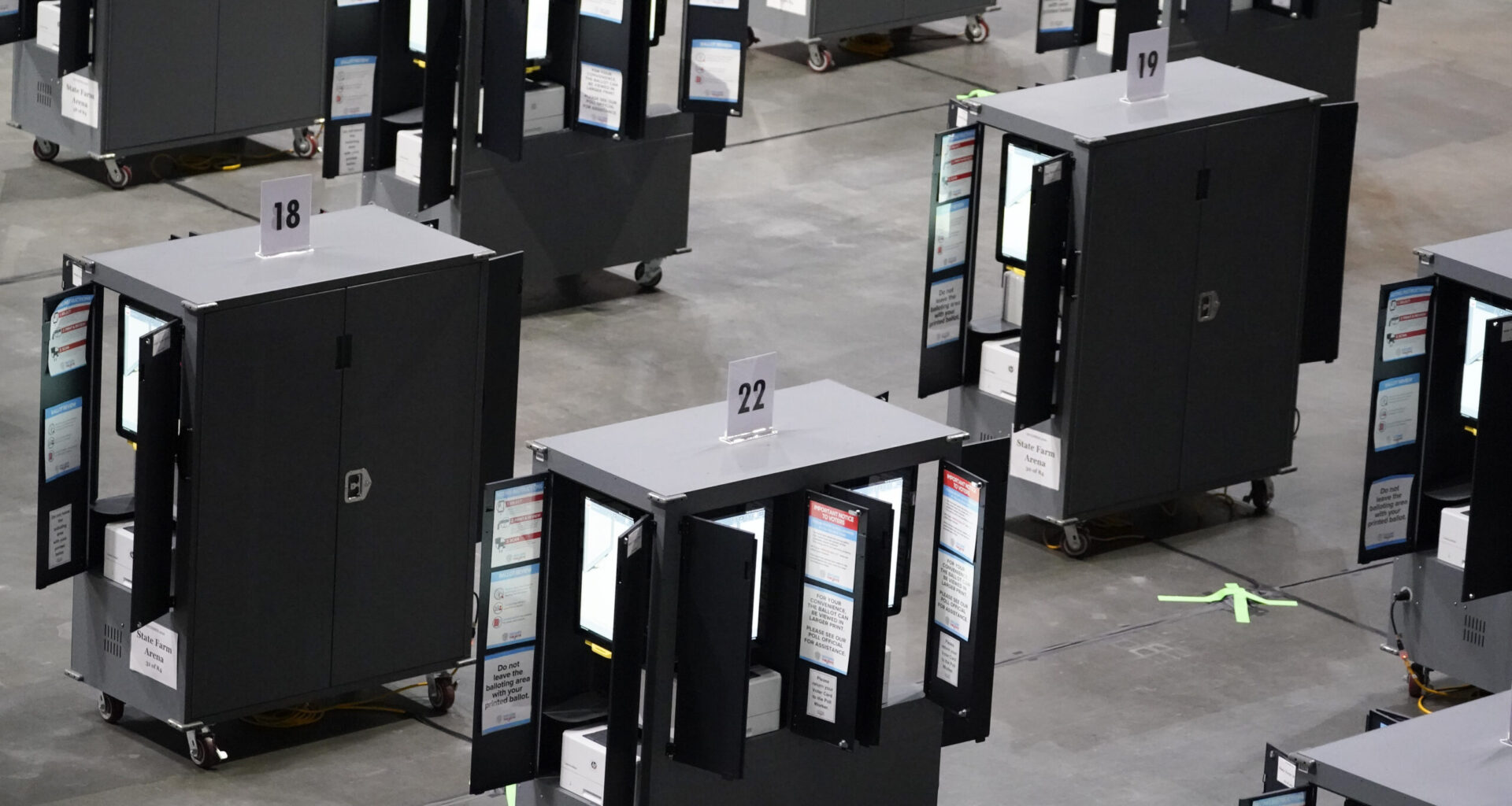
Georgia election officials have less than three months to convert the state’s entire voting system from touchscreen machines to paper ballots, after the state Senate failed to vote Friday on legislation that would have delayed the conversion until 2028.
The rushed system switch risks compromising election security and will complicate ballot counting, delay reporting results and create “widespread confusion” for voters and election administrators, county officials say.
Georgia’s current touchscreen system generates QR codes for ballot counting. But in 2024 GOP state lawmakers voted to sunset these machines by July 1 of this year, making it illegal to use them beyond that. Last week, the state Senate passed a bill to change over to a completely hand-marked ballot system.
However, local election officials urged lawmakers to delay that switch until 2028 so that they would have time to put the new system in place, which would include pre-printing millions of ballots and re-training election workers.
The state House passed a bipartisan bill this morning that would’ve allowed for that two-year grace period. But the Senate – led by Lt. Gov. Burt Jones (R), who is running for the GOP nomination for governor – declined to bring it forward for a vote Friday, the final day of this year’s legislative session.
That means election officials now have until July 1 to develop a system where voters use a pen to fill in oval bubbles to select their candidates.
“This proposal would create widespread confusion for Georgia voters and election officials,” said Joseph Kirk, a county election supervisor and president of the Georgia Association of Voter Registration and Election Officials (GAVREO), last month. “Simply put, transitioning to a new election system and implementing major changes to the voting process this close to the 2026 general election is unworkable.”
Among the problems with doing a ballot system conversion in a crunch – and so close to midterms and Georgia’s gubernatorial election – is that the bill offers no funding for implementing the switch or for technology that could help expedite it. It also creates a security risk, according to GAVREO, given that election officials have little time to train staff and develop protective measures for guarding the millions of pre-printed ballots required by the law before Election Day.
Election officials also warn that the law’s new reporting requirements will cause delays in ballot counting and in delivering timely results. Those problems often trigger chaos, controversy and conspiracy theories, as seen in the fallout over Fulton County’s 2020 election ballot count, which is still being probed today.
Leaders of both parties are now scrambling to see if they can make other modifications or resuscitate the delayed deadline through a special emergency session.