
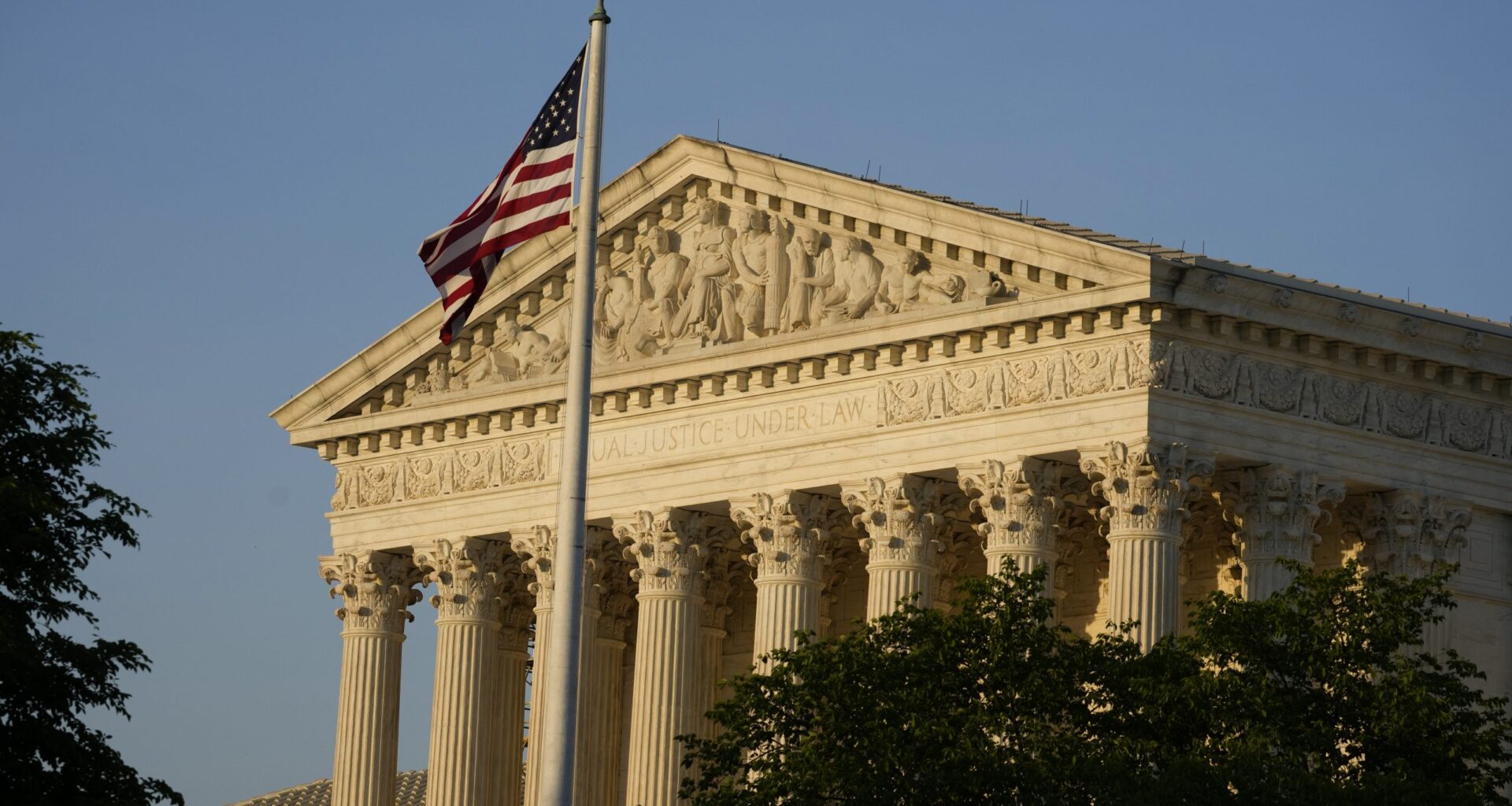
Few decisions by the U.S. Supreme Court have had a greater impact on the nation’s political landscape than the 2010 ruling in Citizens United v. Federal Election Commission. The 5-4 decision allowed corporations and other outside groups including labor unions to spend unlimited money on elections.
The ruling is the law of land unless the high court reverses itself or the states and Congress agree to amend the constitution — both very high bars in the current political climate.
But what if the states took the the initiative to limit the impact of Citizens United by passing their own laws to change the way corporations are defined?
 Civil Beat is focusing on transparency, accountability and ethics in government and other institutions. Help us by sending ideas and anecdotes to sunshine@civilbeat.org.
That is the purpose of Senate Bill 2471, which would emphasize that corporations are “artificial persons” created by state law and granted powers and privileges by it — something SB 2471 points out is already part of Hawaiʻi’s constitution.
The bill would make clear that the powers of corporations do not include spending money or contributing “anything of value” to influence elections or ballot measures, as the bill’s language explains.
That could directly challenge the ability of super PACs to raise unlimited money and keep their sources of funding secret.
“It makes Citizens United irrelevant in Hawaiʻi,” said Tom Moore, a senior fellow for democracy policy at the Center for American Progress who previously served for seven years at the Federal Election Commission. “Hawaiʻi has the opportunity to lead.”
Moore has testified a lot on SB 2471 this session, in writing and over Zoom, and so far he has been able to persuade lawmakers of his argument.
The bill has cleared the Senate unanimously and one House committee. David Tarnas, chair of the House Judiciary and Hawaiian Affairs Committee, said he will decide soon whether to hear it as well — the last committee necessary for the bill to advance to likely conference committee negotiations in late April. The session ends May 8.
Sen. Karl Rhoads, the bill’s author, said the bill could lead to greater transparency when it comes to political donations in the state.
“I believe it will reduce the amount of money coming into campaigns, but more importantly, it will make the money that does come in more easier to figure out who it actually came from,” he said.
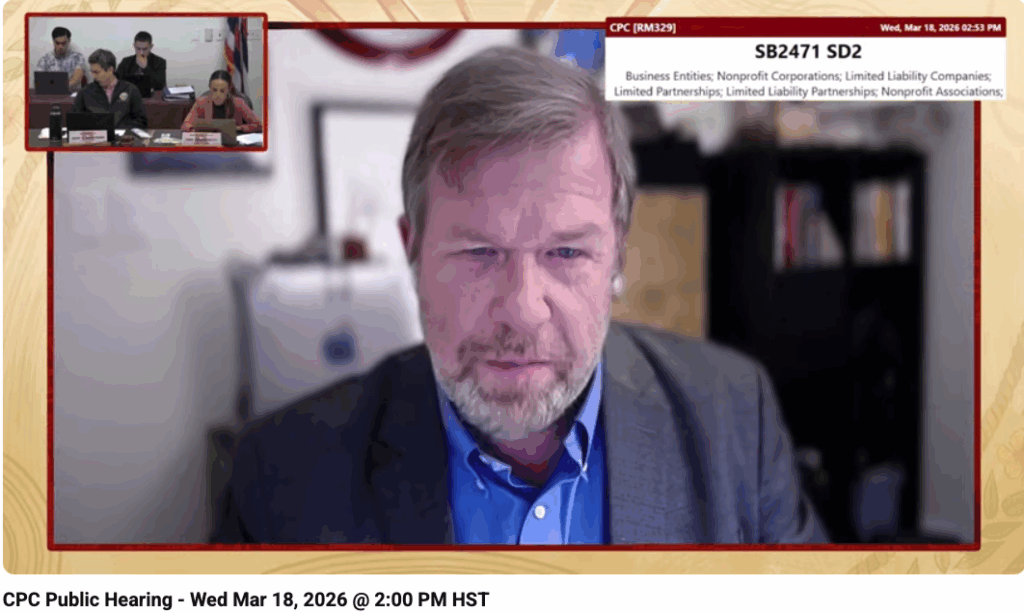 Tom Moore of the Center for American Progress testifying in support of Senate Bill 2471, which he said would make Hawaiʻi the leader in addressing the Citizens United case of 2010. (Screenshot/2026)
Colin Moore, a political analyst at the University of Hawai‘i Mānoa, describes SB 2471 as a clever end run around the U.S. Supreme Court’s ruling.
“I think this is a creative and ambitious bill,” he said. “It tries to get around Citizens United by arguing that corporations only have the powers the state chooses to grant them, and that Hawaiʻi can decline to grant the power to spend money on elections. That’s a genuinely innovative idea.”
Whether it passes legal muster remains to be seen. The Attorney General’s Office opposes SB 2471.
Deputy Attorney General Christopher Han told lawmakers that, while the department “greatly sympathizes with the frustration with federal caselaw on this subject,” the bill raises “serious constitutional concerns and substantial adverse litigation risk” should it become law.
“While many Americans strongly disagree with the U.S. Supreme Court’s holding in Citizens United, under our federal system of government, it is our duty to state that this opinion remains the law of the land, irrespective of its merits (or lack thereof),” he said in written testimony last month.
Han reaffirmed that argument when he spoke to the House Consumer Protection and Commerce Committee on March 18. He said SB 2471 relied in “an untested legal theory, the viability of which we find questionable.”
The freedom to engage in political discourse,” he said, is “a fundamental bedrock of democracy” that is closely guarded by the courts. “This bill purports to take away that freedom.”
Not so, counter supporters of the bill including Rhoads. Individual citizens — that is, real people — can still exercise their constitutional rights to donate to campaigns, and the donations would be part of campaign spending reports for everyone to see. They just would not be able to do so as part of a corporation — that is, as artificial persons.
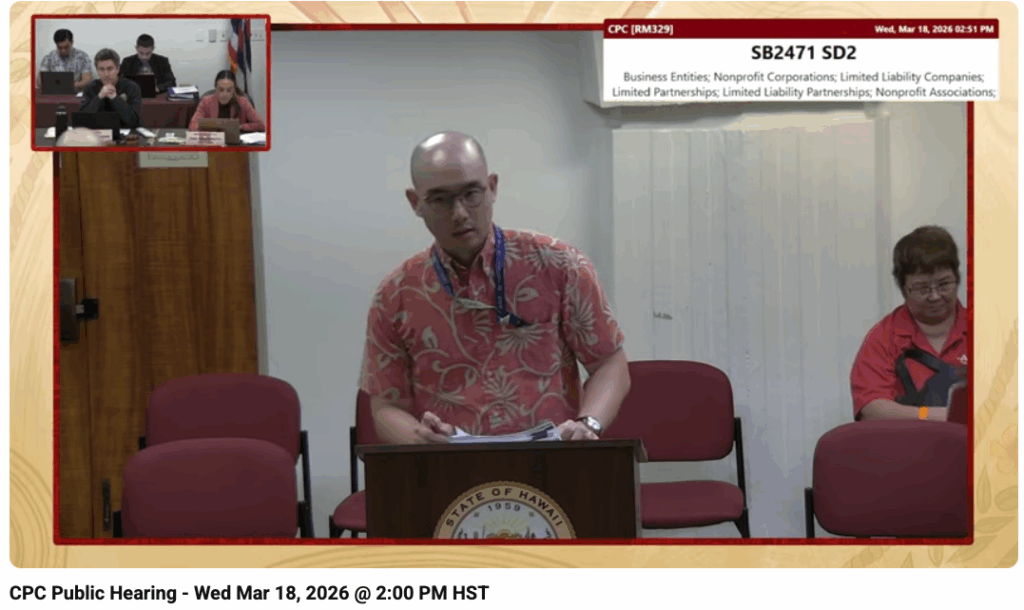 Deputy Attorney General Christopher Han told a House committee last month that Senate Bill 2471 is likely unconstitutional and will be challenged in court. (Screenshot/2026)
Dark Money
The Citizens United ruling upended the role of money in politics nationwide by striking down a century-old prohibition on corporate “independent” spending — that is, money that does not go directly to a party or candidate.
While political action committees support or oppose ballot initiatives and political candidates, they are subject to contribution limits.
Super PACS, however, are not bound by spending limits and are not required to disclose their donors, something known as “dark money.”
The 2010 ruling opened the floodgates to dark money. From 2010 to 2022, according to the nonprofit Brennan Center for Justice, super PACs spent $6.4 billion on federal elections. In the 2024 election alone they set a record of at least $2.7 billion in spending.
“The ruling has ushered in massive increases in political spending from outside groups, dramatically expanding the already outsized political influence of ultra-wealthy donors, corporations, and special interest groups,” according to the Brennan Center.
Dark money has also made its way to Hawaiʻi. Two super PACs aligned with the powerful Carpenters Union, for example, spent $8.6 million in the 2024 election, far more than the next 10 Hawaiʻi-based super PACs that followed them. The Carpenters Union is closely affiliated with Pacific Resource Partnership, one of the state’s biggest political players that also funnels money to two super PACs, Be Change Now, which was active in the 2024 election, and For A Better Tomorrow, which has taken the lead on 2026 elections and beyond, recently reporting $12 million in its PAC fund.
Locally, the effect of Citizens United has been smaller in scale than on the mainland, but still similar, said Moore of UH.
“PRP is probably the clearest Hawaiʻi example. Whatever you think of PRP’s policy goals, it’s shown how an independent-expenditure group can become a major force in local elections, using spending outside the normal campaign contribution system to shape policy debates and help or hurt candidates.”
The Citizens United ruling was based in part on the court’s controversial position that companies and unions are associations of people whose constitutional right to political speech cannot be denied.
Tom Moore of the Center for American Progress said state legislatures have spent the last 16 years attempting to address money in politics through campaign-finance regulation. But these efforts have failed in federal court, he said, because the legal theory behind them was flawed and could not overcome “constitutional obstacles under existing First Amendment doctrine,” as he stated in testimony on SB 2471.
What Hawaiʻi’s bill does is affirm a longstanding principle: the authority of the state to determine which powers it grants to the artificial entities it creates.
Tom Moore said this week that legislation based on this framework has now been introduced in 13 states besides Hawaiʻi: Arizona, California, Georgia, Kansas, Maryland, Minnesota, Missouri, New York, Oklahoma, Rhode Island, Vermont, Virginia and Washington.
“Potential sponsors have draft bills in hand in North Carolina and Pennsylvania,” he said via email. “Sponsors in Connecticut have indicated that they plan to introduce similar legislation during the 2027 legislative session.”
But Hawaiʻi’s bill, Tom Moore said, has made it further than bills in any other state.
“Hawaiʻi could well be the state that delivers all of America from Citizens United,” he said.
Tom Moore and Rhoads, who are attorneys, both say they expect legal challenges should SB 2471 become law. But they expressed confidence that existing state laws give Hawaiʻi the right to define corporations and limit their ability to spend freely in politics.
Another supporter is Sen. Jarrett Keohokalole, who is a co-sponsor of Rhoads bill and who authored similar legislation. He believes it is obvious that corporations are not really persons with inalienable rights.
“The Constitution does not confer those rights on the people,” said Keohokalole, who is an attorney and a candidate for Congress this year. “The people have those rights. They’re natural rights, and the Constitution just highlights the fact that they exist. And so if corporations are creations of the state — which they are — they only exist pursuant to the corporate charter laws in Hawaiʻi.”
SB 2471 is still evolving. Rep. Scot Matayoshi, chair of the House Consumer Protection and Commerce Committee, amended it by deleting language that restricted the authorized purposes of nonprofit corporations to only charitable or public-benefit purposes.
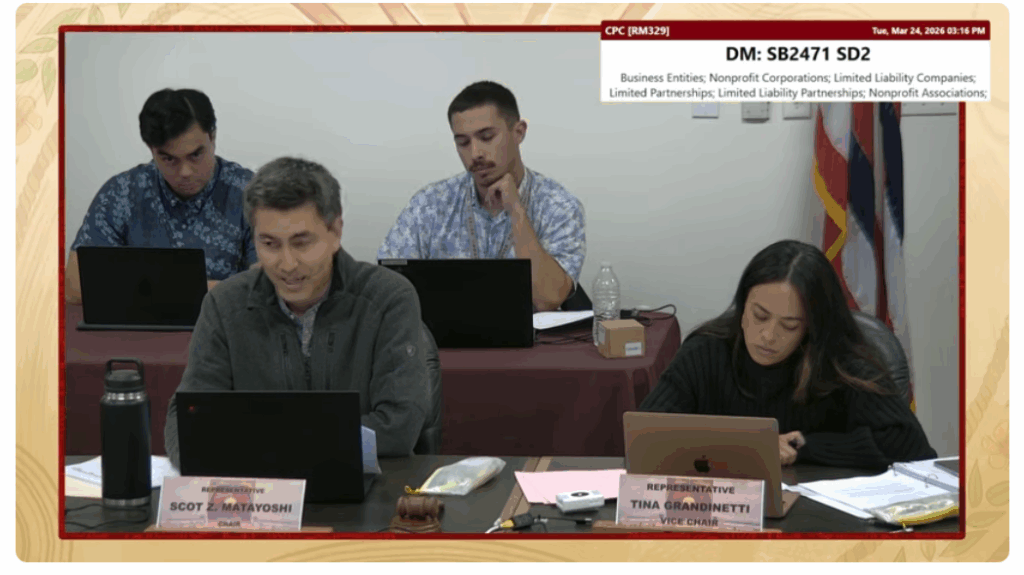 Rep. Scot Matayoshi amended Senate Bill 2471 so nonprofits would not be adversely impacted. (Screenshot/2026)
“Adding this language would put many existing nonprofits that do not fall into that category in jeopardy of losing their nonprofit status, which would include unions and veterans organizations, among others,” he said during decision making on the bill last month. He said that that was not the intention of the bill “and would be extremely harmful.”
Tarnas, meanwhile, said Friday that he did not want to move out a bill “that is obviously vulnerable to a constitutional challenge.” He said he would read the latest House draft and the AG testimony, and if there “might be more they want to say to me directly, I’ll find out from them directly.”
Colin Moore from UH also agrees with the attorney general’s view that SB 2471 will attract “immediate litigation.” Still, he said, that does not diminish the novelty and innovation presented by the legislation.
“Even if supporters frame it as a corporate-powers issue rather than a speech restriction, courts will probably still see it as an indirect attempt to limit political speech that Citizens United protects,” he said via email. “But even if it doesn’t ultimately survive, it’s still a meaningful symbolic measure. If it passes, it’ll send a strong message that a majority of the Legislature wants to push back against the power of super PACs and dark money in local politics. And it would be very cool if Hawaiʻi became the first state to do this.”

Sign up for our FREE morning newsletter and face each day more informed.
Sign Up
Sorry. That’s an invalid e-mail.
Thanks! We’ll send you a confirmation e-mail shortly.