
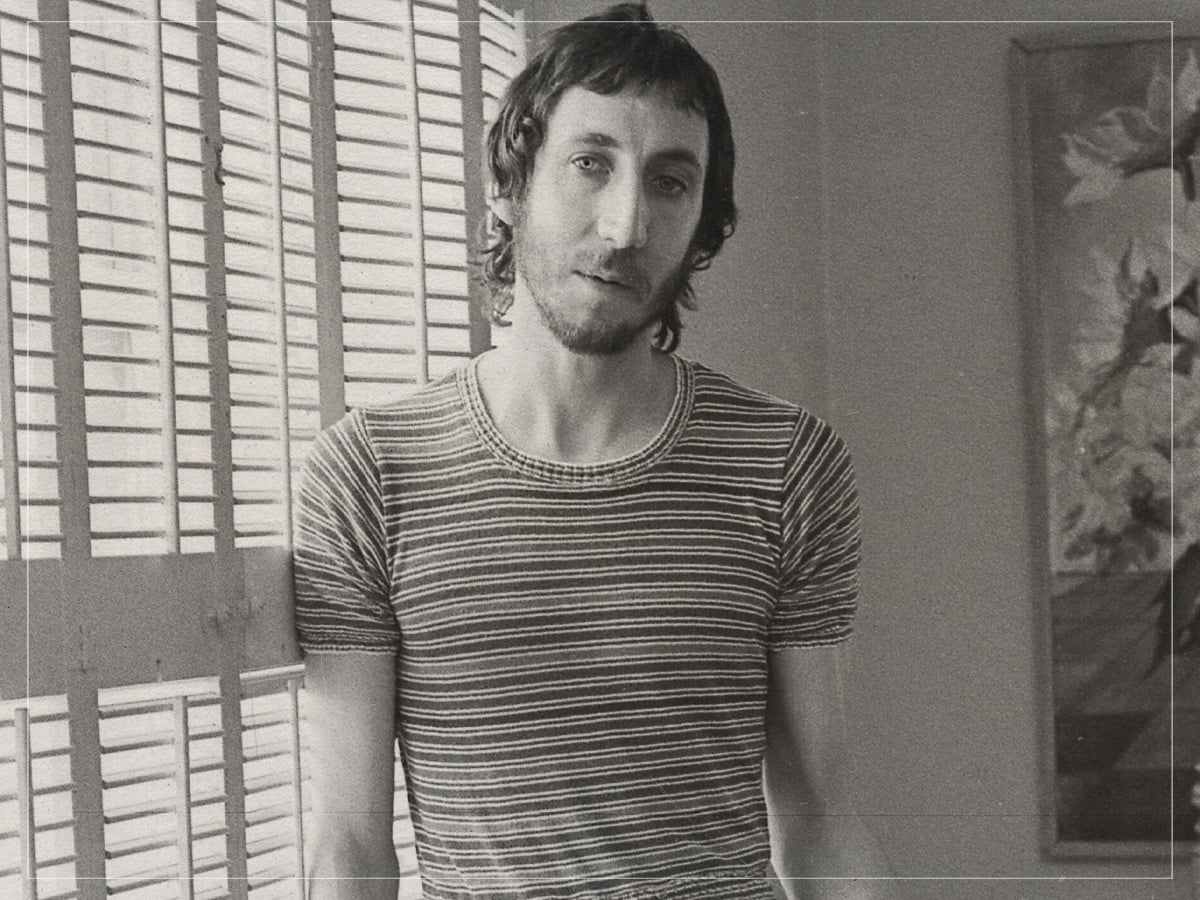
(Credits: Far Out / Harry Chase / UCLA Library)
Sun 5 April 2026 13:30, UK
The entire career of Pete Townshend was a lot more meandering than he probably intended it to be.
There isn’t a single rock and roll musician who has single-handedly managed to pave the way for heaviness as he did, but when he first thought of becoming a musician, his initial vision was to try and have a band for a few years before going back to art school. It felt like a side hustle for the longest time, but once he started realising the legacy that he was leaving behind, he didn’t exactly love every single thing that was coming out of the hard rock scene after The Who had bowed out.
But looking back on their career, The Who were already on their last legs when Keith Moon passed away. He was bound to leave a gaping hole in their sound for the rest of their existence, and while Kenney Jones did a fine job trying to match the drumming god, the fact that they closed up shop on It’s Hard felt more like them trying to leave with some sense of dignity. But right as they were bowing out, a little invention known as MTV was already paving the way for the next group of hard rockers.
Because as much as Townshend is responsible for helping pave the way on Live at Leeds and especially ‘My Generation’, the next wave of artists had a lot more glamour behind their presentation. It’s one thing to have played around with androgyny in the days of David Bowie and T Rex, but after the punk revolution faded from view, Townshend was starting to question what he had to do with giving the world bands like Poison and Def Leppard when they started making eye-catching videos.
Sure, they had the same roaring guitars that he did, but they were some of the most gentle rock and roll that anyone had ever heard up until that point. The power ballads were the most formulaic tearjerker songs that anyone had ever heard, and as far as Townshend could tell, this was a case of bands that were actively trying to kill the kind of passion that he always approached his songs with.
He needed to make the audience feel something whenever he sang, but the cookie-cutter brand of glam metal wasn’t anywhere near what he wanted, saying, “I’m not into men in spandex trousers with hair like that [holds palm one foot from head]. I’m kind of confused as to why these guys look like that, and why it is that they think they look so cool. Maybe they would just say that I was old-fashioned, I don’t know. A lot of these guys in spandex trousers and hair like that are playing some of the most unbelievable guitar, and you can’t really argue with it. It’s just that sometimes the vehicles seem to leave a little bit to be desired.”
That said, Townshend isn’t lying about the guitar prowess of these bands. No matter what people thought about the amount of hairspray that anyone was working with at the time, no one could deny that everyone from Eddie Van Halen to George Lynch to Yngwie Malmsteen were absolute masters of their instruments. Townshend couldn’t even begin to understand that, but the truth was that he didn’t really need to.
He was the master of the power chord, and he was out there proving to everyone that all someone needed to succeed was a lot of conviction whenever they made their songs. It took a lot of guts to be able to make something as extravagant as Quadrophenia, but even without having the greatest knowledge of music theory, Townshend was making the kind of tunes that didn’t need to have a massive guitar solo in order to be interesting.
So while he might have been called a curmudgeon back in the day for even hinting that Poison and Ratt weren’t all that great, he was vindicated a little more when grunge started to become a major cultural force. The Seattle kids were those who actually had something to say, and given how much Eddie Vedder talked about Townshend in interviews, he practically became an unofficial godfather of grunge alongside Neil Young.
