
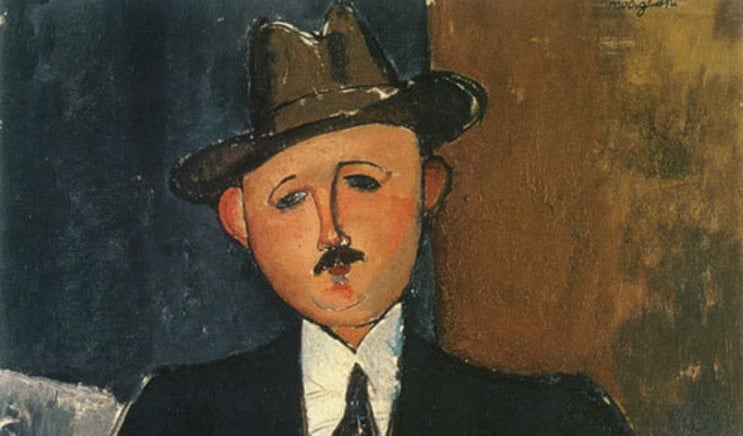
The New York Supreme Court ordered Friday that a 1918 Modigliani painting looted by the Nazis in France be returned to the estate of the Jewish art dealer who owned it, The New York Times reported, after an 11-year legal battle.
“Seated Man With a Cane,” which shows a mustachioed figure in a suit and hat with a cane, is worth an estimated $25 million.
Judge Joel M. Cohen found that the oil painting was the same piece that was confiscated during the German occupation of France from the Paris art shop of Oscar Stettiner, a British national who died in France in 1948.
In his ruling, Cohen rejected arguments to the contrary by Lebanese-born Jewish art dealer David Nahmad and his International Art Center holding company, which purchased the painting at auction in 1996.
“Oscar Stettiner owned or at a minimum had a superior right of possession of the painting prior to its unlawful seizure,” and “he never voluntarily relinquished it,” the judge wrote, according to the Times.
Get The Times of Israel’s Daily Edition
by email and never miss our top stories
By signing up, you agree to the terms
The defendants “failed to raise any material issues of fact, and offer no evidence that identifies anyone other than Mr. Stettiner as the owner of the painting or that he voluntarily relinquished it,” he added.
Evidence in support of the ruling reportedly included records suggesting Stettiner lent the work to a 1930 exhibit in Venice, and a 1946 decision by a French court where Stettiner filed for ownership of the painting after the second world war.
The French court was said to have found that the painting should be returned to Stettiner, but the work had already been sold off and was not returned at the time.
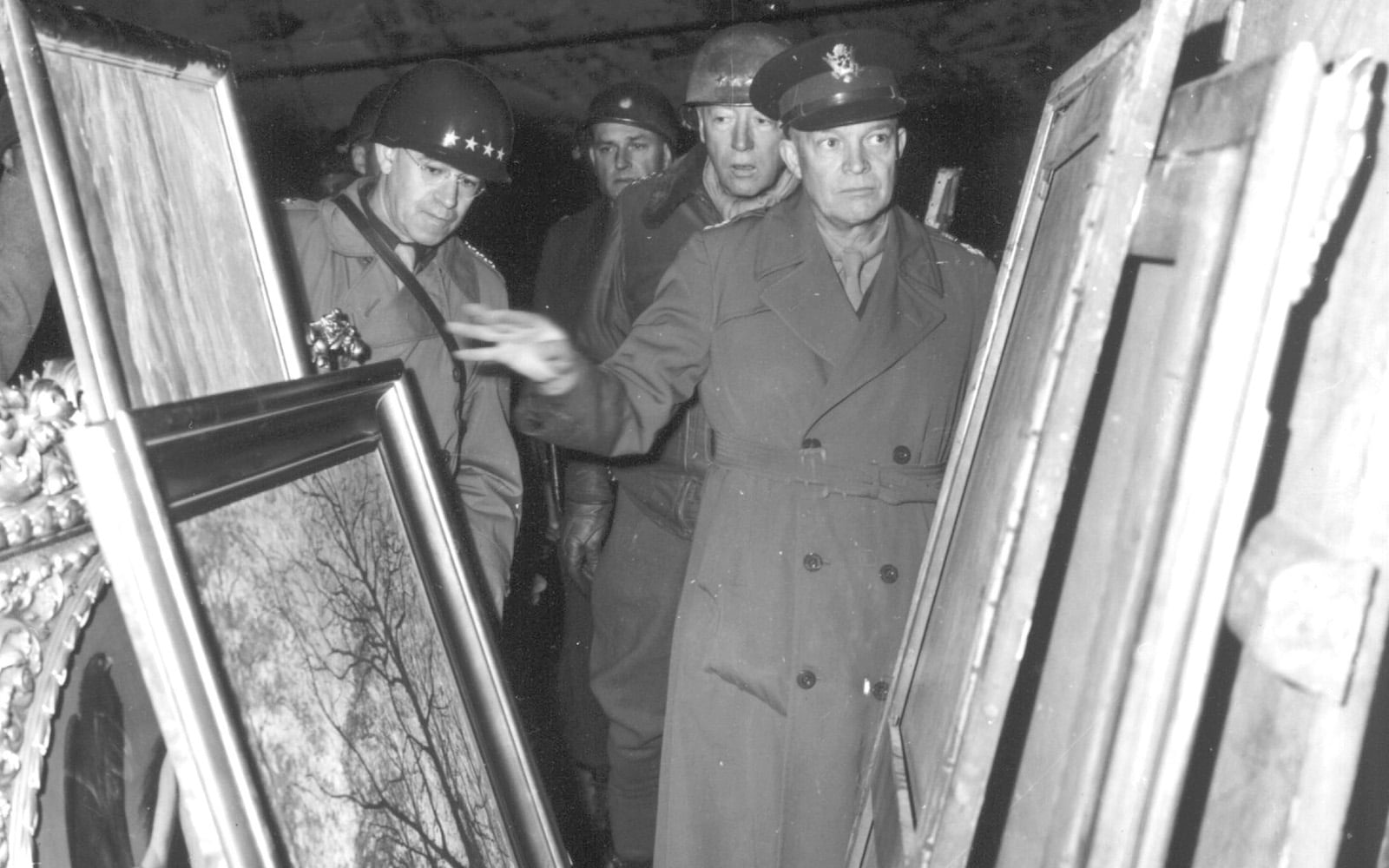
US General Dwight D. Eisenhower, center, inspects paintings in a salt mine at Merkers, in Germany, where the Nazis stored art treasures and gold, for the most part stolen from Jews or plundered in occupied countries, April 12, 1945. (AP)
The New York suit was filed in 2015 by Stettiner’s grandson Philippe Maestracci and Canadian company Mondex. The firm, which specializes in retrieving stolen artwork, has since 2011 been appealing to US authorities to help Maestracci get back the painting, which was stored at the Geneva Freeports, a heavily guarded toll- and customs-free zone.
The Nahmad family at first claimed they were not the owners of the painting, and that it belonged to the International Art Center, a company set up by the Panama-based law firm Mossack Fonseca. But when the law firm’s documents were published in the so-called Panama Papers leak of 2016, it was revealed that Nahmad was the sole owner of the company.
According to the New York Times, Nahmad has claimed in interviews that he bought the painting in good faith and loaned it to multiple museums, including New York’s Jewish Museum in 2004.
The newspaper quoted him saying in a 2016 interview: “If you had any doubt about looted art, would you really lend it to a Jewish museum?”
Agencies contributed to this report.
You appreciate our wartime journalism

You clearly find our careful reporting of the Iran war valuable, at a time when facts are often distorted and news coverage often lacks context.
Your support is essential to continue our work. We want to continue delivering the professional journalism you value, even as the demands on our newsroom have grown dramatically during this ongoing conflict.
So today, please consider joining our reader support group, The Times of Israel Community. For as little as $6 a month you’ll become our partners while enjoying The Times of Israel AD-FREE, as well as accessing exclusive content available only to Times of Israel Community members.
Thank you,
David Horovitz, Founding Editor of The Times of Israel