
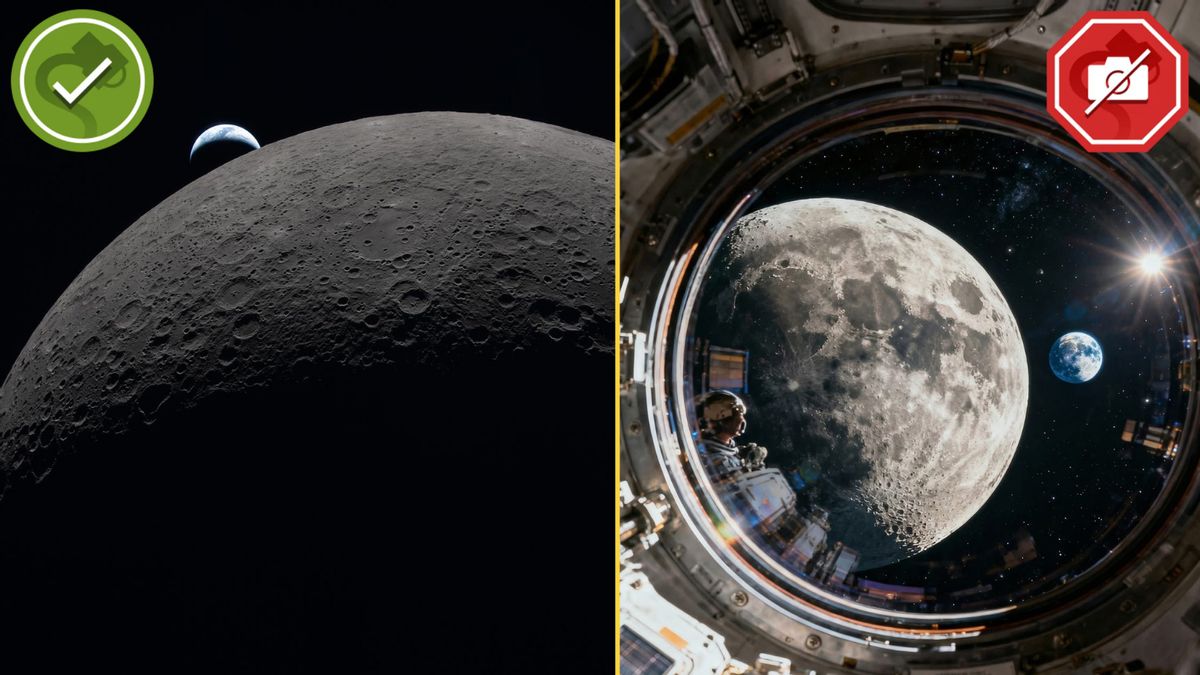
Astronauts on NASA’s Artemis II mission circled the moon on April 6, 2026, allowing them to take photos of the moon’s far side, which never faces the earth.
NASA released photos from the Artemis II mission as they were taken, including photos from the astronauts’ lunar flyby.
At the same time, some people online shared images that were AI-generated, edited or unrelated and claimed they were photos of the moon taken during the Artemis II lunar flyby.
NASA publicly uploaded real Artemis II mission photos to a page on its website, which has galleries that include the astronauts’ approach to the moon and their lunar flyby. We’ve compared these photos with the manipulated ones.
On April 6, 2026, the Artemis II astronauts flew around the moon, allowing them to observe and photograph the moon’s far side, commonly referred to as its dark side.
Following the flyby, people on social media rushed to post and share photos of the moon from the mission.
Not all of those images were real.
NASA released photos from the astronauts and the spacecraft’s cameras as the historic mission proceeded, including an entire gallery dedicated to the lunar flyby alone.
Some people on social media claimed to share real photos of the moon from the Artemis II mission while posting images generated by artificial intelligence, digitally edited or completely unrelated to the mission.
To help you figure out what’s real, we’re sharing some examples of the fake images falsely attributed to the Artemis II mission, as well as real Artemis II photos NASA uploaded to its galleries.
Fake or unrelated moon images
Window view of the moon
One of the most popular fake images depicts a view of the moon and the distant Earth as seen from a circular spacecraft window. An X post (archived) claimed the image was from “that moment when Artemis II got closer to the moon and the earth was 238K miles away.” The same image was widely shared on Facebook (archived) and elsewhere on X (archived).
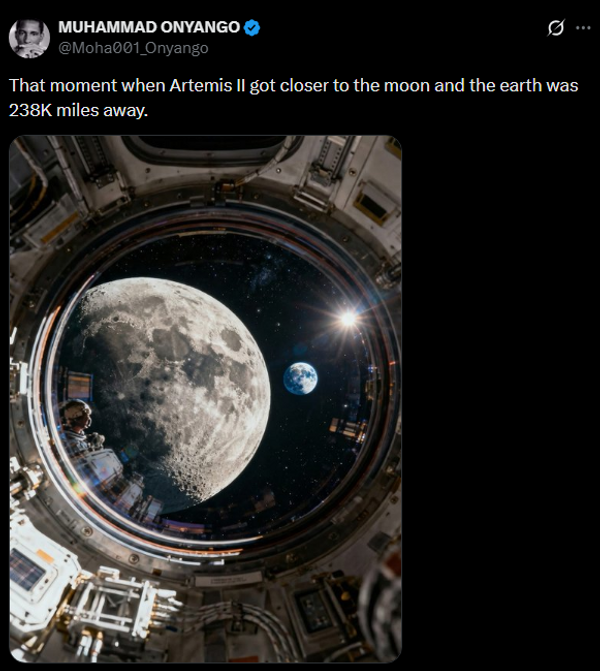
(X user @Moha001_Onyango)
There are a few giveaways that this is not a real photo by the Artemis II astronauts.
For example, the part of the moon visible in the image is its near side, the side that is always visible to Earth, even though that side is facing away from the Earth in the image. Furthermore, the Artemis II astronauts have been taking photos through a rectangular window, not a round one.
Additionally, the Earth is fully visible in the image, which is a mistake many other fake images have also made. In the real Artemis II photos capturing both the moon and Earth, the Earth is at least partially obscured.
Small moon and gargantuan Earth
Another popular fake is a video that appeared to show the moon passing in front of a background filled entirely with the surface of the Earth. An X post (archived) said of the video, “Behind the Moon, where no human eyes had recently ventured, the crew of Artemis II captured this: our pale blue planet slipping behind the lunar landscape.”
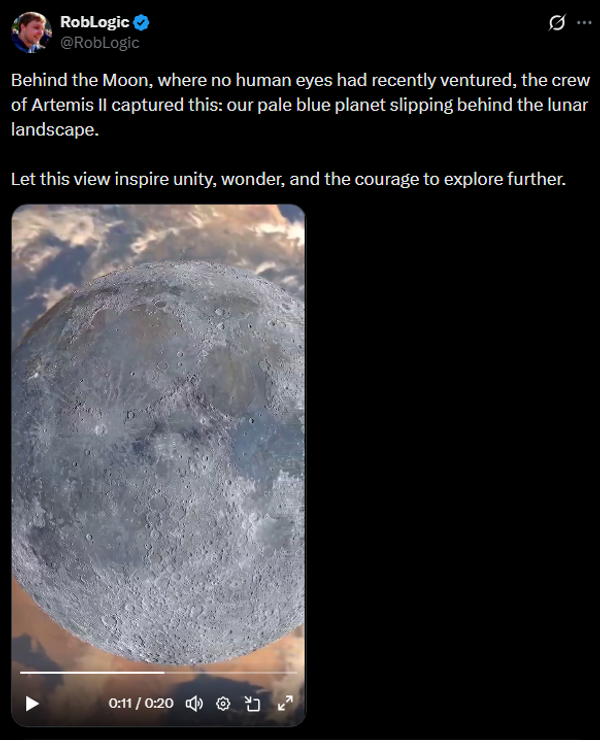
(X user @RobLogic)
In reality, the Earth looms nowhere near as large from on or behind the moon, and there’s been evidence of that for decades. The Apollo 8 astronauts, the first astronauts to circumnavigate the moon, took the photo “Earthrise” in 1968 showing the Earth taking up only a small portion of the sky as seen from the moon.
A label on the X post above notes the content was made with AI. The same video, minus the spacecraft floating across the screen in front of the moon, was posted to Facebook (archived) in November 2025, well before the launch of the Artemis II mission.
Orientale Basin
Some social media users shared nearly identical images of what they asserted were photos of the moon’s Orientale Basin as seen for the first time by human eyes (archived). One Facebook post (archived) claimed that “reports suggest that Artemis II may have captured an unusually complete view of the Orientale Basin, one of the most massive and least understood regions on the Moon.” Other versions posted to X (archived) included similar craters surrounded by rings as seen from a spacecraft’s window.
The claims emerged after NASA and the European Space Agency announced that the Artemis II crew was the first to see the Orientale Basin in its entirety with human eyes. The crater straddles the line separating the moon’s near and far sides, concealing some of it from Earth at all times. Other crewed missions to the moon were unable to view the entire crater for various reasons.
The real photos shared by the space agencies were from much farther away, capturing it as a small feature upon the wider surface of the moon. The Artemis II crew did capture closer photos of the basin, but from far above the moon’s surface. That’s because the Artemis II crew was still 4,000 miles from the moon’s surface when the spacecraft was closest to the moon.
These fake images had the same flaws visible in the others: The Earth was incongruously in full view and the windows were, again, the wrong shape.
Colorful moon
A post apparently viewed millions of times on X (archived) included a video of a colorful moon and claimed “the highest quality video of the moon was just released… this is so beautiful.” It was posted the same day as the Artemis II crew made its lunar flyby. A still-image version of that video was shared to Threads (archived) and credited to the Artemis II crew.
The video was a compilation of images an amateur astrophotographer posted to Instagram on April 3. The photographer said he created the clip by processing and stitching together “tens of thousands of frames captured” with a telescope and camera. The colors are indicative of the various minerals that make up the moon, such as titanium and iron.
None of the images in NASA’s moon flyby and journey to the moon galleries depict such a colorful moon. However, the astronauts did report “color nuances” such as “shades of browns and blues” that could be seen on the moon’s surface by the human eye. NASA said these colors were indicative of mineral composition and age of various features on the moon.
Real Artemis II moon photos
The astronauts crewing the Artemis II mission and their spacecraft’s cameras took many real photos and videos of the moon during the flight. NASA expediently uploaded these images to its Artemis II multimedia page, which is divided into various galleries such as those for the astronauts’ journey to the moon, moon flyby and return trip to Earth.
On its journey to the moon, the Artemis II mission did not capture any photos of the Earth and the moon in the same frame, although it did capture photos of one or the other separately. For example, one detailed photo of the lunar surface shows the Orientale Basin at bottom left of the moon’s surface and a portion of the moon’s far side everywhere to the left of that crater:
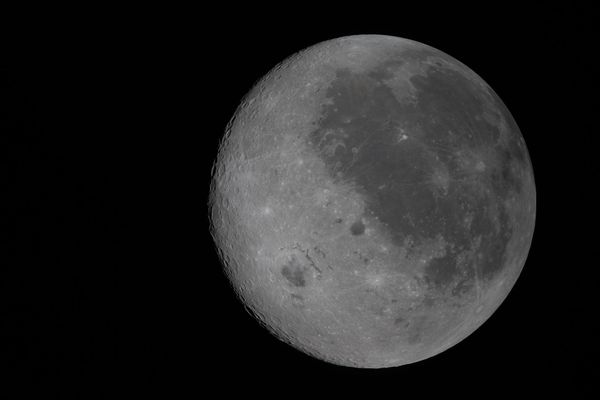
(NASA)
While the most stunning image of those taken during the Artemis II mission is a matter of opinion, the lunar flyby gallery has several contenders. Among them are a photo of the moon’s far side with a crescent Earth in the distance, one of a total solar eclipse made possible by the spacecraft’s position behind the moon, one of an “Earthrise,” another of the same total solar eclipse with Venus in frame, and a photo of “Earthset.”
Here are two such photos, one of the moon’s far side and another of the total solar eclipse:
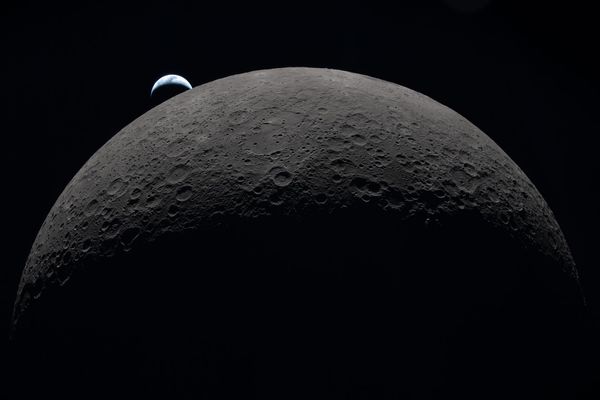
(NASA)
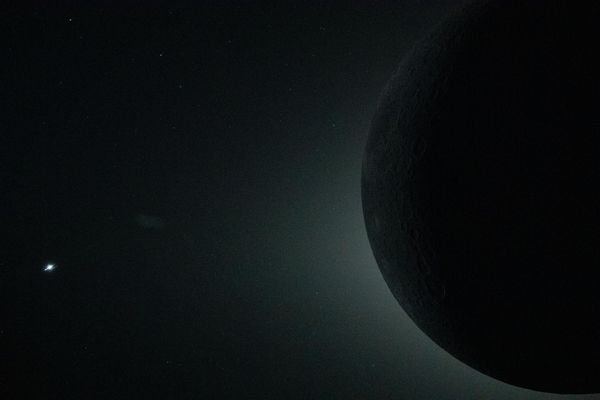
(NASA)
At the time of writing, NASA hadn’t yet uploaded any photos of the moon to the return-to-Earth gallery.