
NEED TO KNOW
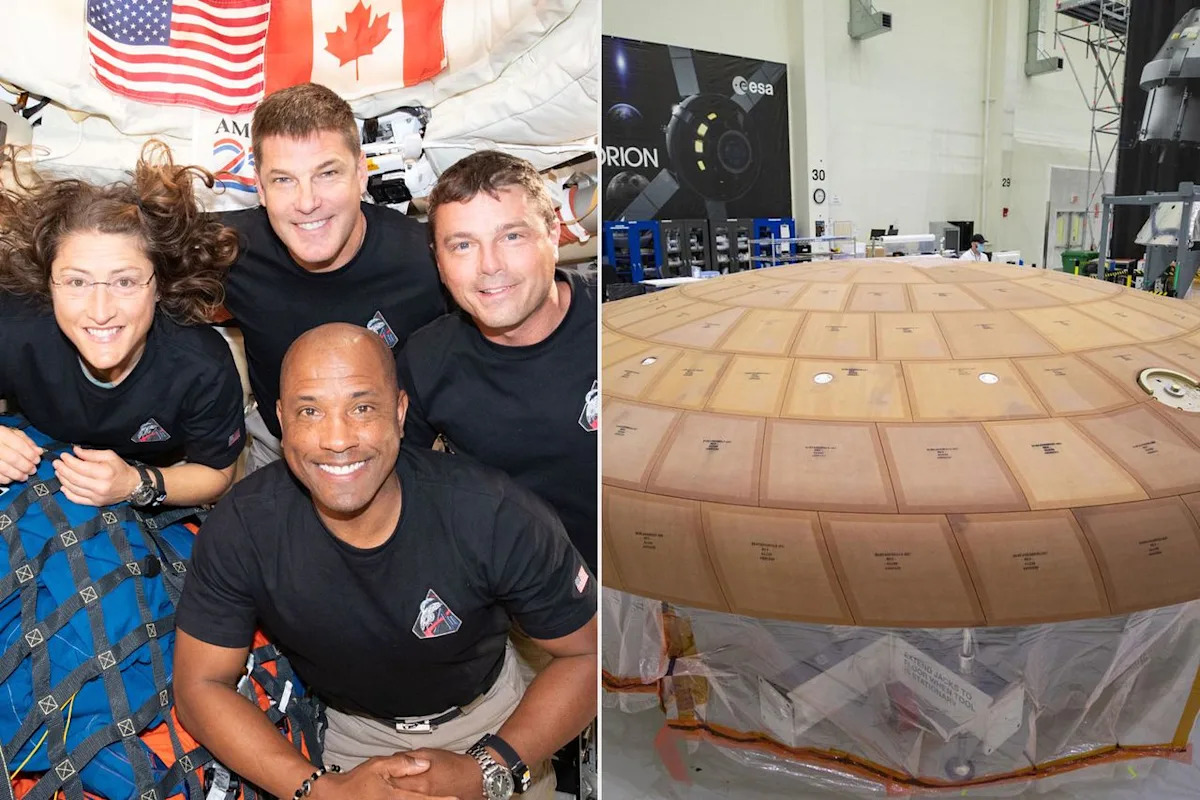
As the Artemis II crew prepares to return to Earth, concerns are resurfacing about known flaws with their spacecraft’s heat shield
The flaws were discovered after the heat shield for Artemis I cracked as it returned to Earth in 2022
NASA has acknowledged flaws in the spacecraft’s heat shield but maintains confidence in its ability to protect the crew
The Artemis II crew is about to face what experts are calling the most dangerous part of their mission: returning home.
After 10 days in space on the first manned mission to the moon in more than five decades, astronauts Reid Wiseman, Victor Glover, and Christina Koch and Jeremy Hansen just have one major thing left to do: splash down safely off the coast of California on Friday, April 10.
Re-entering the Earth’s atmosphere is always hazardous. Their spacecraft will be subject to temperatures of 5,000 degrees Fahrenheit, which is why the capsule has a heat shield designed to provide protection to the returning astronauts, according to NBC News and CNN.
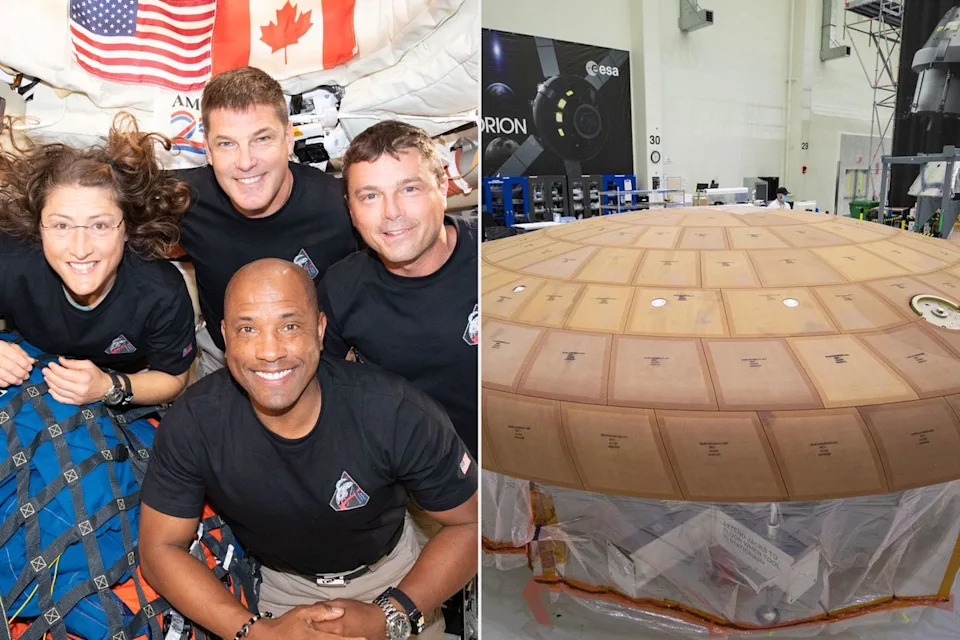
Credit: NASA via Getty; Isaac Watson/NASA
But by its own admission, NASA has said the heat shield on this crew’s space capsule has known flaws, and according to The New York Times, could disintegrate if it fails. There is no backup and a major failure could put the lives of all four on board at risk.
“It’s 13 minutes of things that have to go right,” Jeff Radigan, NASA’s Artemis II flight director, said at a press conference on Thursday, April 9, per NBC News.
The unmanned Artemis I mission faced issues with its heat shield as it returned to Earth back in 2022. The Artemis II crew is using the same design.
An investigation conducted by NASA determined the shield cracked in some spots due to “gas pressure built up” after Artemis I faced “less severe heating” than expected upon re-entry into the atmosphere.
However, NASA said a crew “would have been safe” had they been on board, with temperatures in the crew module “holding steady in the mid-70s. The thermal performance of the heat shield, they added, “exceeded expectations.”
After the investigation, NASA said its teams “unanimously agreed” that the agency could develop a modified path for the Artemis II mission “that will keep crew safe” during re-entry.
“Every system we’ve demonstrated over the past nine days — life support, navigation, propulsion, communications — all of it depends on the final minutes of flight,” Amit Kshatriya, NASA’s associate administrator, said at Thursday’s briefing.
In an open letter sent in January to NASA Administrator Jared Isaacman, Charlie Camarda, a former NASA astronaut and an expert on heat shields, suggested NASA should not have launched Artemis II with its current heat shield design.
“History shows accidents occur when organizations convince themselves they understand problems they do not,” Camarda wrote at the end of his letter. “This issue exhibits the same patterns that preceded past catastrophes.”
Speaking with the Times, Camarda said that there is a 95% chance that the Artemis II astronauts will return home safely. Still, he added, “I’m going to pray that nothing happens.”
Meanwhile, Isaacman has expressed “full confidence” in Orion’s heat shield, according to NBC News.
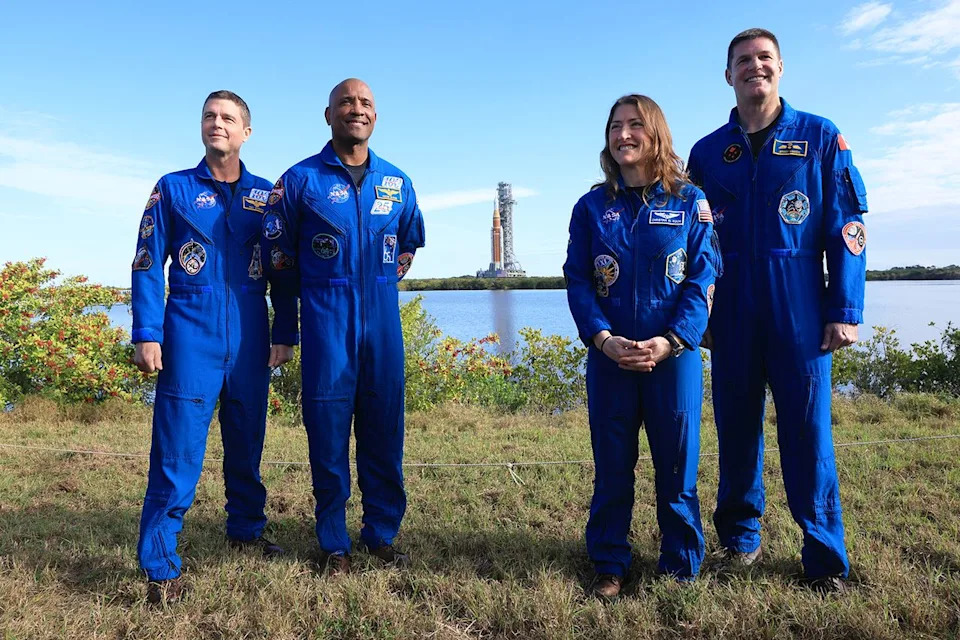
(L-R) Artemis II Commander Reid Wiseman, pilot Victor Glover, mission specialist Christina Koch and Jeremy Hansen
Credit: Joe Raedle/Getty
As they prepared for splashdown, the crew sent some touching messages to their families, according to Today and The New York Post.
“I just want to look at my daughters, Ellie and Katey, and just say I love you,” said Wiseman, the mission commander.
Meanwhile, Hansen offered some advice to his three kids: “All you have to do on any given day is just get up and do your best and try to find joy in your day and try to contribute in a meaningful and positive way.”
Never miss a story — sign up for PEOPLE’s free daily newsletter to stay up-to-date on the best of what PEOPLE has to offer, from celebrity news to compelling human interest stories.
“We spent years coaching you, but we are very much in that transition to being cheerleaders and just rooting for you in life,” added pilot Victor Glover in a message to his four children.
Meanwhile, Christina Koch thanked her nine nieces and nephews for the letters and hand-drawn pictures they sent to her. “You had beautiful earths and rockets, and they truly touched my mission, and I feel like you’re here with me,” she said.
Read the original article on People