
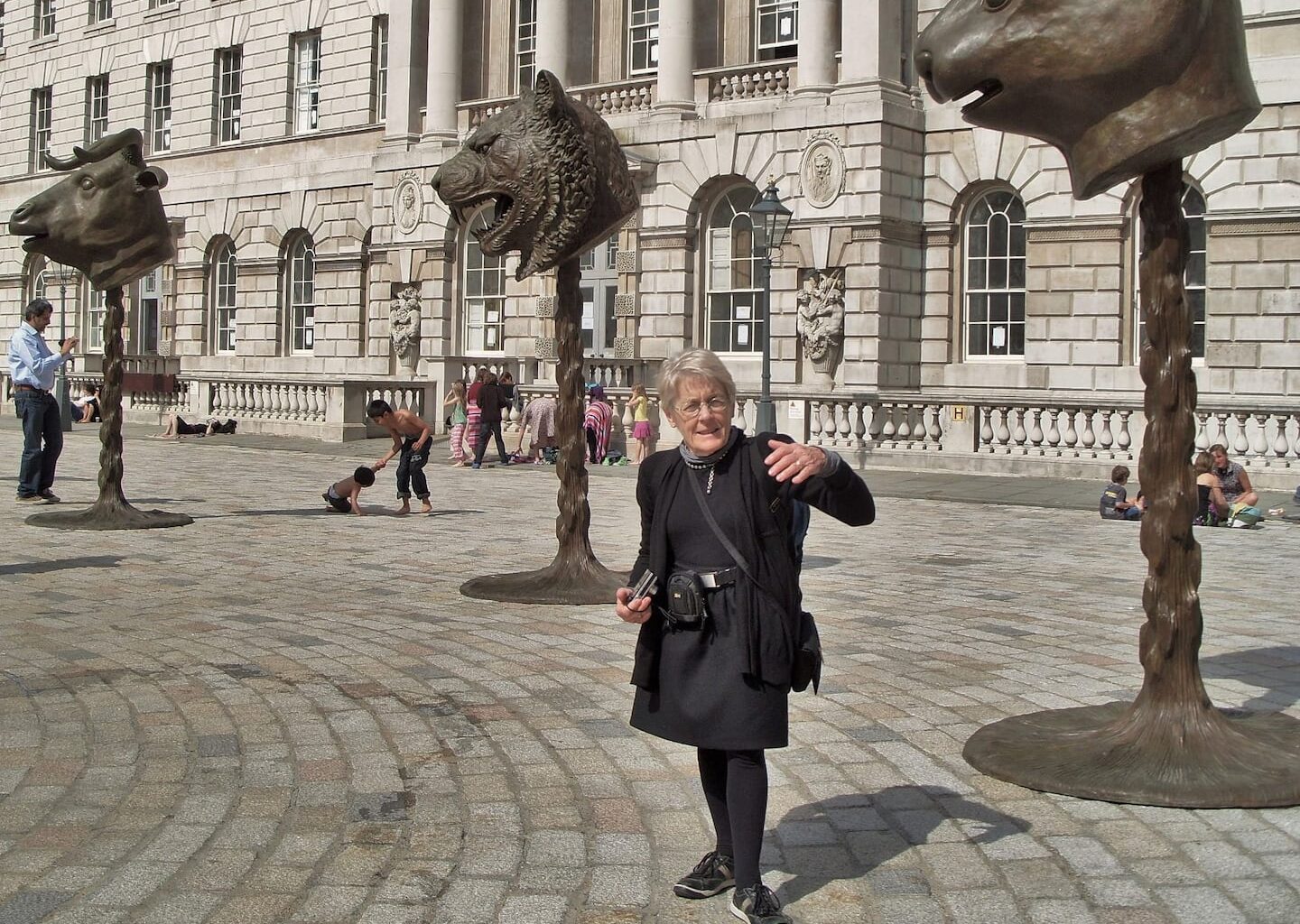
Leslie founded two nonprofits — Dorchester Community Center for the Visual Arts, better known as DotArt, in 1998, and Living Art, in 2015. They were small, even by local nonprofit standards — not the type of organization you’d typically read about in the business section.
They had an outsize impact, but Leslie rarely got the recognition she deserved for bringing art to communities, even as schools cut back on such “extras.” No matter. For her, teaching artmaking was a labor of love. And she helped make Boston a better place to live and raise a family.
Today’s newsletter is my way of honoring Leslie, who died March 24 at her home in Stoneham, where she had moved to be closer to family. She was 90.
Welcome to Dorchester
My wife and I met Leslie in December 1989. We’d just moved to the Ashmont section of Dorchester. Leslie knocked on the door, welcomed us to the neighborhood, and offered an invite to her annual New Year’s Day party.
Leslie lived a few houses away, and she was thrilled we’d landed from New York with two small children in tow. She and her husband at the time had a young son and were members of a babysitting cooperative. She was quick to recruit us into the co-op — and we were glad she did. We met people who became longtime friends and introduced us to other Dorchester families.
An unstoppable force
The essential thing to know about Leslie: She was a fighter — determined, unyielding, never one to take no for an answer. Even those who loved her knew she could be a pain in the butt.
That strong will was evident when she battled tuberculosis as a young girl in Dublin. She was bedridden for four years and spent most of that time in a body cast.
During that period, “drawing became a crucial way to realize her ideas about herself and the world,” her ex-husband, Paul Dobbs, said in an email. “This was quite possibly the crucible that created her passion for teaching, or, more specifically, for advocating artmaking as a tool for self-realization.”
Leslie was accepted at Ireland’s National College of Art and Design at 14, and later attended the famed École des Beaux-Arts in Paris. When she returned to Dublin, Leslie taught art while establishing herself as an acclaimed painter.
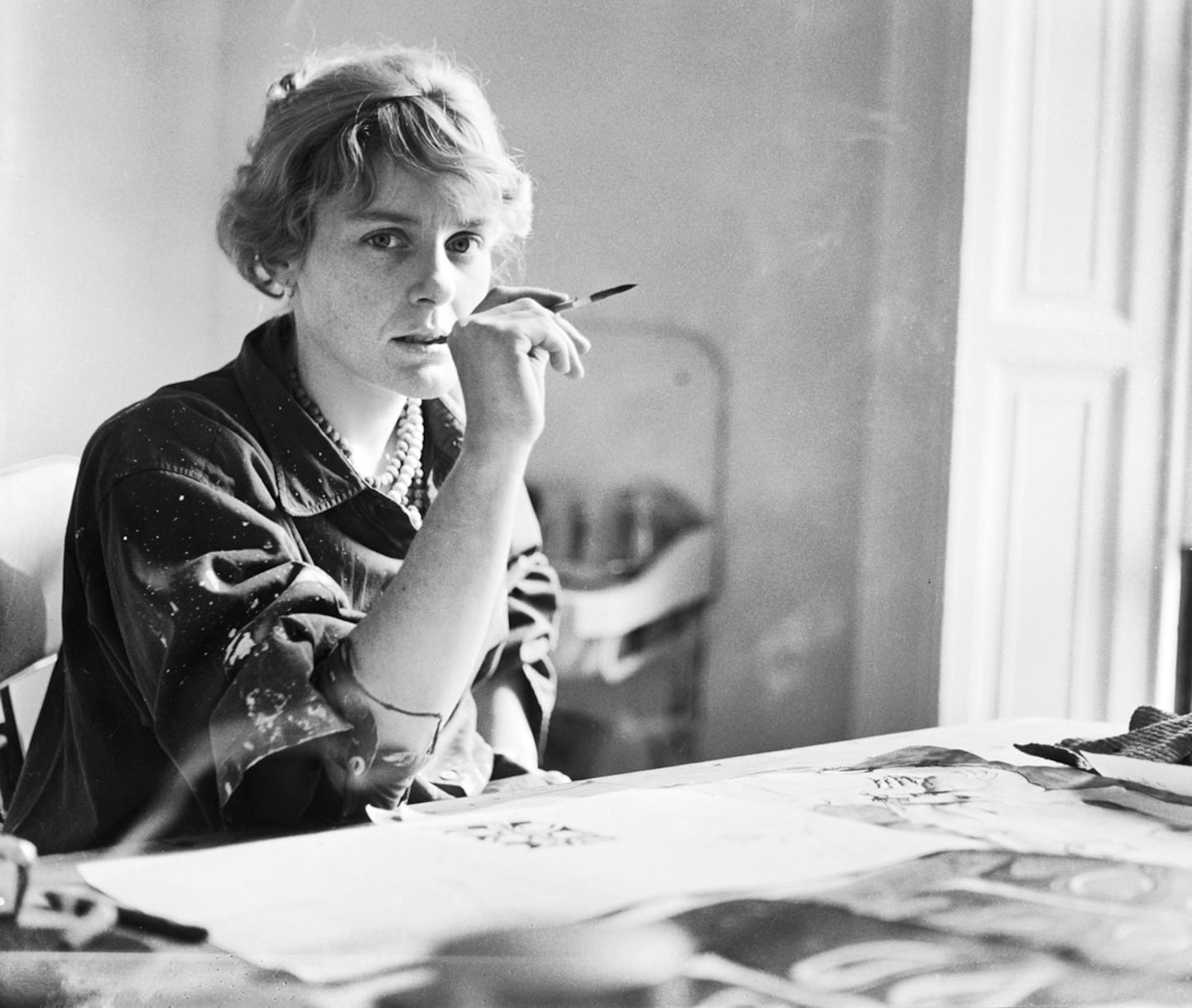 Portrait of an artist as a young woman.Alen MacWeeney
Coming to America
Leslie came to the US in 1973 to become a graduate student at Boston University. She taught undergraduate art classes at BU and Massachusetts College of Art and Design, where she was later appointed an assistant professor.
It was at BU that Leslie met Dobbs, an archivist, whom she would marry in 1977. A decade later, they adopted an infant, Adam, from Honduras. Leslie lived for several months in a Honduran Mennonite colony while the adoption papers were completed. She was already in her 50s.
In 1992, Leslie created The Children’s Studio in Dorchester, where she and others taught young children to draw, paint, and sculpt. That led to the formation of DotArt six years later.
Leslie focused on portrait paintings, done on hollow-core doors, and figurative sculptures in papier-mâché on simple armatures.
“Leslie also made the creation of these portraits a ‘paying job’ by securing funding from the city of Boston and charitable foundations (including the Boston Foundation) to create and manage summer jobs for teens,” according to an obituary by family friend Mark Farrington.
Moving on
Leslie left DotArt in 2012 after a consultant recommended the organization hire a new executive director with better organizational skills. Leslie was notoriously late for everything. (I would kid her about operating on “MacWeeney Time.”)
While a persuasive fundraiser, Leslie didn’t care much for the paperwork that many institutional donors wanted to see detailing how their grant money was spent and the results achieved, said Evan Hershenson, DotArt’s executive officer and treasurer.
A few years after leaving DotArt, she started Living Art, which recruited police officers, firefighters, EMTs, and veterans to pose for portraits.
Her genius was the ability to provide “new art opportunities in so many mediums,” Hershenson said. “She knew how to bring art into a lot of different spaces. And the one constant was creating a safe space where you wouldn’t be judged on your work.”
A Funeral Mass for Leslie will be held April 25, 10 a.m., at the Paulist Center, 5 Park St. in Boston, with an informal gathering afterward to celebrate and appreciate Leslie’s remarkable life.
Larry Edelman can be reached at larry.edelman@globe.com.